


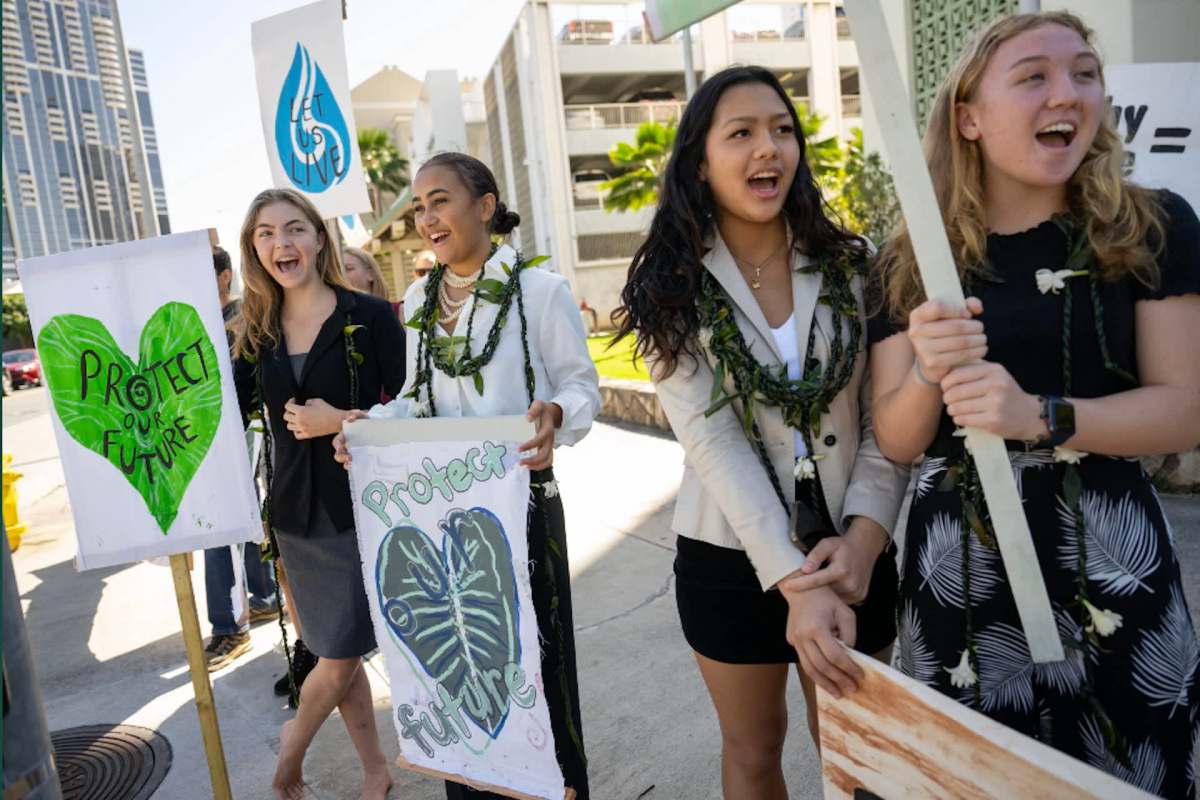
Young people in Hawai'i did not just win a climate lawsuit — they also secured a formal role in shaping the state's transportation future.
Following the 2024 settlement, teens are helping guide decisions on transit, bike lanes, and other transportation changes intended to move Hawai'i away from non-renewable energy sources, according to Yale Climate Connections.
The next phase, however, may be the most important yet: whether the commitments won in court lead to visible, everyday changes on the ground.
Here's what to know
As part of the 2024 resolution of Navahine v. Hawai'i Department of Transportation, the state created the Hawai'i Youth Transportation Council. In that case, 13 young plaintiffs argued that Hawai'i was failing to meet its own climate obligations, according to Yale Climate Connections.
The settlement gives the DOT until 2045 to decarbonize transportation. That requirement covers travel on land and sea as well as interisland flights, with interim milestones set for 2030, 2035, and 2040.
Joanna Zeigler, a staff attorney at Our Children's Trust who led the case, said Hawai'i had long organized transportation around cars, with the agency prioritizing "road expansion and maintenance rather than projects that reduce greenhouse gas emissions, such as pedestrian, bicycle, and transit expansion and expansion of EV infrastructure," per Yale Climate Connections.
TCD Picks » Quince Spotlight
💡These best-sellers from Quince deliver affordable, sustainable luxury for all




Yale Climate Connections also reported that the settlement requires the DOT to produce a greenhouse gas reduction plan, finish its pedestrian, bicycle, and transit network within five years, and expand EV infrastructure.
More background
Zeigler described it as "the first youth-led climate change case to have reached a settlement agreement," and said the result shows what can happen when government works with young people "rather than against them."
For plaintiff Charlotte Madin, the case is personal too. She has said she lived through severe heat waves while growing up in Australia and later saw environmental conditions worsen in Hawai'i.
"The entire time I've lived in Hawai'i, about eight years now, I've noticed the beautiful ocean and the biodiversity of the coral reefs just slowly becoming less and less healthy," she said, per Yale Climate Connections.
That helps explain why transportation became such a major focus: it is Hawai'i's largest source of planet-warming pollution, and those levels were projected to continue increasing. Moving toward cleaner transportation could also bring safer streets, stronger transit access, and less dependence on expensive non-renewable energy sources.
The youth council creates an additional form of accountability by giving younger residents an official way to tell the state which projects matter most in their communities.
What's being done?
The most immediate change is continued youth involvement.
Madin said the council is giving her and other young Hawaiians a direct voice in transportation planning and helping them better understand how legislation works, according to Yale Climate Connections.
Instead of leaving those aims as broad promises, the settlement makes them enforceable through deadlines and planning requirements that can be tracked over time.
People may notice the effects most clearly in everyday travel: more complete bike and pedestrian networks, stronger public transit, and expanded EV infrastructure. Improvements like that can make it easier for residents to use alternatives to gas-powered driving on routine trips.
If the state follows through, the settlement may offer a model for how legal action, youth advocacy, and transportation planning can work together to reduce pollution while improving day-to-day mobility.
Madin said, "You always have a voice, and you always have a choice with how you use that. And utilizing the power of democracy and utilizing the legal system, you can do big things with your voice."

Get TCD's free newsletters for easy tips, smart advice, and a chance to earn $5,000 toward home upgrades. To see more stories like this one, change your Google preferences here.






