


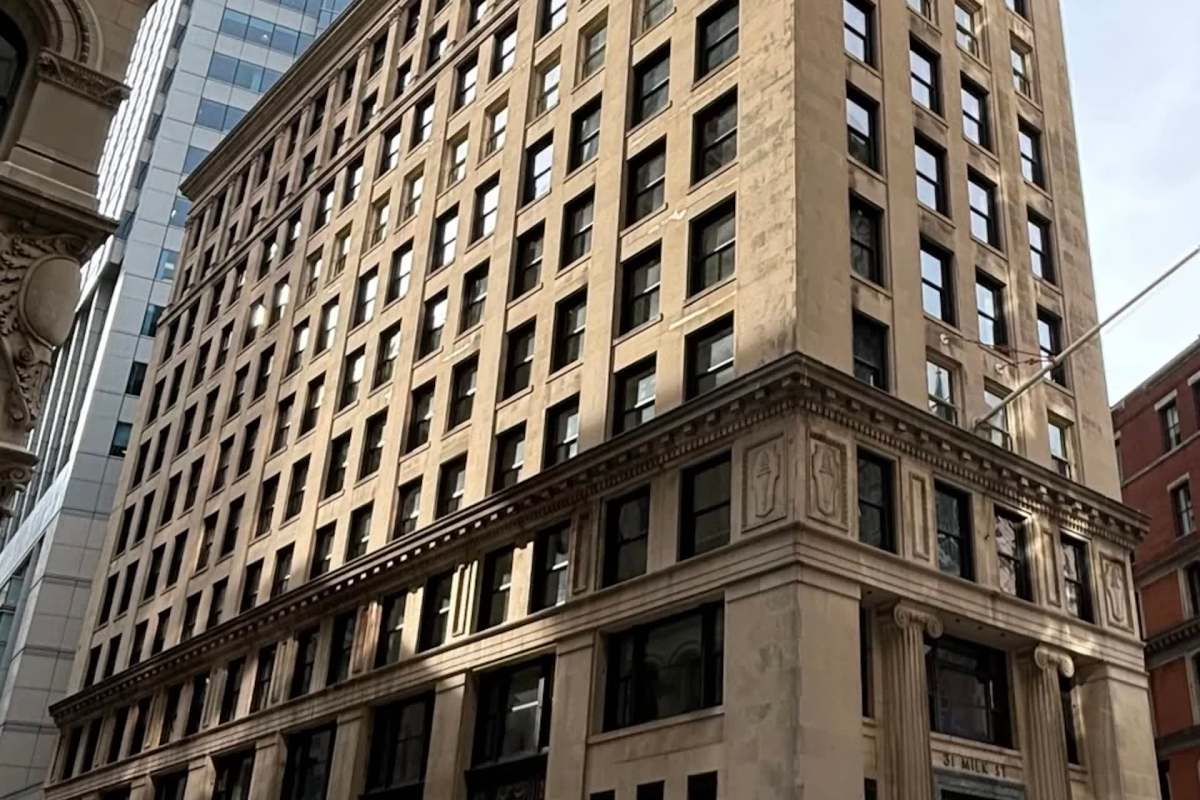
After securing $39.6 million in construction financing, 31 Milk St. is slated to be converted into 110 apartments with all-electric building systems, Banker & Tradesman reported.
Despite the transformation, the nearly century-old office building in downtown Boston will retain much of its historic character.
Here's what to know
Miami-based S.USA Life Insurance Co. provided the financing to Newton-based Dinosaur Capital Partners, which is converting the office building into housing.
Banker & Tradesman reported the proposal set aside 20% of the apartments as income-restricted, and the ground-floor U.S. Post Office branch is expected to keep operating during construction.
The property dates to 1923 and includes 86,730 square feet on a 9,481-square-foot site with frontage along Milk, Hawley, and Arch streets, per the outlet. Dinosaur Capital Partners purchased the building in 2025 for $9.55 million.
The development won a $4 million state grant in January through a Massachusetts initiative to spur office-to-residential conversions. In a 2024 application to the Boston Planning Department, the developers said the project would consist largely of one-bedroom apartments, with market-rate rents projected at roughly $2,500 to $4,500 a month, per Banker & Tradesman.
TCD Picks » Quince Spotlight
💡These best-sellers from Quince deliver affordable, sustainable luxury for all




The Boston Planning & Development Agency board approved the proposal in May through the city's conversion program. The outlet noted that the program grants a 75% property tax abatement for 29 years and that Boston has received 29 applications covering 2,331 units, with 431 already under construction.
More background
The project touches several challenges at once, including the need for more housing, an oversupply of old office space in parts of downtown, and pressure to modernize aging buildings without erasing historic architecture.
Notably, the project will adapt the existing building while keeping the stone facade and other historic features.
Developers have also said they want the property listed on the National Register of Historic Places, Banker & Tradesman said. That could open the door to historic tax credits, and the plan includes rebuilding and restoring the original windows that still remain.
An all-electric system is another central part of the proposal. Conversions designed this way can avoid new gas service and provide electric heating and cooling from the beginning, including heat-pump-based equipment.
The conversion will add 110 apartments, including income-restricted units, in a high-demand neighborhood. Adding homes downtown will expand supply in an area with access to jobs, transit, and services.
What's being done?
Boston and Massachusetts are supporting office-to-housing conversions with public incentives, as Banker & Tradesman described. State grants can close financing gaps, while the city's tax abatements can make costly adaptive reuse projects more feasible.
Converting old office buildings is often more difficult than building from the ground up. Developers must navigate existing floor plans, aging infrastructure, historic preservation standards, and the cost of bringing buildings up to modern residential requirements.
The strategy can create housing more quickly than new construction projects and keep old downtown blocks active. The number of applications shows local officials and developers see room for this model to grow.
If 31 Milk St. proceeds as planned, it would bring together historic preservation, added housing, and all-electric building systems in one downtown redevelopment project.

Get TCD's free newsletters for easy tips, smart advice, and a chance to earn $5,000 toward home upgrades. To see more stories like this one, change your Google preferences here.






