


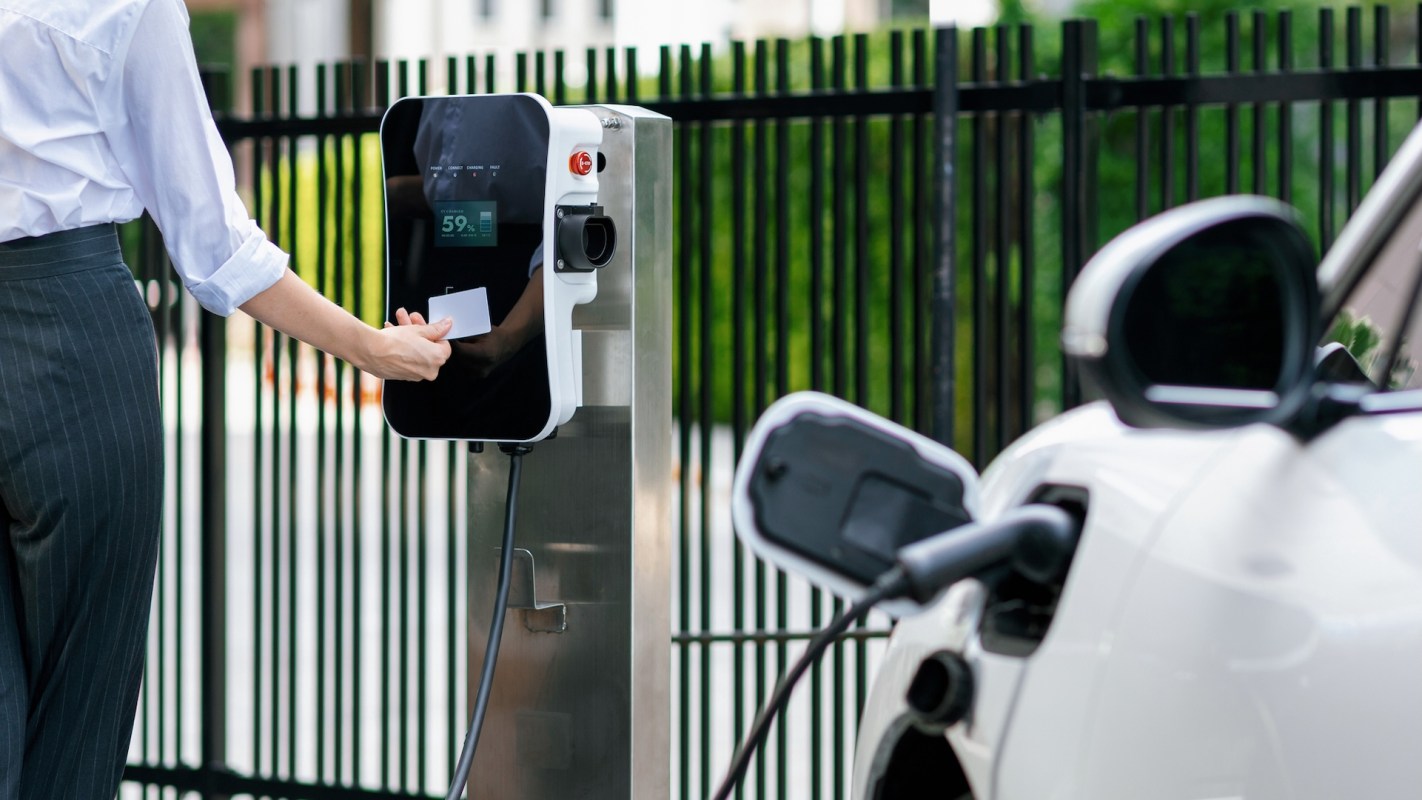
A key financial benefit of owning an electric vehicle is the low cost of refueling since charging at home is usually cheaper than paying for gas.
However, people who rent or live in apartments or other multifamily housing often don't have that savings advantage — though advocates say utilities could close that gap.
Here's what to know
In an article for Utility Dive, Zach Franklin, strategic impact officer at GRID Alternatives, and Linda Khamoushian, senior clean mobility strategist at the Oakland, California-based nonprofit, said utility EV programs should be redesigned so eligible customers, not just household meters, receive discounted charging rates.
Without a place to plug in at home, many renters depend on expensive public stations or shared chargers at multifamily buildings, where electricity can cost up to six times more than standard residential service.
Franklin and Khamoushian called this mismatch the "renter's penalty." The effect is that two people driving comparable EVs may have sharply different monthly charging bills based solely on whether one rents and the other has access to a home charger.
When low-cost charging is unavailable, one of the clearest budget advantages of driving electric is weakened, and the appeal of switching to an EV fades away. That can make it much harder for families hoping to save money by replacing a gas vehicle with an EV.
TCD Picks » Quince Spotlight
💡These best-sellers from Quince deliver affordable, sustainable luxury for all




More background
At the center of the issue is the way many utility assistance programs were designed; benefits are commonly linked to electricity consumed through a home meter. When charging happens away from home, that model can miss drivers who power their vehicles somewhere else.
The duo argued that this creates both an equity issue as well as a roadblock to broader EV use. If renters consistently pay more to charge, the cost benefits of cleaner transportation remain unevenly distributed.
Low-cost charging could help more households afford EV ownership while also increasing utility electricity sales and getting more use out of existing charging infrastructure.
As Franklin and Khamoushian put it, "affordability and grid optimization are not competing objectives — they reinforce one another."
What can be done?
They said a new playbook from GRID Alternatives and the Smart Electric Power Alliance lays out a range of ways utilities could respond.
One path would center benefits on the driver, using tools such as discounts tied to a customer account or prepaid charging cards so income-qualified EV owners pay less at participating chargers.
A different route would focus on specific locations, with utilities providing reduced-price charging at public stations they own or at multifamily charging sites in priority communities.
Combining those approaches could offer a dependable nearby source of low-cost charging while still letting drivers take their discounts with them when they need to charge in other places.
The experts also noted utilities can begin helping before a statewide policy or sweeping regulatory system is in place. Current programs already indicate that customer-based benefits are workable, and GRID Alternatives says it can provide no-cost technical support and planning help to utilities developing affordable public and multifamily charging efforts.
"Transportation electrification should not create two classes of EV drivers: those who enjoy low-cost residential charging and those who pay a premium simply because they rent," Franklin and Khamoushian wrote.

Get TCD's free newsletters for easy tips, smart advice, and a chance to earn $5,000 toward home upgrades. To see more stories like this one, change your Google preferences here.






