


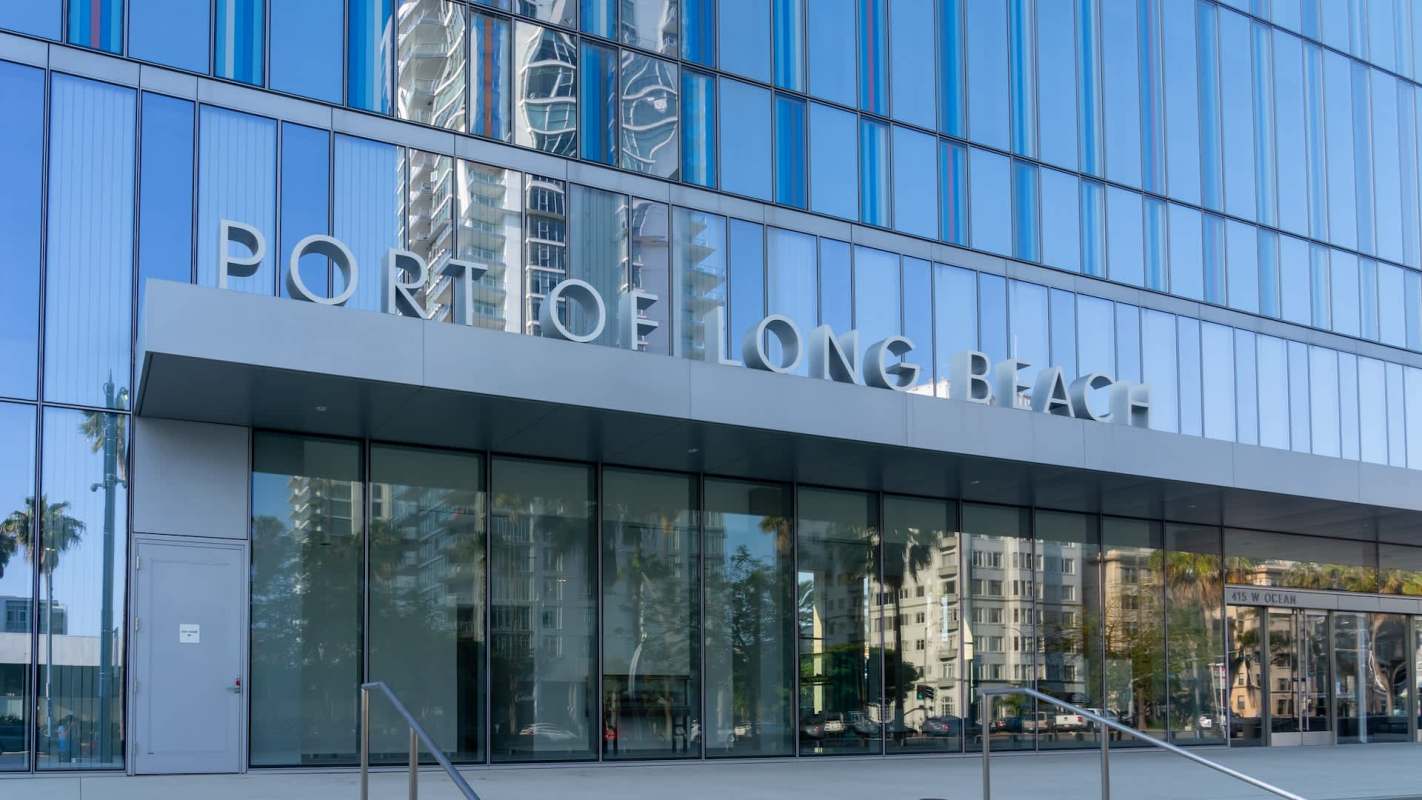
A new partnership at the Port of Long Beach could move California closer than it has been in decades to another nuclear power project.
At the center of the plan is a federal agreement to study small modular reactors, or SMRs, at one of the country's busiest ports.
Supporters say that, if the concept advances, barge-mounted reactors could eventually supply electricity to port facilities and ships while helping Long Beach pursue its zero-emission targets.
Here's what to know
In July, the Port of Long Beach and the U.S. Department of Transportation's Maritime Administration signed a memorandum of cooperation that paves the way for startup Bluecore Energy to explore SMR development at Berth 48, according to the Orange County Register.
Port leaders are presenting the agreement as an important step toward cleaner, more dependable power for cargo-related activity.
Port CEO Noel Hacegaba said the initiative aligns with the harbor's long-range plans.
TCD Picks » Quince Spotlight
💡These best-sellers from Quince deliver affordable, sustainable luxury for all




"We're building the 'port of the future' in Long Beach, where we've led in global trade by moving $300 billion in cargo annually to support 2.7 million American jobs," he said.
"We cannot assume the energy landscape of today will sustain the port in 2050," Hacegaba continued.
Commercial use of the technology, however, remains limited. Russia and China are the only countries currently operating SMRs, and although several U.S. designs are in development, none has been completed.
Bluecore Energy founder Kofi Asante said the company's reactors could power an entire port terminal or about 15,000 households, calling nuclear energy "a very good solution."
More background
SMRs can be thought of as compact nuclear plants. Advocates say they can provide continuous electricity without carbon emissions at the point of generation, which makes them appealing for ports, industrial sites, and other facilities that need reliable power around the clock.
Even so, they raise many of the same long-standing concerns associated with nuclear energy.
Diana Gragg, managing director of the Explore Energy Program at Stanford University's Precourt Institute for Energy, noted that "small is relative," since even a 50- to 300-megawatt reactor is still "a significant-sized power plant."
Cost and regulation are also major obstacles. A closely watched NuScale project in Idaho was canceled after expected costs rose sharply, and SMR companies have struggled to demonstrate they can build reactors more quickly and cheaply than conventional plants.
In Long Beach, the debate has focused heavily on safety, waste, and public confidence. Because Bluecore's proposal calls for floating reactors, residents have questioned the risk of capsizing, the impact of severe weather, how radioactive waste will be handled, and how the agreements were reached.
Long Beach resident Jeff Miller put it bluntly: "SMR technology is nowhere near mature."
What's being done?
As the technology develops, federal regulators are starting to work out how to govern it.
The Nuclear Regulatory Commission has not yet received an application from the Port of Long Beach for a maritime reactor, but Bluecore was scheduled to meet with the agency on August 17 to outline its regulatory engagement plan and reactor concept.
The NRC is also drafting a white paper on how existing licensing rules might apply to maritime nuclear projects, including floating plants.
NRC spokesperson Prema Chandrathil said the effort is meant to address "unique regulatory considerations in maritime nuclear deployments."
State law adds still more uncertainty. California has had a moratorium on new nuclear fission reactors since 1976 unless the federal government establishes a long-term solution for radioactive waste, and past efforts to make an exception for SMRs have not succeeded.
Bluecore says it is in discussions with federal agencies, state officials, and local residents as the proposal develops.
Asante said the company wants broader public engagement in the future and emphasized that safety has to come first.
"I'd say with the state in particular, we want to make sure we engage very deeply and we care about bringing them on the process along, but it is slightly different than maybe like a land-based solution in its traditional route," he told the Orange County Register.

Get TCD's free newsletters for easy tips, smart advice, and a chance to earn $5,000 toward home upgrades. To see more stories like this one, change your Google preferences here.






