



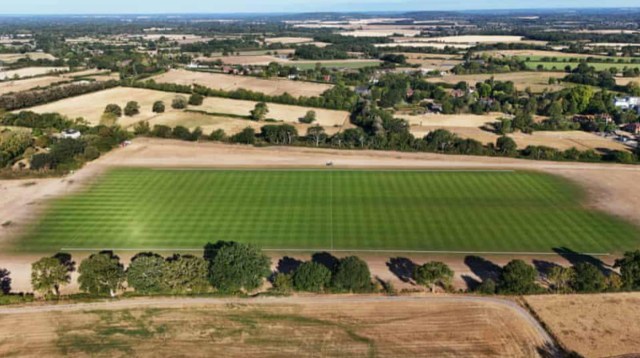
A photo of a vividly green polo field amid drought-stricken parts of England is drawing attention online.
To many people, the picture is not simply an odd contrast in landscaping. It has become a shorthand for how unequal water scarcity can seem when different kinds of land use are involved.
Here's what to know
Posted to Reddit's r/mildlyinfuriating, the photo depicts a bright green field amid swaths of dry, brown grass. The caption reads, "This perfectly green Polo pitch in England as the country is ravaged by drought."
One commenter wrote, "A 6 pitch polo field near me claims they get their water from the nearby lake, which is currently extremely low. Sprinklers still going though." They also included a photo of the nearby field's "comprehensive drought action plan," which states that they are "only irrigating when grounds are due to be played."
"I don't buy the line that they are only watering when games are played (assuming there are off days)," another said in response to the photo. "Brown grass does not turn suddenly green when watered."
That mix of skepticism and anger pushed the discussion toward a broader complaint: that drought restrictions may not be landing equally on everyone.
TCD Picks » Quince Spotlight
💡These best-sellers from Quince deliver affordable, sustainable luxury for all




More background
Even if irrigation is not coming directly from household water supplies, the environmental concern does not go away. Drawing from a lake during a dry spell can still raise questions about falling water levels, strained ecosystems, and whether maintaining lush landscaping is an appropriate use of limited resources.
One person who said they walk near the field referenced in the comment section wrote, "What surprises me is that they said they will slow down on the matches. If you look at the schedule, they haven't. Big waste of land."
In another part of the thread, a commenter said the post's original image appeared in a Guardian gallery and identified the location as the King Power Polo ground in Holyport near Maidenhead. That same commenter also claimed map imagery showed two small lakes near the site.
What can be done?
Drought rules need to be transparent and applied consistently, especially for nonessential uses such as ornamental turf and private sports grounds. If a facility is allowed to irrigate, communities deserve clarity about where that water is coming from and what limits are in place.
At the site level, clubs and other large land users can scale back match schedules, reduce irrigation to the minimum needed for safety, and shift toward more drought-tolerant grounds management. Public disclosure also matters, since vague explanations or secrecy can intensify backlash.

Get TCD's free newsletters for easy tips, smart advice, and a chance to earn $5,000 toward home upgrades. To see more stories like this one, change your Google preferences here.







