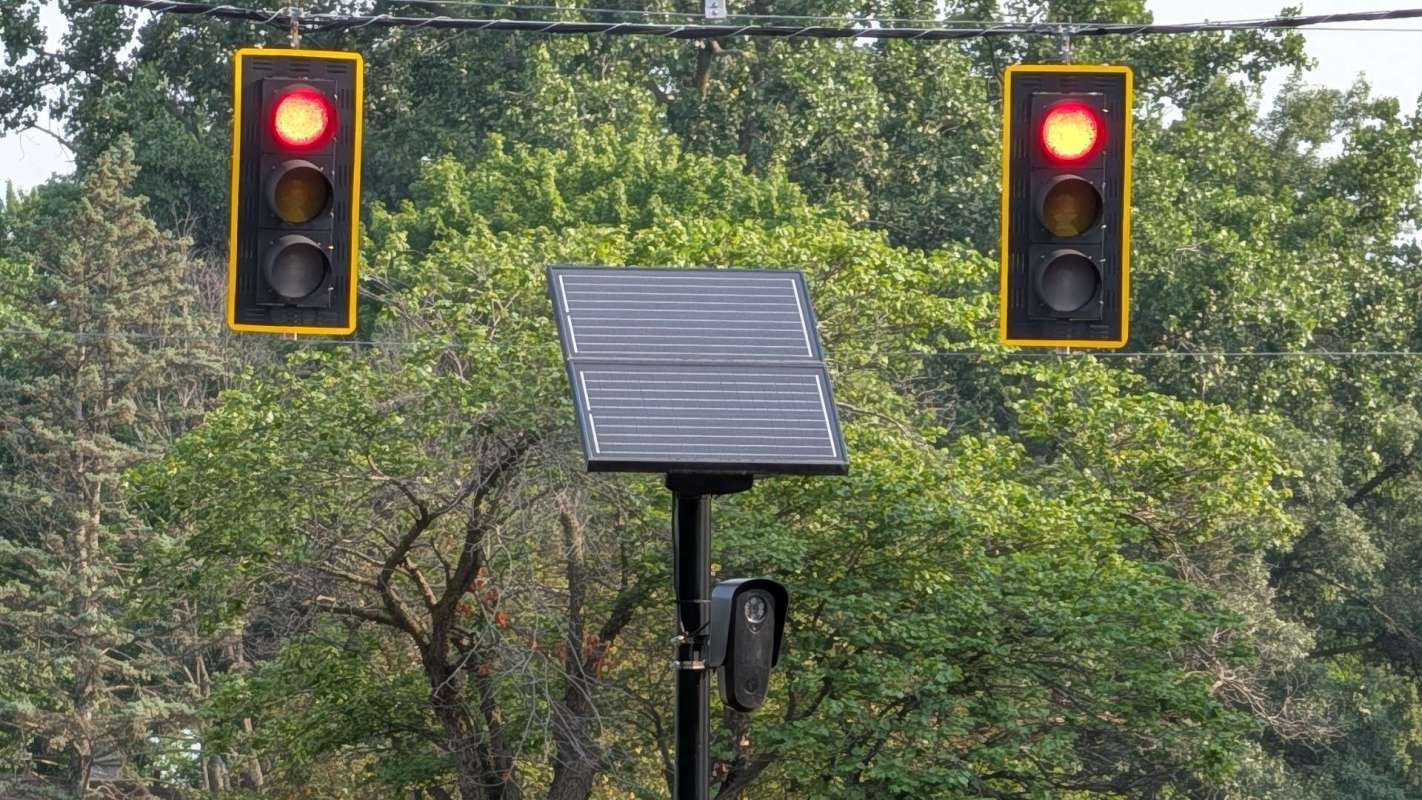
A Wisconsin police officer has been sentenced to jail after using a nationwide network of AI-powered license plate reader cameras to track his ex-girlfriend.
This case adds to mounting backlash over police surveillance tools across the state, and the country.
Here's what to know
After pleading no contest to felony misconduct in public office, 32-year-old Menasha police officer Cristian Morales was sentenced to six months in jail and three years of probation, the Wisconsin Examiner reported.
Authorities say Morales, while off duty, ran seven searches through Flock Safety's network of between 15,234 and 92,702 cameras as he tried to find a vehicle tied to his former girlfriend.
The investigation was set in motion when the woman contacted the Appleton Police Department because she believed she was being tracked. During the court proceedings, she described a "pattern" of controlling and violent behavior and said, "I am here because I lived through something that changed my life," as the Milwaukee Journal Sentinel reported.
At sentencing, Judge Mark Schroeder said Morales had abused public-safety tools placed in his care and called him an "oathbreaker." Morales told the court, according to WBAY 2, "I take responsibility for the decision I made."
TCD Picks » Quince Spotlight
💡These best-sellers from Quince deliver affordable, sustainable luxury for all




Similar cases in Wisconsin have had very different outcomes, including probation-only deals or no criminal charges at all.
More background
Flock's cameras photograph passing vehicles and license plates on an ongoing basis, with the images then kept in a database that subscribing law enforcement agencies can search.
The system is used to investigate crimes and find missing people, but critics say it also creates the potential for deeply personal abuse.
Other Wisconsin officers have also been accused of misusing the system, including Milwaukee officer Josue Ayala and Kenosha County deputy Frank McGrath. In a separate Flock-related case, Milwaukee internal affairs detective Tehrangi Chapman was charged.
Beyond surveillance and privacy concerns, opposition to Flock's cameras also centers on its use of artificial intelligence. AI tools such as automated camera systems are increasingly tied to the energy grid because they rely on large-scale computing, data storage, and networked infrastructure.
While AI can help improve efficiency and optimize clean energy systems, it can also increase electricity and water use, create security risks, and deepen social harms when used irresponsibly. That includes surveillance abuses that can leave communities paying for systems they do not fully control.
Communities including Kaukauna, Sturgeon Bay, Verona, Appleton, Oshkosh, and Dane County are among the places that have ended Flock contracts, while critics have raised concerns about federal access, vendor transparency, and the potential for wrongful stops.
What's being done?
Some police departments are tightening audits and limiting who can access the system. Green Bay has restricted outside agency access, while Milwaukee has said it strengthened its internal review procedures.
Flock has also introduced tools intended to reduce vague searches and require stronger documentation.
Residents and advocacy groups are urging elected officials to slow or block surveillance contracts altogether. More than 50 agencies statewide have ended Flock agreements, according to the grassroots group Deflock.
Amanda Merkwae, the ACLU of Wisconsin's policy and advocacy director, said one major issue is that many surveillance purchases happen through sole-source, no-bid contracts that avoid meaningful public scrutiny, according to the Wisconsin Examiner.
"I think that it is ludicrous to just trade one for-profit Big Brother for another for-profit Big Brother that is, like, trying to make money," Merkwae said. "That's their goal."
Some local governments have adopted rules known as Community Control Over Police Surveillance, or CCOPS, which require notice, debate, and public input before police adopt or renew surveillance technologies.

Get TCD's free newsletters for easy tips, smart advice, and a chance to earn $5,000 toward home upgrades. To see more stories like this one, change your Google preferences here.