


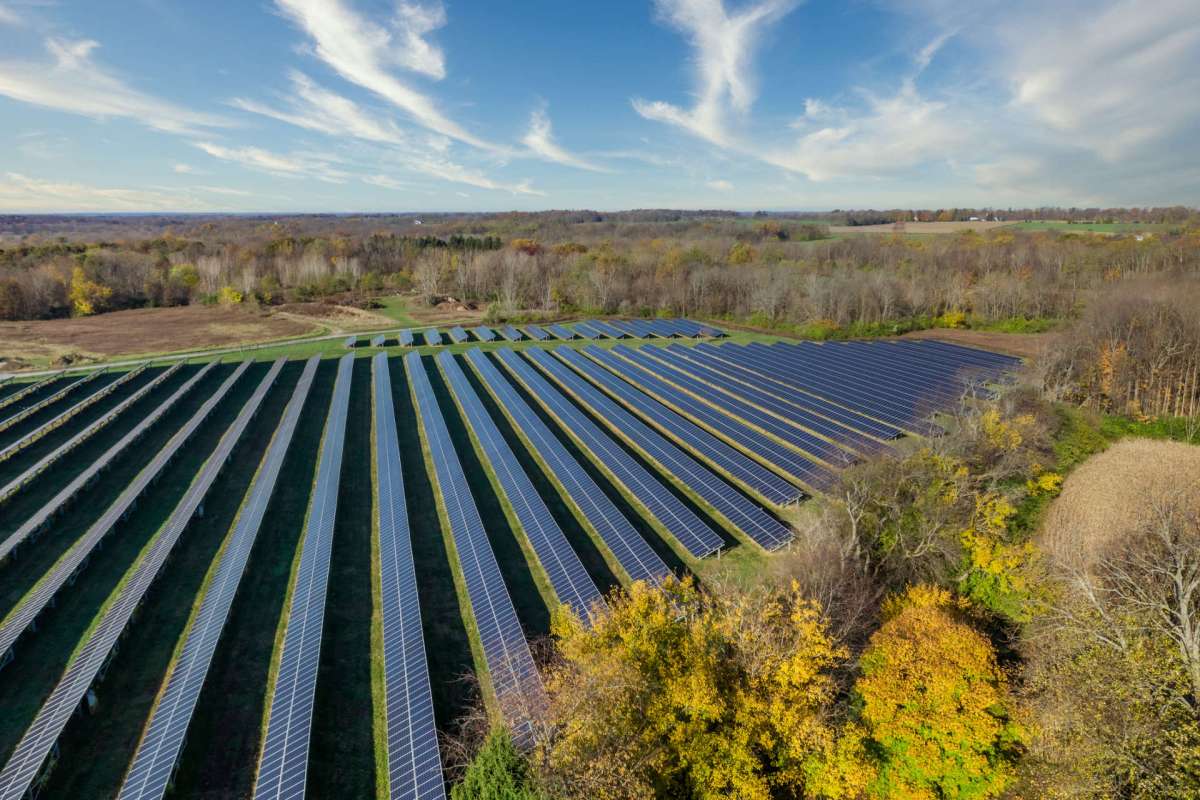
A final state decision is approaching for Oak Run Solar, the largest solar project proposed in Ohio, after a roughly two-year battle that has become a measure of how hard it is to add major new power resources in the state.
After legal briefing ended on Aug. 14, Oak Run Solar is back before the Ohio Power Siting Board for a ruling, according to Canary Media.
The high-profile delay comes as Ohio faces rising electricity demand, higher power bills, and growing questions about grid reliability.
Here's what to know
Oak Run Solar would add 800 megawatts of solar generation and 300 megawatts of battery storage in Madison County, making it the largest project of its kind in Ohio.
After the Ohio Power Siting Board approved the project in March 2024, Madison County and three townships appealed that decision to the Ohio Supreme Court in October 2024.
When the court ruled on May 26, it dismissed nearly every challenge but sent one question back to regulators for a closer review of how three substations would look from public viewpoints.
TCD Picks » Quince Spotlight
💡These best-sellers from Quince deliver affordable, sustainable luxury for all




That limited issue then went before regulators for testimony on July 28.
Board staff have already recommended keeping the permit in place. As Canary Media reported, Mark Bellamy, who advises the board on utility matters, said his review of the consultant's updated analysis found Oak Run's visual character would be consistent with other solar farms.
That means a potentially major addition to Ohio's power supply has remained tied up in litigation for years even as the state needs more electricity.
More background
The lengthy fight over Oak Run reflects a wider pattern in Ohio, where clean energy developments often run into political and legal resistance that fossil fuel projects do not.
As Canary Media has reported, lawmakers since 2021 have added obstacles for solar and wind development, and Ohio has turned away 5.3 gigawatts of those projects.
Slowing the construction of new generation can leave fewer options for controlling utility costs and improving grid stability. It can also mean lost jobs, tax revenue, and investment for communities willing to host those developments.
In Oak Run's case, the developer has already spent more than $13 million. The company has also said the project could bring roughly $250 million to local governments if it is allowed to move forward.
Lawyers for the developer also warned that continued delays could threaten contractual deadlines tied to getting the project online by 2030.
According to Canary Media, Ohio Environmental Council lawyer Karin Nordstrom said the Ohio Supreme Court's split opinions "added more confusion to an already uncertain legal environment" for large renewable energy projects.
What's being done?
At this point, the case is back in the Ohio Power Siting Board's hands.
Administrative law judges David Hicks and Isabel Marcelletti allowed the updated visual evidence into the record, and board staff have urged the full board to uphold the permit.
To respond to the court's concerns, Savion commissioned more photo simulations. As Canary Media reported, Savion permitting and environmental director Lauren Devine said the firm EDR produced updated views showing the planned substations from public roads and other viewpoints.
Supporters of the project, including the Ohio Environmental Council, have argued that opponents are trying to relitigate issues the Supreme Court has already settled.
Opponents, meanwhile, continue to challenge both the visual review itself and the process used to submit the additional materials.
"The project represents a significant opportunity for long-term economic investment in Madison County while supporting Ohio's growing energy needs," Samantha Sawmiller, senior development manager for the Oak Run Solar Project, told Canary Media. "We respectfully await the Ohio Power Siting Board's decision."

Get TCD's free newsletters for easy tips, smart advice, and a chance to earn $5,000 toward home upgrades. To see more stories like this one, change your Google preferences here.







