


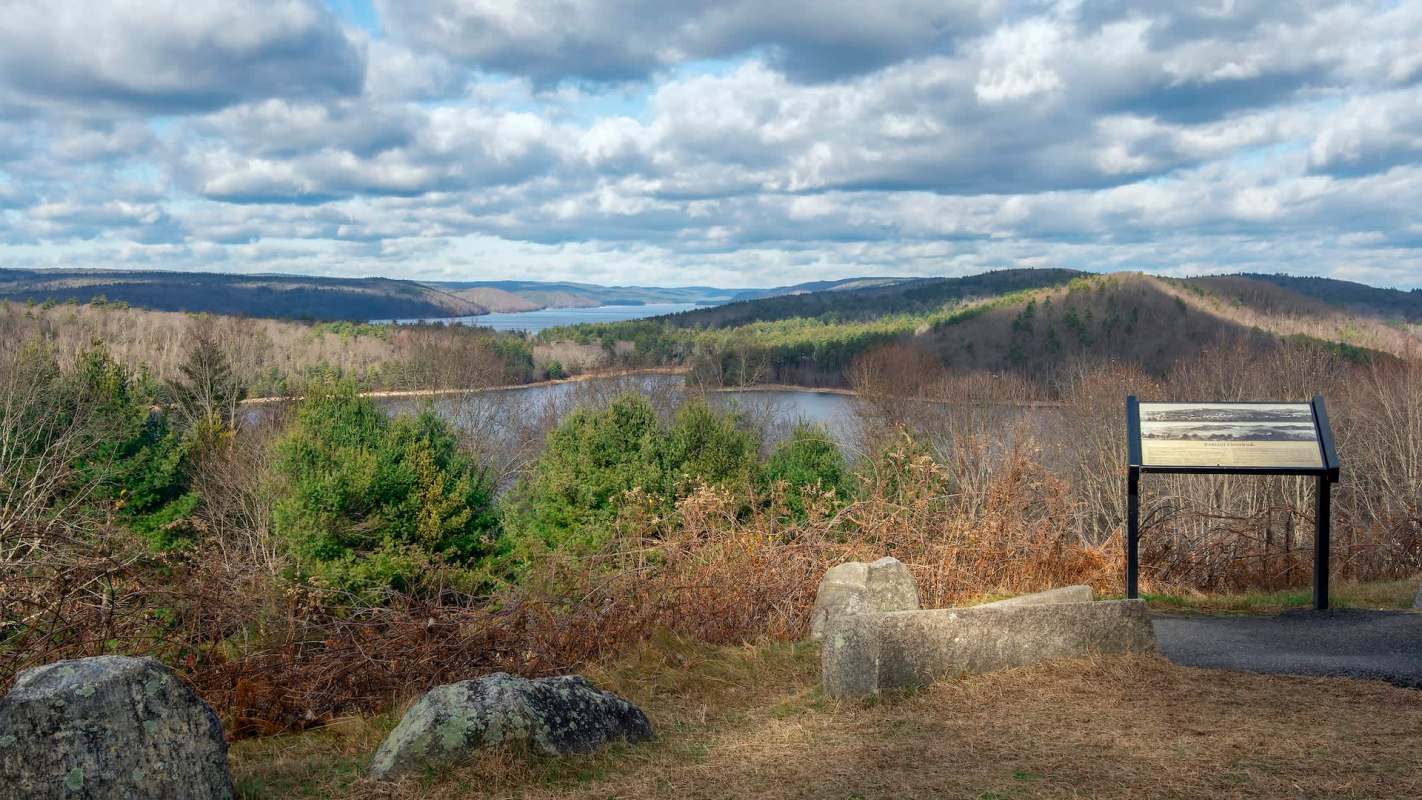
Greater Boston depends on the Quabbin Reservoir for drinking water, but towns near the reservoir say they carry much of the responsibility for protecting it without receiving a fair share of the benefits.
With drought conditions persisting, CommonWealth Beacon reported communities around the reservoir say that imbalance is becoming harder to bear.
Here's what to know
Even though seven towns help host the Quabbin and protect its watershed, they cannot draw from its water system. The manmade reservoir in Central Massachusetts supplies roughly 3.1 million people in Greater Boston, as the publication reported.
Those towns instead depend on local wells and other municipal sources that are more susceptible to drought and contamination. With Central Massachusetts in Level 2 significant drought, officials say an old frustration has become more urgent, per CommonWealth Beacon.
At a Massachusetts Water Resources Authority board meeting in Belchertown, senior reporter Jordan Wolman said "there was this just sense of desperation," according to the outlet.
That strain is already showing up in daily life. CommonWealth Beacon reported New Salem's town hall well failed, leaving staff without water or functioning restrooms, and Belchertown's fields were reportedly too dry for athletes to safely play soccer and football.
TCD Picks » Quince Spotlight
💡These best-sellers from Quince deliver affordable, sustainable luxury for all




"It just creates this dynamic that's festering of, 'Why do we live near the biggest body of water in Massachusetts and we can't drink from it? And we're struggling ourselves with access to water because of drought, because of contamination, whereas Greater Boston is fairly insulated from this,'" Wolman explained to the outlet.
More background
The conflict goes beyond who gets reservoir water. It also hits on land restrictions, tax revenue, and how the costs of protecting a key public resource are distributed.
Commonwealth Beacon noted that because the land around the reservoir is state-owned and tightly limited from development to preserve the watershed, host towns receive payments in lieu of taxes, or PILOTs. Local leaders say those payments do not adequately make up for what their communities have lost.
In New Salem, the payment works out to just $21 per acre, well below the statewide median of $127, per the outlet. More broadly, PILOT payments have stayed flat for five consecutive years for five of the seven host communities.
Local leaders say that shortfall limits investment in water infrastructure, public safety, and basic municipal services. The arrangement spurs conflict.
"It creates that sort of us-versus-them mentality, I think, that's started to really spill over here," Wolman explained to CommonWealth Beacon.
What's being done?
The issue is in front of state policymakers. The outlet reported negotiators are working behind closed doors on an environmental bond bill that includes the PILOT dispute, with implications for both reservoir towns and downstream water customers.
Massachusetts Gov. Maura Healey has also urged the MWRA to "more fully recognize" Quabbin communities, according to CommonWealth Beacon.
The MWRA has argued that higher payments could lead to steeper water rates for customers in lower-income communities including Chelsea and Everett.
"She's asking the MWRA to sort of take good faith measures to collaborate and partner with and coordinate with these towns on their water access concerns, on their local police and fire response," Wolman clarified to the outlet.

Get TCD's free newsletters for easy tips, smart advice, and a chance to earn $5,000 toward home upgrades. To see more stories like this one, change your Google preferences here.






