


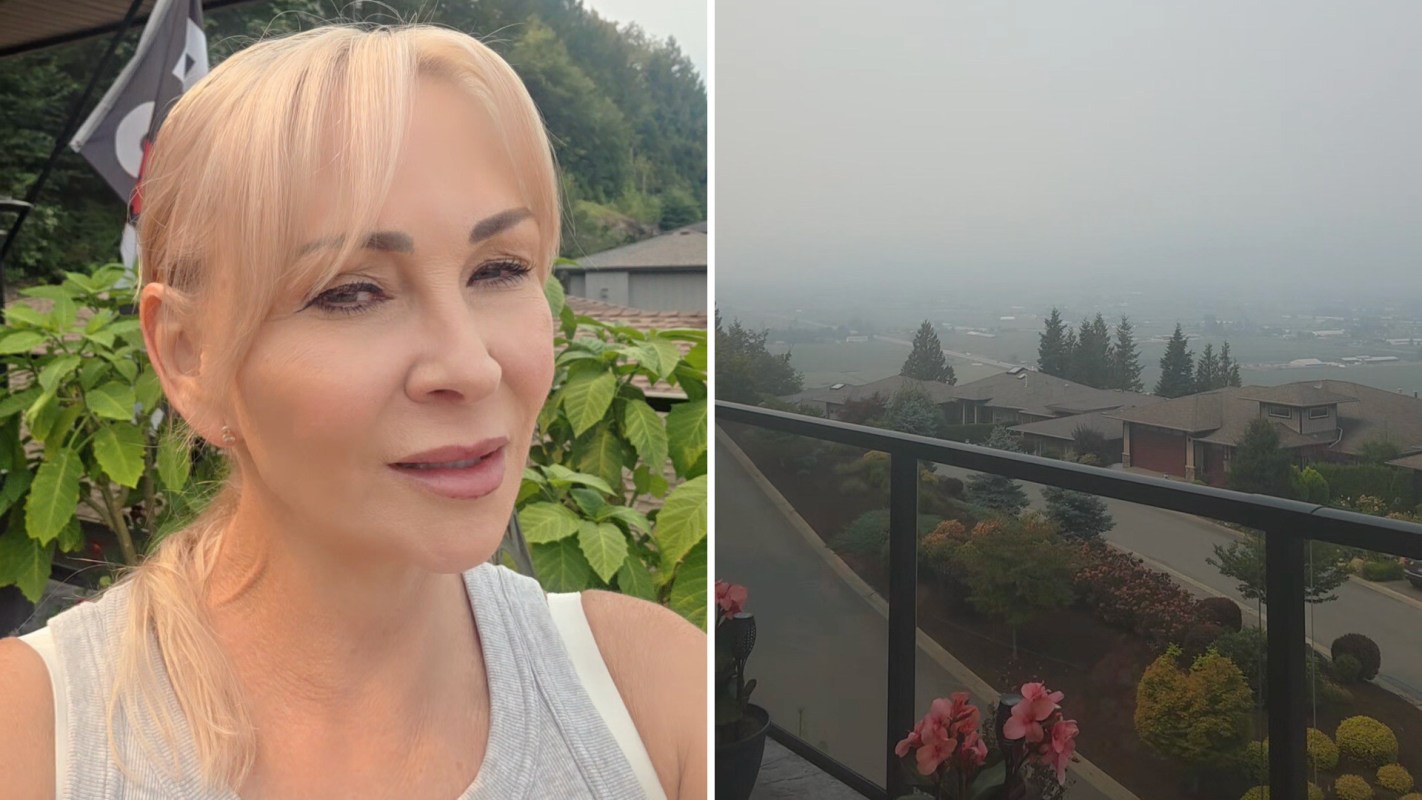
A TikTok from a resident of British Columbia has captured the everyday impact of wildfire smoke up close, with ash covering patio furniture and air that looks dense enough to cling to outdoor spaces.
Here's what to know
Baracuda Barbie (@baracudabarbie4.0) in the Lower Valley pointed out the ash outside and described the smoky air as hard to breathe.
"Look at that, you can taste it, you can hardly breathe, and there's ash on every table," she explained.
@baracudabarbie4.0 #britishcolumbia #smoke #fires #airquality #breathing ♬ original sound - Baracudabarbie4.0
One commenter wrote, "Happy Saturday from Mission, smoke is bad."
Another added, "I'm in Ok Falls, it's bad here."
By focusing on what smoke leaves behind, the clip makes exposure feel concrete. Instead of only showing haze in the distance, it highlights the residue from wildfire pollution, which can also be inhaled.
TCD Picks » Quince Spotlight
💡These best-sellers from Quince deliver affordable, sustainable luxury for all




Wildfire smoke can irritate the eyes and throat, worsen asthma, and put extra stress on the lungs and heart, especially for children, older adults, pregnant people, and anyone with existing health conditions.
More background
Wildfire smoke has become a recurring public health concern across parts of Canada, particularly during severe fire seasons. When smoke drifts into populated areas, it can limit outdoor activity, reduce visibility, and force people to change daily routines with little warning.
Worsening extreme weather disasters endanger lives and livelihoods in ways that extend far beyond property damage. Larger and more intense wildfires can threaten homes, disrupt schools and businesses, reduce farm productivity, delay travel, and increase medical risks for entire communities. For hourly workers, outdoor laborers, and small businesses, smoky conditions can also mean lost income and added costs.
The ash shown in the video is a visible sign of a bigger problem. Polluted air reaches places where people should feel safe, including their yards, patios, and neighborhoods. Even when flames are far away, smoke can turn a distant wildfire into an immediate health issue.
What can be done?
When wildfire smoke moves in, the most practical steps are to limit time outdoors, keep windows and doors closed, and use an air purifier or a clean HVAC filter to reduce indoor exposure.
If people need to be outside for work or essential errands, a well-fitted N95 or similar respirator can offer more protection than a cloth face covering. It can also help to check local air-quality alerts before exercising, commuting, or sending children out to play.
Communities can reduce risk by investing in cleaner indoor-air spaces, emergency response planning, and forest-management strategies that lower the odds of catastrophic fire behavior, but day-to-day protection during smoke events is still necessary.

Get TCD's free newsletters for easy tips, smart advice, and a chance to earn $5,000 toward home upgrades. To see more stories like this one, change your Google preferences here.







