


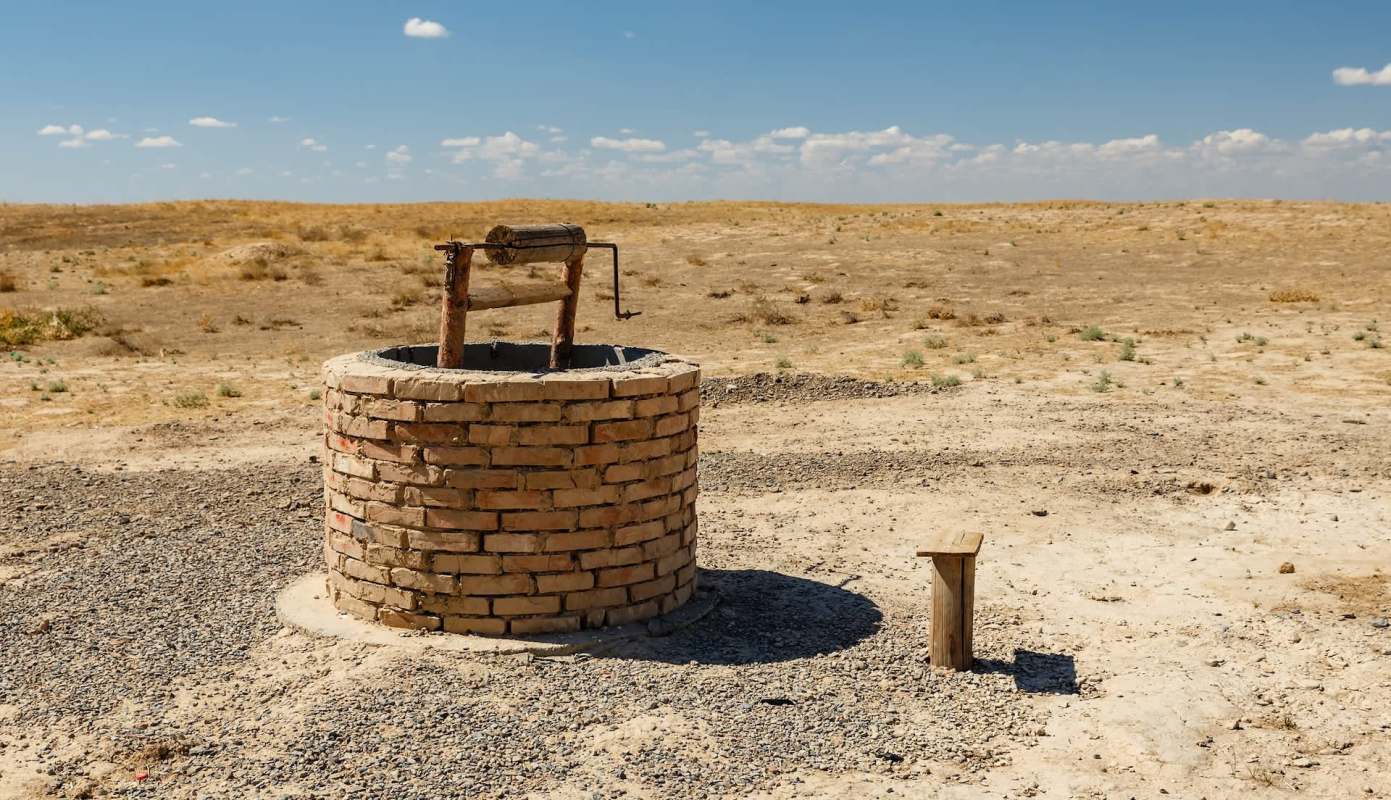
In southeastern Arizona, some homeowners are giving up on their wells and paying to have water trucked in instead.
Families in the Willcox Basin have experienced brown water, broken well casings, dead gardens, and have had to face up to the ongoing cost of securing enough water to drink, wash, and care for animals.
Here's what to know
According to the Arizona Daily Star, homeowner Hazard Hawk and his wife, Deborah, stopped using their well after repeated sediment problems turned the water so brown that they no longer believed it was safe for themselves or their four horses.
The couple now spends $200 every three weeks to have 2,500 gallons hauled to their Cochise County home, the outlet reported.
Well driller Brian Allen said he delivered the same grim assessment to two other nearby households, and the outlet cited local estimates that more than 100 drinking wells across the basin have gone dry.
State hydrogeologist Brian Conway told the outlet that the Richland-Sunsites area is subsiding by about two inches per year, suggesting that sinking land is compounding the effects of falling groundwater levels.
TCD Picks » Quince Spotlight
💡These best-sellers from Quince deliver affordable, sustainable luxury for all




Allen said the damage pattern was the same in the three nearby failures: "For all three of them, the well casing broke."
Another resident, Randy Redhawk, said his well's output collapsed from 26 gallons a minute to roughly 1 gallon an hour.
"A month later, the well 'totally went out,'" he told the Arizona Daily Star.
More background
Since his well failed, Redhawk said he has been hauling water himself, relying on an outhouse to stretch supplies, and letting his crops at a community garden die.
Redhawk said subsidence can bury pumps and ruin the systems residents depend on.
"We lost all of our wells," Redhawk said of the Richland residents. "The pumps got covered" because of subsidence, he told the Arizona Daily Star.
Groups focused on the basin say irrigation, not household use, has put the aquifer under heavy pressure because farms consume far more water than households.
Steve Kisiel, who leads Cochise Groundwater Stewards, told the outlet that many residential wells could eventually fail if pumping stays at current levels.
"The drought only makes things worse," he told the Arizona Daily Star. "Everyone here knows or should know it's just a matter of when, not if, their well will run out of water."
What's being done?
According to the outlet, state regulators want most farmers in the 1,911-square-mile Willcox Basin to reduce water use by 10% starting in 2029. The plan comes after years of conflict over disappearing groundwater, but local activists say it is far from enough to protect household wells.
The Arizona Daily Star reported that an $11 million well replacement program grew out of an early-2026 legal settlement between Riverview LLP and Arizona Attorney General Kris Mayes.
Louis Manuta, president of People for the Playa Water Resources, said his nonprofit is helping residents through the process and covering hauled-water costs in the meantime.
According to the Arizona Daily Star, the Attorney General's Office said 17 families have received funding totaling $389,483 for new wells. Manuta said another "40 to 50 applications" have been stalled while a separate fund is created and reviewed.
Water hauling helps households get by, but it does not address the underlying problem of a shrinking aquifer.
As Manuta put it: "It's only getting worse. So many wells have gone dry in the last few months. Most people can't afford new wells. Without a really strong, enforceable management plan, it's only going to accelerate."

Get TCD's free newsletters for easy tips, smart advice, and a chance to earn $5,000 toward home upgrades. To see more stories like this one, change your Google preferences here.







