


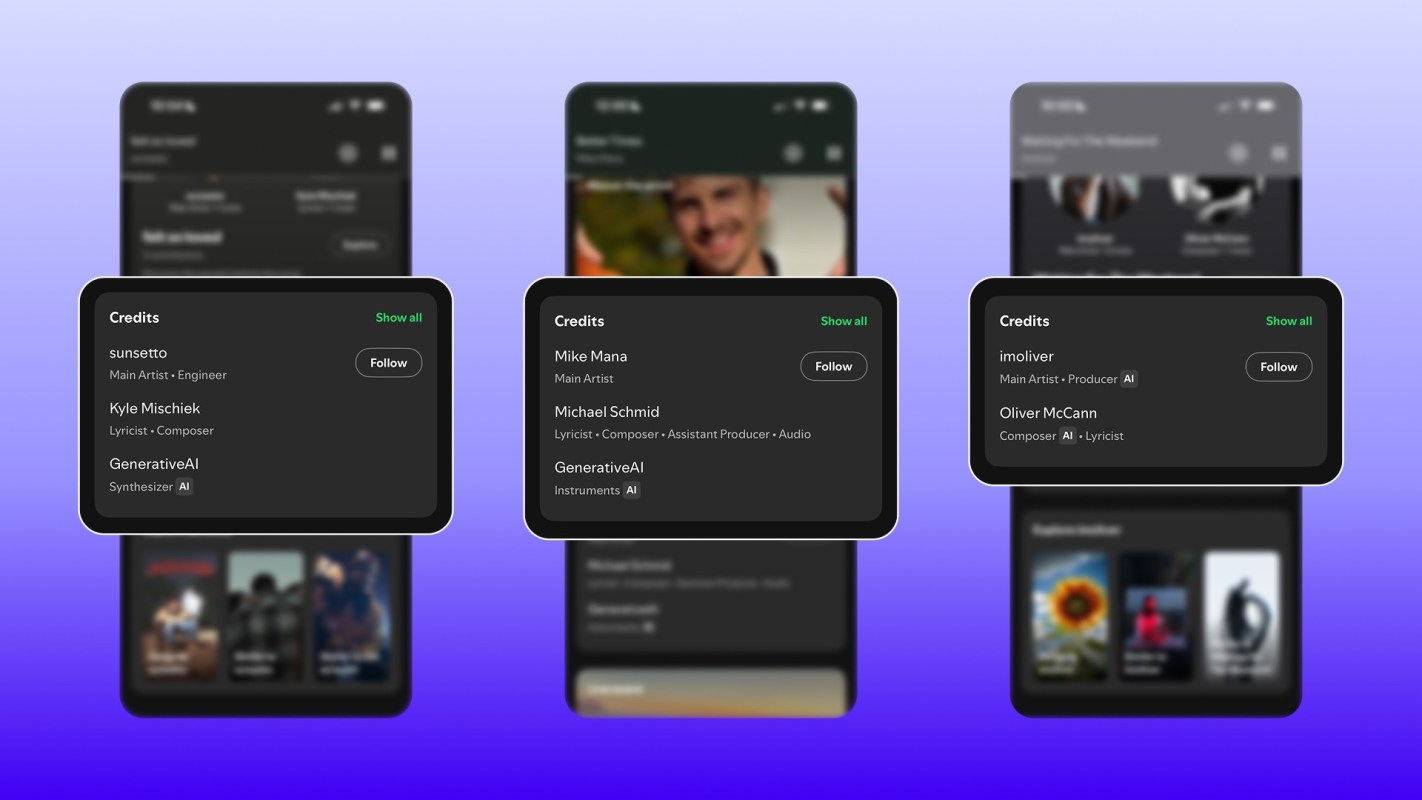
Spotting AI-generated content online is getting easier as the web is filling up with machine-made material, from music and avatars to bland, formulaic posts. In response, platforms are starting to add warning labels and detection features to give users a heads-up on AI-produced content, according to New York Magazine.
The scoop
As AI is swamping the internet, a growing group of platforms are experimenting with disclosure methods. TikTok, YouTube, and Meta mark at least some AI-made material; Substack works with Pangram so writers can check whether text appears to have used AI; and Spotify says it plans to identify music generated by AI. The push comes as user frustration with spammy, assembly-line content continues to rise.
Spotify said, "Listeners have been clear in telling us that they don't like seeing an artist profile that seems human, only to find out that the persona is AI-generated."
Part of that pressure has come from the European Union, which requires chatbot and generative AI providers to alert users when they are interacting with AI and to tag outputs in a machine-readable format so they can be recognized as artificial or altered.
Why is this important?
Only a few years into the era of easily generated AI images, videos, and text, the status quo is dismal. The output, or slopaganda, is what many are calling a crisis.
While AI-produced image watermarks have become common among companies such as Google, OpenAI, and Meta, text has proved harder to tag. Anthropic is trying to change that with a Claude text-watermarking approach, a development that could have major implications for schools, workplaces, and social platforms.
TCD Picks » Quince Spotlight
💡These best-sellers from Quince deliver affordable, sustainable luxury for all




Even without an official label, AI-written text often stands out to readers. Programmer Werner Robitza described Claude's style as "unmistakable," as it talks as if it's "proving its reasoning rather than informing a reader."
What's being done?
Anthropic says its watermark is designed to remain attached to text even after it is shared.
"Because the watermark is part of the text, it will travel with the text when it's copied and pasted elsewhere, and may persist through some editing," the company said.

Get TCD's free newsletters for easy tips, smart advice, and a chance to earn $5,000 toward home upgrades. To see more stories like this one, change your Google preferences here.






