


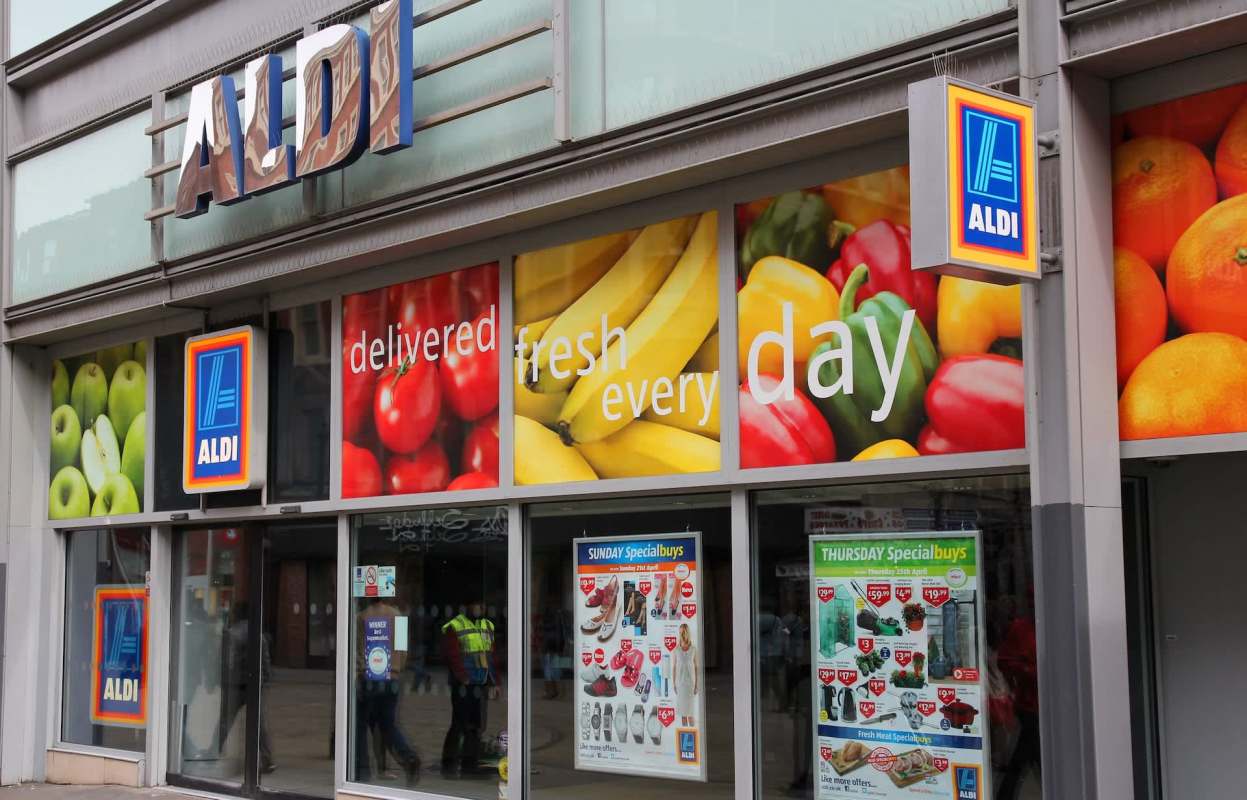
Grocery bills are already stretching household budgets, and Aldi's top executive is now publicly backing a U.K. government push to crack down on so-called "rip-off" promotions, arguing that flashy savings claims can still leave people paying more than they should.
The comments add to a broader debate over whether supermarkets are making it harder for customers to tell what a real bargain actually is, City A.M. reported.
Here's what to know
Giles Hurley, Aldi's chief executive, agreed that the government was "right" to go after misleading discounts and promotions.
A sign advertising a discount does not automatically mean a product is competitively priced.
"For too long, shoppers have been bombarded with discount signs and loyalty prices that can give the impression they're getting a great deal, when the price they pay at the till can still be higher than elsewhere," Hurley acknowledged.
The criticism targets a common retail strategy that encourages shoppers to focus on the feeling of saving money rather than the reality of what they are spending.
TCD Picks » Quince Spotlight
💡These best-sellers from Quince deliver affordable, sustainable luxury for all




The dispute comes as UK officials increased pressure on retailers amid cost-of-living concerns.
Backing that approach, Prime Minister Andy Burnham stated that Westminster "has got used to telling people that everyday hassles" such as fake discounts and subscription traps "are just a part of life."
"I don't think that's right, especially when the cost of living continues to weigh heavily on so many people's lives," Burnham commented.
Hurley also took aim at loyalty pricing used by competitors — including Tesco's Clubcard and Sainsbury's Nectar card — saying those schemes can make it harder for shoppers to judge value at checkout, City A.M. reported.
More background
Hurley did not pull punches when discussing tricks supermarkets use to feign markdowns.
"The problem with loyalty pricing is that it encourages shoppers to focus on how much they've supposedly saved, rather than how much they've actually spent," he explained.
"Taking £2 off a £6 product doesn't make it good value if you can buy it for £3 somewhere else."
The criticism was part of a broader clash between government officials and retailers over alleged profiteering.
The row also pulled in Chancellor John Healey, who warned shops not to take consumers "for a ride at the pump or the till," while the British Retail Consortium pushed back on claims that supermarkets are cashing in.
"It's not helpful for the Chancellor to label retailers as potential profiteers when it's one of the UK's lowest margin industries," said Jim Bligh, corporate affairs director at the British Retail Consortium.
That makes Aldi's intervention notable, because the support is coming from a major supermarket rather than a regulator or consumer watchdog.
What's being done?
The proposed crackdown targets fake discounts and other pricing practices that can make comparison shopping more difficult.
If regulators tighten the rules, retailers could face greater pressure to present prices more clearly and stop using promotions that create a false sense of urgency or savings.
A big markdown helps only if the resulting price is actually lower than competing options.
"And when so-called special prices are running week after week, shoppers are entitled to ask what the real price actually is," Hurley stated.
"A permanent promotion isn't the same as a permanently low price."

Get TCD's free newsletters for easy tips, smart advice, and a chance to earn $5,000 toward home upgrades. To see more stories like this one, change your Google preferences here.







