


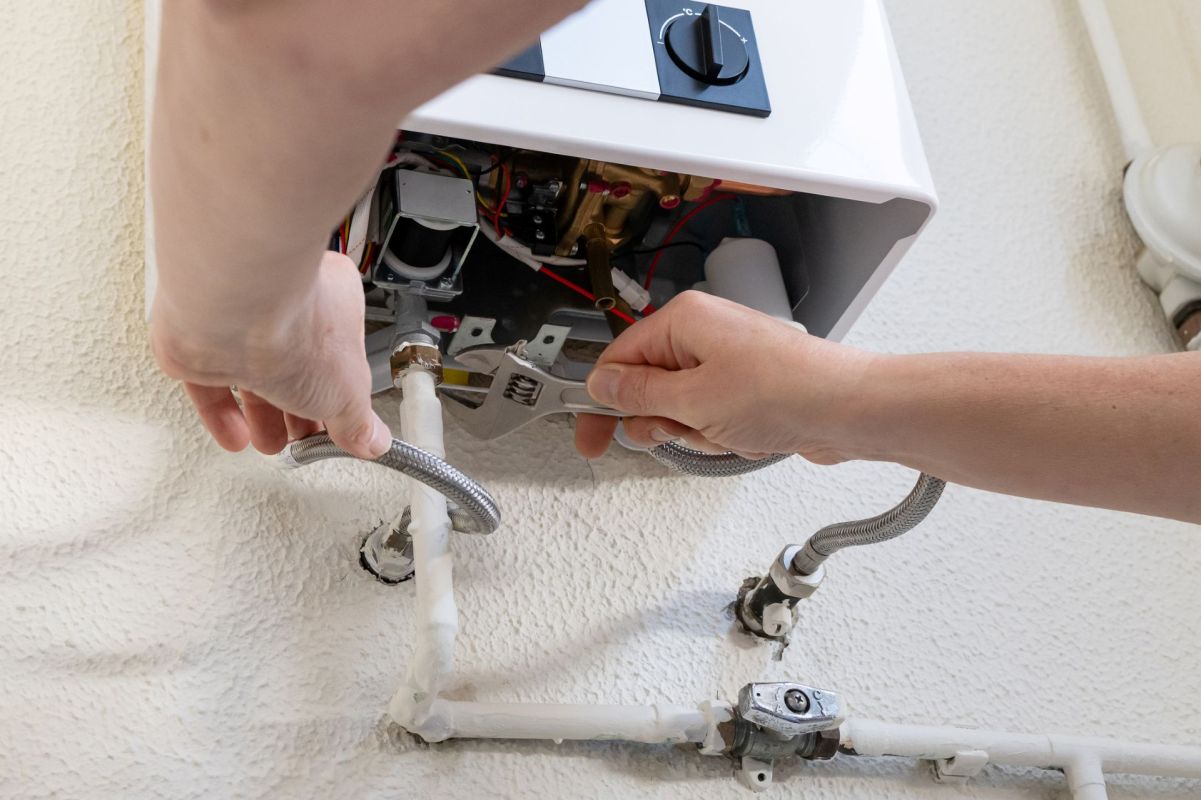
One Atlanta homeowner thought a warranty would soften the blow after their tankless water heater failed.
Instead, they received a $2,300 labor quote just to install the covered replacement.
Here's what to know
A homeowner posting in Reddit's r/AskAPlumber community said their Rheem ECOH200 gas-fired condensing tankless model had triggered an "Er:45 internal leak" alert.
The manufacturer would supply a replacement unit under the warranty, but the installation cost would still fall on them (the homeowner).
The original poster asked the community of plumbers whether the $2,300 figure seemed too high and whether they should even replace the unit, given that the original one failed so quickly. They also asked whether a $5,000 Navien unit would be worth it.
One commenter wrote: "$2,300 is INSANE for an even model swap. Get the same unit and call around for install. I guarantee you can find a licensed plumber for $600 to swap."
A second user advised, "Spend the money and get the Navien." Another added: "If you are changing out the same exact model and the hookups are the same, you might consider doing it yourself. By the way, Rheem usually makes a good product, although every manufacturer spits out a dud from time to time."
More background
The labor figure sparked sharply different reactions, which helps explain why homeowners can struggle to tell whether a quote is reasonable. Despite the one commenter calling the $2,300 swap price "insane," another licensed plumber in the area said the homeowner would "NEVER find a licensed plumber to swap that out for $600 or less."
Save $10,000 on solar panels without even sharing your phone number Want to go solar but not sure who to trust? EnergySage has your back with free and transparent quotes from fully vetted providers in your area. To get started, just answer a few questions about your home — no phone number required. Within a day or two, EnergySage will email you the best options for your needs, and their expert advisers can help you compare quotes and pick a winner. Solar panels can save you more than $50k over their 25-year lifespan, and EnergySage can help you save as much as $10k on installation. Which begs the question — isn't that worth an email or two? |

Given how much can be buried inside a quote, it often makes sense to get several and press for specifics. Homeowners may want to confirm whether the price is for a direct swap or includes other upgrades, whether labor is covered, how long the replacement warranty lasts, and whether the installation will actually solve any recirculation issues.
It can also be worth comparing entirely different technologies before committing. For example, Cala makes smart heat pump water heaters. Its kind of scheduling and load management can make a major difference for families with predictable morning and evening hot-water demand. In the right home, it can offer a lower-cost path over time than simply replacing one conventional unit with another.
Smart controls can also help households avoid wasting energy by keeping water hot when nobody needs it. For shoppers exploring alternatives, Cala is part of a growing market focused on making water heating more efficient, more responsive, and less expensive to operate.

Get TCD's free newsletters for easy tips, smart advice, and a chance to earn $5,000 toward home upgrades. To see more stories like this one, change your Google preferences here.






