


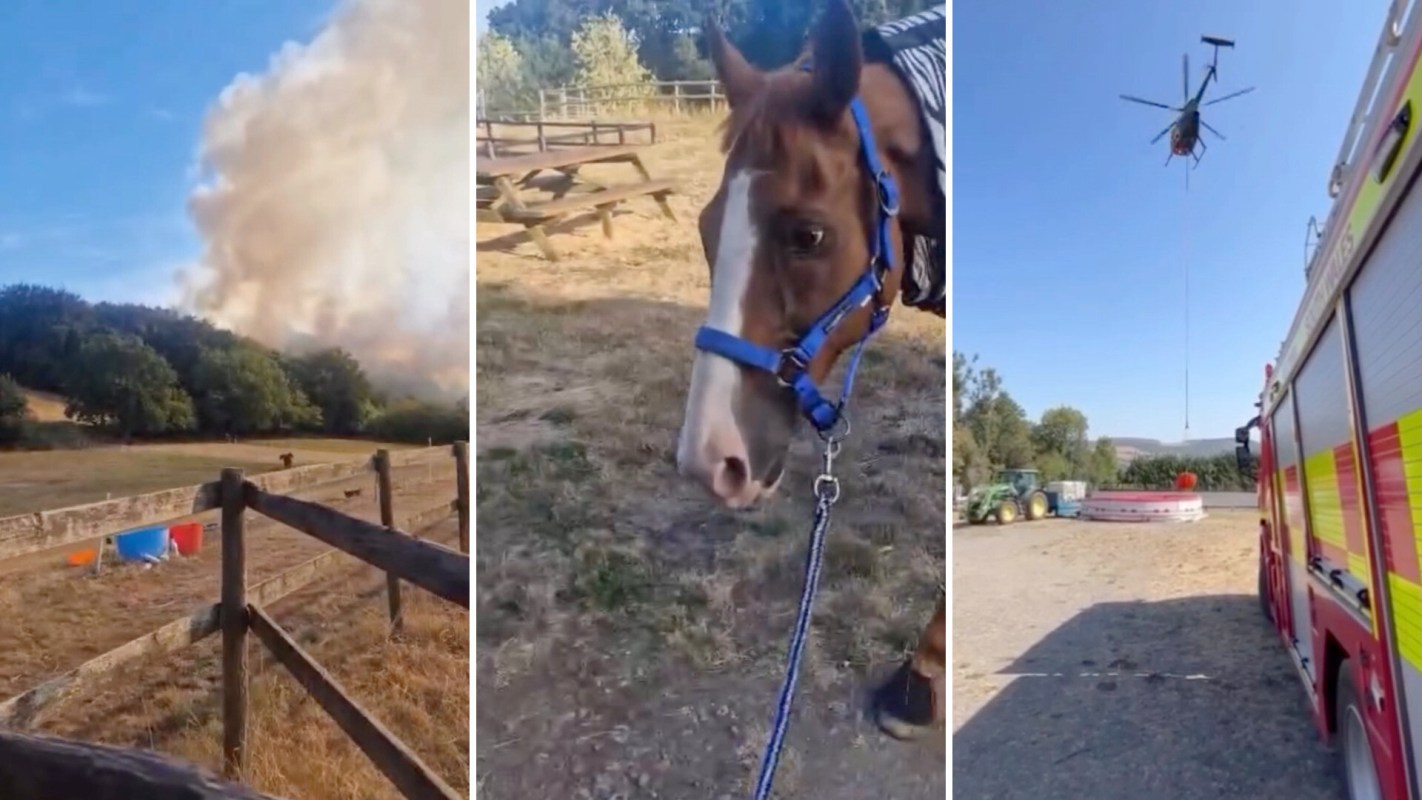
For one resident of a smallholding in Wales, the heatwave became an immediate crisis when a nearby wildfire forced them to move their animals to safety.
Dr. Rhys Jones (@drjoneswales), an associate professor at Cardiff University, used the post to spotlight firefighters, saying they had been working through the night in full PPE despite the extreme heat.
Here's what to know
The experience was shared in an Instagram post from Wales, where Jones documented the movement of animals as a wildfire burned nearby.
In the video, he can be heard urging one animal forward: "Come up, we gotta take you in. Come on, let's go head on the bottom, sweet pea."
While assuring viewers that "everyone is safe," Jones wrote, "I've been in big forest fires in East Africa, but never thought we would be moving our animals out of harm's way here in Wales."
He also praised the fire service for continuing its response through the night during a heatwave.
TCD Picks » Quince Spotlight
💡These best-sellers from Quince deliver affordable, sustainable luxury for all




Heatwaves can dry out grasses, brush, and other vegetation, making fires easier to spread and harder for emergency crews to contain.
Among the responses was a message that combined sympathy with appreciation for first responders: "Firefighters do such an amazing job. We've just been through a similar experience in Suffolk. Hope all stay safe and well."
More background
Wildfires are often associated with hotter, drier regions, but prolonged heat and drought can raise the threat in places that may not fit people's usual expectations.
Worsening extreme weather disasters endanger lives and livelihoods by putting homes, farms, animals, and entire communities at risk.
Smoke can threaten public health, especially for children, older adults, and people with respiratory conditions.
Evacuations disrupt daily life and work, while property damage, lost grazing land, and emergency response costs can strain household finances and local economies.
For smallholders and farmers, the danger is especially immediate. Protecting animals in an emergency takes time, space, transport, and calm under pressure — all while fire conditions can change quickly.
Another response was brief: "They are heroes."
What can be done?
At the community level, the most immediate protection comes from well-supported fire services and emergency planning. Fast-moving fires are harder to manage during heatwaves, so preparedness — from staffing to equipment to evacuation coordination — can make a major difference.
Reducing dry fuel around homes, barns, and outbuildings can also help lower risk. That may include clearing dead vegetation, maintaining defensible space where appropriate, and having a plan for who will help move animals if an evacuation becomes necessary.

Get TCD's free newsletters for easy tips, smart advice, and a chance to earn $5,000 toward home upgrades. To see more stories like this one, change your Google preferences here.







