


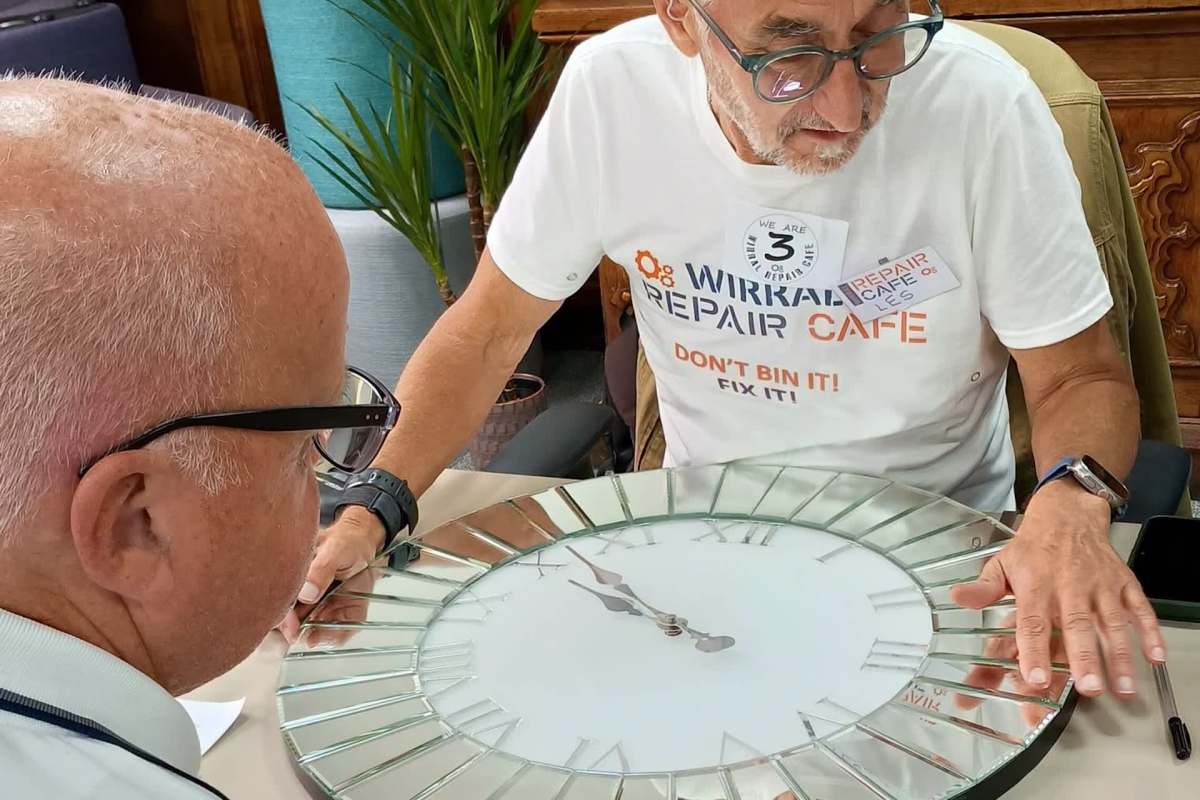
A volunteer-run repair café in northwest England is challenging the habit of replacing everyday items as soon as they break, fixing kettles, clocks, and toys.
As the Wirral Globe reported, the project connects residents with skilled volunteers to keep household goods out of the trash.
Here's what to know
The Wirral Repair Café has been active since 2023 and belongs to the worldwide Repair Cafés network, which started in Amsterdam in 2009.
The repair café's mission aligns with the broader "right to repair" movement, which argues that products should be designed so consumers and independent repairers can open them, replace parts, and keep them in use longer. The issue affects household budgets and the growing waste problem tied to electronics and appliances that are difficult to fix.
Only repairs that can be completed during a session are taken on, which keeps the work focused on small, manageable items. After arriving, visitors complete a form, get a number, and are paired with a volunteer whose skills match the job, the Globe reported.
Beyond the repair tables, the organizers say they are pressing for stronger repair rights in the United Kingdom. Co-founded by Barbara Gleave and Kate Jenner, the café is part of that effort.
TCD Picks » Quince Spotlight
💡These best-sellers from Quince deliver affordable, sustainable luxury for all




Gleave told the Globe that lawmakers need to change course. "We're pushing them," she said. "We're really trying to put pressure on lawmakers to change their attitude."
For each job, the group logs information including the item's make and model and whether the repair succeeded, then passes it along to the network. That shared record can show which brands and products are hardest to fix.
More background
The Wirral Repair Café also points to "built-in obsolescence," the idea that some modern products are designed to have short lifespans or include frustrating barriers to repair. When replacing an item is easier than fixing it, consumers spend more over time while more discarded goods accumulate in landfills.
There has been movement elsewhere. Canada adopted a national right-to-repair law in 2024, and states including New York and California have passed similar measures. In Europe, manufacturers must provide affordable spare parts and avoid software blocks, and France requires manufacturers to display a product's repairability index from 1 to 10.
The café can also serve people who no longer have a neighborhood repair shop to turn to.
What's being done?
Local repair events offer quick, practical answers for people wanting to avoid replacement costs and keep sentimental belongings.
That hands-on approach also builds community.
Advocates are focused on legislation, arguing for rules that make products easier to repair through better access to parts, fewer design barriers, and greater transparency from manufacturers.

Get TCD's free newsletters for easy tips, smart advice, and a chance to earn $5,000 toward home upgrades. To see more stories like this one, change your Google preferences here.







