


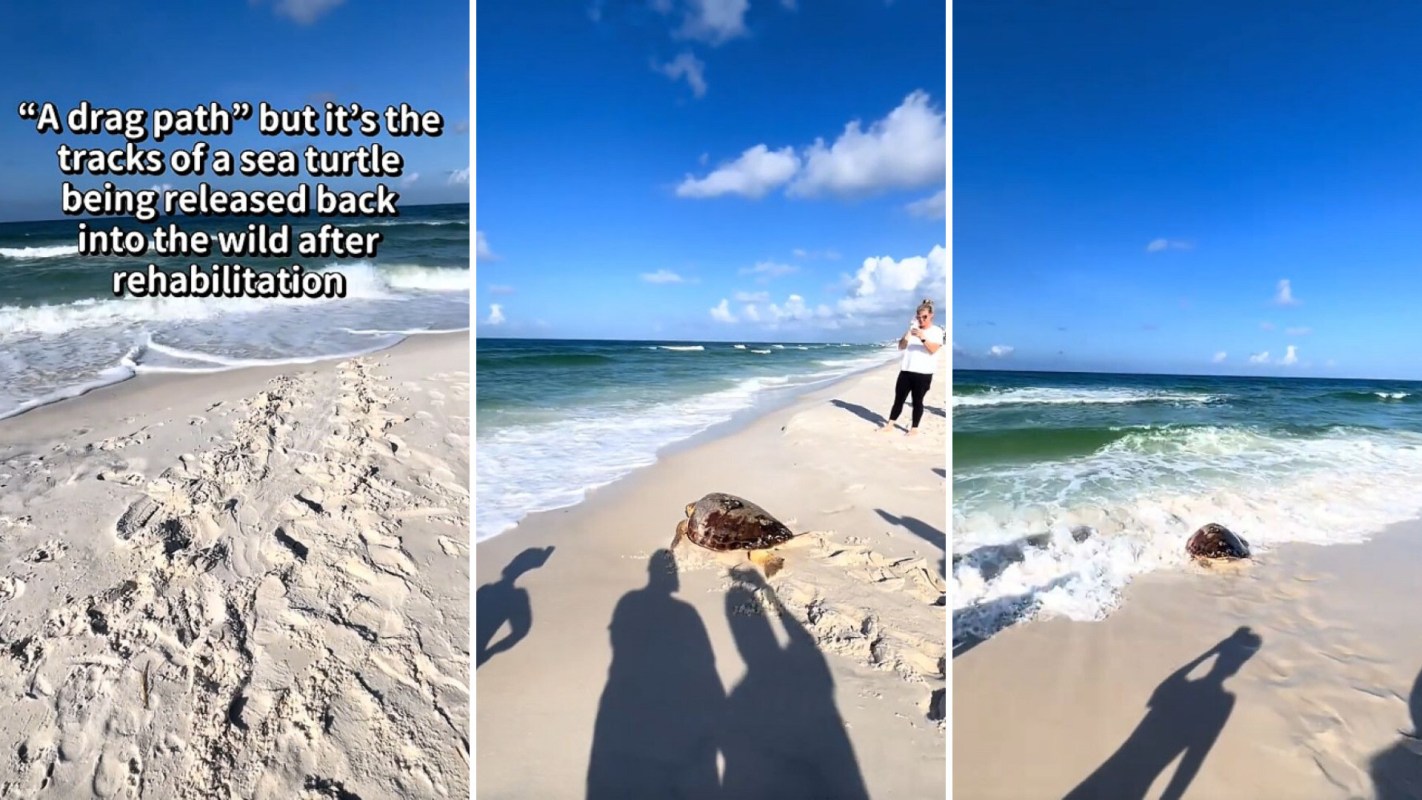
The bittersweet reality of sea turtle rehabilitation was beautifully captured in a TikTok showcasing the moment when one was released back into the ocean where it belongs.
Here's what to know
In the post, Carley on the Coast (@carleyonthecoast) highlighted the sea turtle and other marine wildlife her rehab team cared for before those animals returned to the ocean.
"So proud of all of our patients and what they overcome through rehabilitation," she wrote. "We love our patients so much. We hope we never see them again because that hopefully means they are swimming free, happy, and healthy and don't need our help."
One commenter wrote, "The way I'd cry forever." Another added: "Thank you for sharing. I would cry and cry. I love them so much."
@carleyonthecoast So proud of all of our patients and what they overcome through rehabilitation❤️🐢 We love our patients so much, we hope we never see them again because that hopefully means they are swimming free, happy, and healthy and don't need our help. I love watching those tracks wash away knowing they are back in the wild where they belong❤️ #seaturtle #seaturtles #seaturtlerehab #seaturtlerelease #seaturtleconservation ♬ Drag Path - twenty one pilots
Why is this important?
Sea turtle rehabilitation is crucial to ocean health. When injured, sick, or stranded animals can be treated and returned to the wild, it supports healthy marine ecosystems that coastal communities depend on.
Sea turtles play an important role in ocean food webs, and their survival is tied to the health of seagrass beds, reefs, and beaches. Those systems, in turn, support fishing, tourism, and shoreline resilience. That means every successful release carries value beyond the story of one animal.
TCD Picks » Quince Spotlight
💡These best-sellers from Quince deliver affordable, sustainable luxury for all




The goal of wildlife rehabilitation is not to keep wild animals under human protection but to help them recover so they can get back where they belong and survive on their own.
What's being done?
Licensed wildlife rehab teams provide direct care for vulnerable marine animals, including exams, treatments, cleanings, and releases meant to avoid additional harm.
Public education is a major part of conservation efforts. By sharing rescue and release moments, rehab workers can build support while showcasing the amazing work they do.
If you encounter an injured or distressed sea turtle or other marine animal, the safest move is almost always to contact a licensed wildlife rescue, stranding network, or conservation authority rather than trying a hands-on rescue.
Support can also take smaller forms, including respecting protected beach areas, reducing litter that can end up in the ocean, and backing organizations that care for injured wildlife. Every little bit helps create safer conditions for animals and stronger coastlines for communities.
"I love watching those tracks wash away knowing they are back in the wild where they belong," Carley wrote.

Get TCD's free newsletters for easy tips, smart advice, and a chance to earn $5,000 toward home upgrades. To see more stories like this one, change your Google preferences here.







