


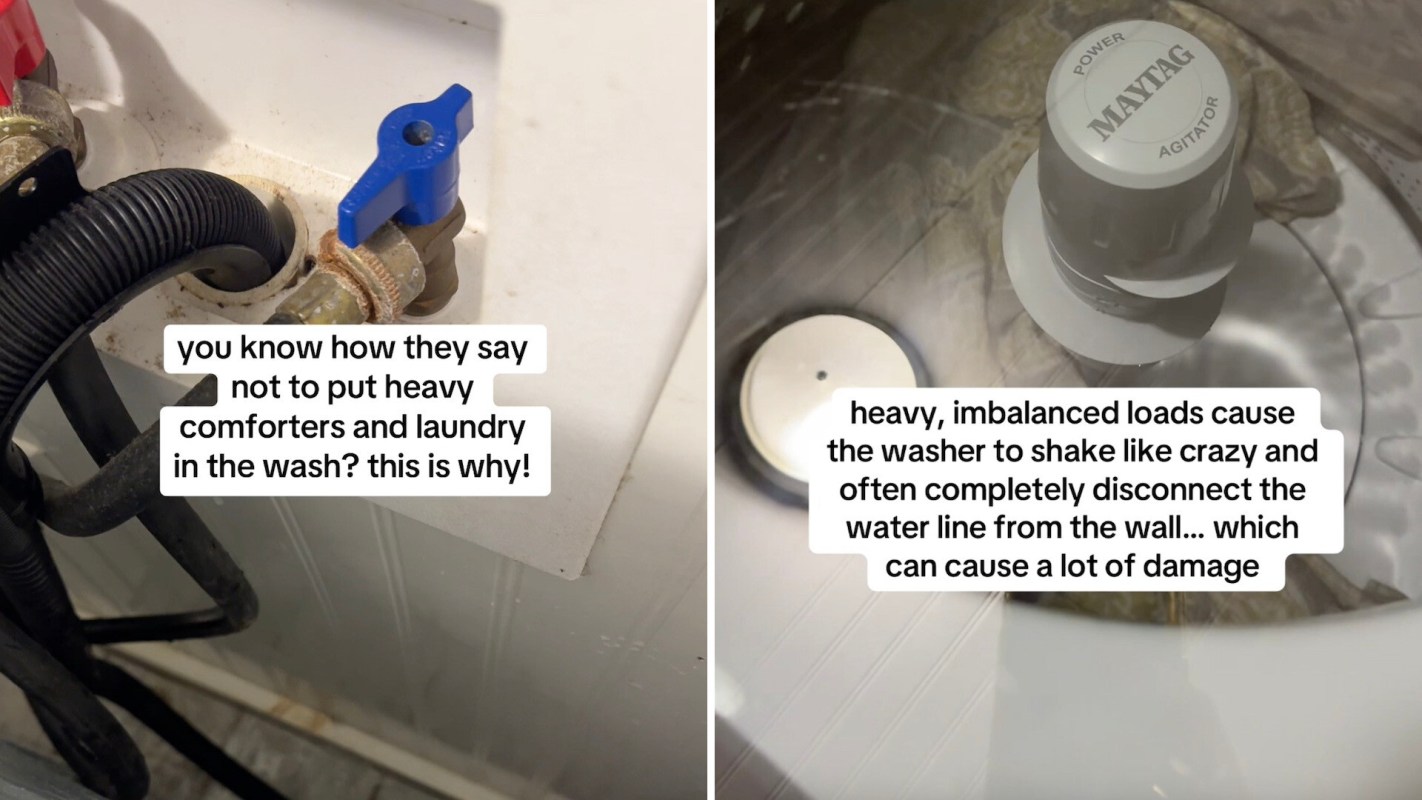
A washer hose coming loose can turn an ordinary laundry cycle into a home-repair headache in minutes.
But in one appliance-repair video, a single setup choice prevented a much more expensive mess.
Here's what to know
Total Repair Pros (@totalrepairpros) posted a TikTok video of a service call involving a washer failure.
"Thankfully this person's washer/dryer is in an external closet so not too much damage was done," the caption read.
@totalrepairpros thankfully this persons w/d is in an external closet so not too much damage was done #homeowner #homeownertips #appliancerepair #laundry #oop ♬ Saxophones getting louder - Sped Up - AntonioVivald
A popped drain hose can send water across the floor fast, and when a laundry machine sits in a hallway, mudroom, or upstairs closet, the damage can spread to flooring, baseboards, drywall, ceilings, and insulation.
That kind of placement will not stop a leak, but it can keep the mess more contained and lower the chances of a much bigger repair bill.
TCD Picks » Quince Spotlight
💡These best-sellers from Quince deliver affordable, sustainable luxury for all




"The drain hose popped off!" one commenter wrote. "That's a super easy fix, you just need a pair of pliers, put the hose back on the drain hole, and take that metal ring on the hose and move it up using your pliers. The metal ring holds the hose onto the machine."
Another commenter added a warning about load size: "That's why you don't put heavy comforters in your washer. Your drain hose wasn't connected properly and wiggled loose. Your washer still isn't rated for a wet comforter."
More background
People often ignore laundry appliances until a failure spills beyond the machine itself. Even a relatively simple hose issue can lead to cleanup costs, while water-damage remediation expenses can climb quickly if flooring or walls need to be replaced.
A laundry setup in an exterior closet, a spot near the garage, or another contained area still can leak, but it may limit how much of the home the water reaches.
Overloading washers with bulky bedding is a common laundry problem. Wet comforters and quilts can become extremely heavy, increasing vibration and strain on hoses and connections even when the machine appears large enough at first glance.
What can be done?
Start with the easiest fix: inspect the drain hose and clamp connection. If the hose is loose, cracked, or poorly secured, a small adjustment or low-cost replacement may prevent a future leak and spare you a much larger water-damage bill.
It also helps to double-check what your washer is actually rated to handle. Large comforters, quilts, and other bulky items can push a machine beyond its practical limit once soaked.
When in doubt, using a gentler cycle, washing smaller loads, or taking oversized bedding to a commercial machine can be cheaper than paying for a repair visit.
If you are planning a renovation or moving appliances, consider where the laundry setup will go before finalizing the plan.
A more isolated laundry setup, especially one with good drainage and easy-to-clean surfaces, can reduce the impact of indoor flooding and potentially save money. If a load starts thumping or going badly off-balance, stopping it early may help.

Get TCD's free newsletters for easy tips, smart advice, and a chance to earn $5,000 toward home upgrades. To see more stories like this one, change your Google preferences here.






