


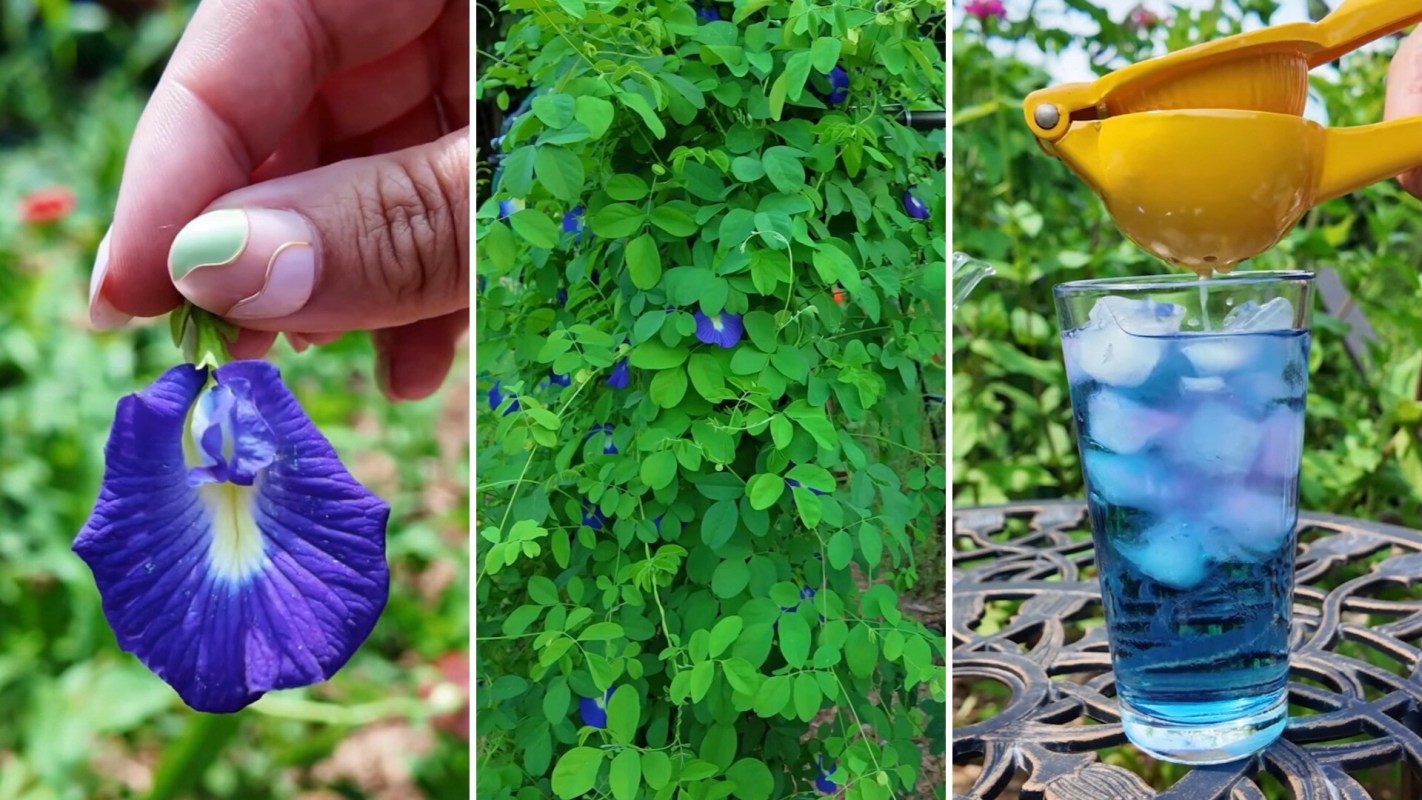
An edible flower that brews bright blue tea and turns purple-pink with a squeeze of lemon is sparking fascination for more than just its appearance.
Butterfly pea also offers a practical backyard benefit: It's a fast-climbing summer vine with pollinator appeal, as well as a homegrown ingredient that can elevate drinks without artificial dyes.
Here's what to know
In a YouTube video, Meg of Meg Grows Plants (@meggrowsplants) showed viewers how to grow butterfly pea from sowing to harvest, calling it "one of the easiest and most rewarding edible flowers you can grow."
Because butterfly pea is a tropical legume, Meg said it prefers hot, sunny conditions and can help enrich soil by fixing nitrogen. She advised gardeners in cooler areas to start seeds indoors before the last frost, since the plant can be slow to get going at first.
Meg said, "This might be the coolest, most whimsical, most magical flower you could ever possibly grow in your garden." A big reason is the bloom itself: fresh or dried flowers can be steeped to make an electric-blue tea that shifts to purple-pink when lemon or lime juice is added.
Commenters shared their own experiences, too, including one gardener who wrote: "With the 2nd sowing I kept the seed trays up to a month to make sure every seed sprouted. I had germination even past 21 days so be patient with these seeds."
TCD Picks » Quince Spotlight
💡These best-sellers from Quince deliver affordable, sustainable luxury for all




More background
The plant is ornamental, edible, and useful in the kitchen while also attracting bees and hummingbirds. For home gardeners, that kind of multipurpose plant can help a small yard, raised bed, or container setup go further.
Growing even part of your own food or tea ingredients can help reduce grocery costs, and many people find that homegrown harvests taste fresher than store-bought options. Time spent gardening can also support physical activity and mental well-being, especially when the reward is something both beautiful and useful.
Seed starting is where growers may need the most patience. Meg said the hard-coated seeds benefit from scarifying or soaking, and because the plant dislikes root disturbance, she recommends soil blocking or biodegradable starters to reduce transplant stress.
After that early stage, though, the vine seems fairly easy to manage. Meg reported "virtually no pest pressure at all" and said the blossoms are so clean that she does not even rinse them before drying.
What can be done?
According to Meg, butterfly pea does best in full sun and needs something substantial to climb, such as a sturdy trellis or fence.
Regular harvesting can help the plant keep producing. Meg explained that flowers left on the vine start turning into seed pods, which can reduce blooming, so picking daily both encourages more flowers and helps gardeners build a supply for tea.
Meg said the flowers can be dried in a dehydrator and then kept in an airtight container out of the sun for up to a year. That makes butterfly pea useful for gardeners who want a longer-lasting homegrown ingredient.
One commenter summed up the payoff simply: "My transplants did not make it, I ended up direct sowing and I am getting flowers now! We made the lemonade tonight it was so fun! I'm so glad I didn't give up!"

Get TCD's free newsletters for easy tips, smart advice, and a chance to earn $5,000 toward home upgrades. To see more stories like this one, change your Google preferences here.







