


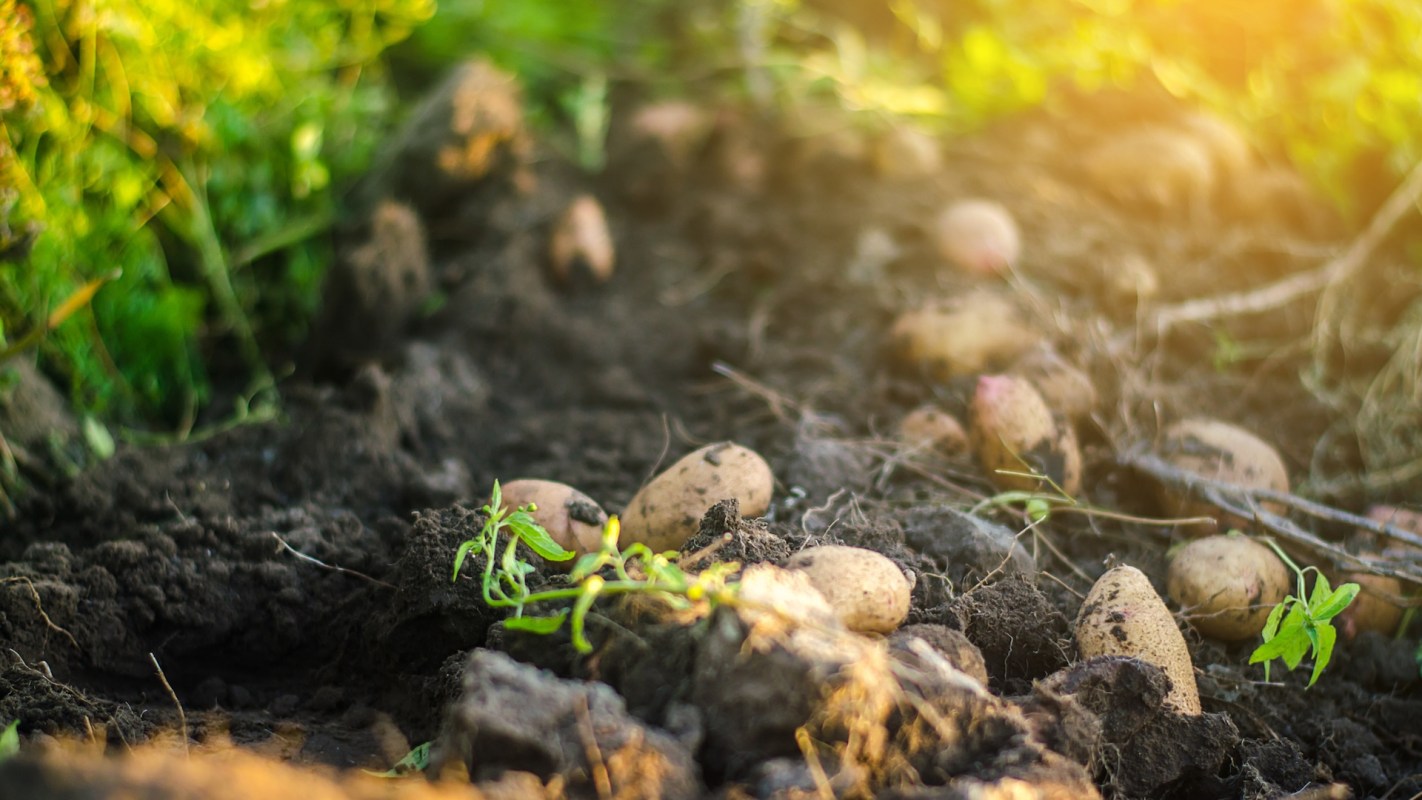
Record temperatures sweeping East Asia are showing up even beneath the soil in South Korea, where a farmer said potatoes that had appeared healthy ended up underground "like boiled potatoes," The Guardian reported.
The damage extends well beyond one field, with extreme heat battering people, animals, harvests, and the local economies that depend on them across the region.
Here's what to know
About 80 miles northeast of Seoul in Yanggu county, farmer Lee Sang-hyuk said a crop that looked healthy was now turning soft and collapsing in the soil.
His losses were part of a broader hot spell affecting South Korea, Japan, and Hong Kong.
South Korea's disease control agency has linked the heat to at least 31 deaths, while more than 900,000 livestock and 1.4 million farmed fish were also lost.
On Aug. 2, Yangsan in southeastern South Korea reached 108.5 degrees Fahrenheit (42.5 degrees Celsius), the country's highest temperature since modern records began in 1904.
TCD Picks » Quince Spotlight
💡These best-sellers from Quince deliver affordable, sustainable luxury for all




Several locations in Japan reached 104°F (40°C) or higher, and the country recorded its first "kokushobi," a newly designated "cruelly hot day" for temperatures above 104°F (40°C).
Hong Kong, meanwhile, hit 98.4°F (36.9°C), its highest official temperature since records began in 1884.
South Korean President Lee Jae Myung said the heat was "unlike anything we have experienced before" and warned that "this extreme weather is becoming the new normal."
More background
Without human-caused warming, a heat wave like Japan's would be expected only roughly once in 10,000 years.
Researchers at Japan's Weather Attribution Centre determined that the country's intense July heat would have been "virtually impossible" without global warming.
The World Meteorological Organization found that Asia's warming from 1991 to 2025 accelerated about twice as fast as during the three decades prior.
June-Yi Lee, a climate scientist at Pusan National University and a coordinating lead author of the United Nations' latest climate assessment, said the regional heat wave was likely influenced by a combination of atmospheric patterns and a warming climate.
Farmers in South Korea say those impacts are already visible.
Watermelon farmer Hong Kyung-hee said fruit that had been in good condition turned to mush, while strawberry farmer Yoon Woo-ha lost three-month-old seedlings that were not covered by insurance.
What's being done?
South Korean authorities issued a heat warning urging people to "immediately stop all outdoor activities," and Lee Jae Myung called for "a fundamental overhaul of the national crisis system."
Record temperatures in Hong Kong also drew attention to shortcomings in worker protections.
Writing on Facebook, Lam Chiu Ying, a former head of the Hong Kong Observatory, criticized the city's heat-stress alert system, asserting that "the threshold for the red warning is clearly set too high."
Hong Kong's Labour Department has said it is reviewing the system with the observatory.
Experts say both cutting planet-heating pollution and adapting to hotter conditions will be necessary. That includes stronger early warning systems, better safeguards for outdoor workers, and farm insurance that reflects changing climate risks.
"It's not just one or two fields like this. How can I even put it into words? It's so upsetting," Lee Sang-hyuk said.

Get TCD's free newsletters for easy tips, smart advice, and a chance to earn $5,000 toward home upgrades. To see more stories like this one, change your Google preferences here.






