


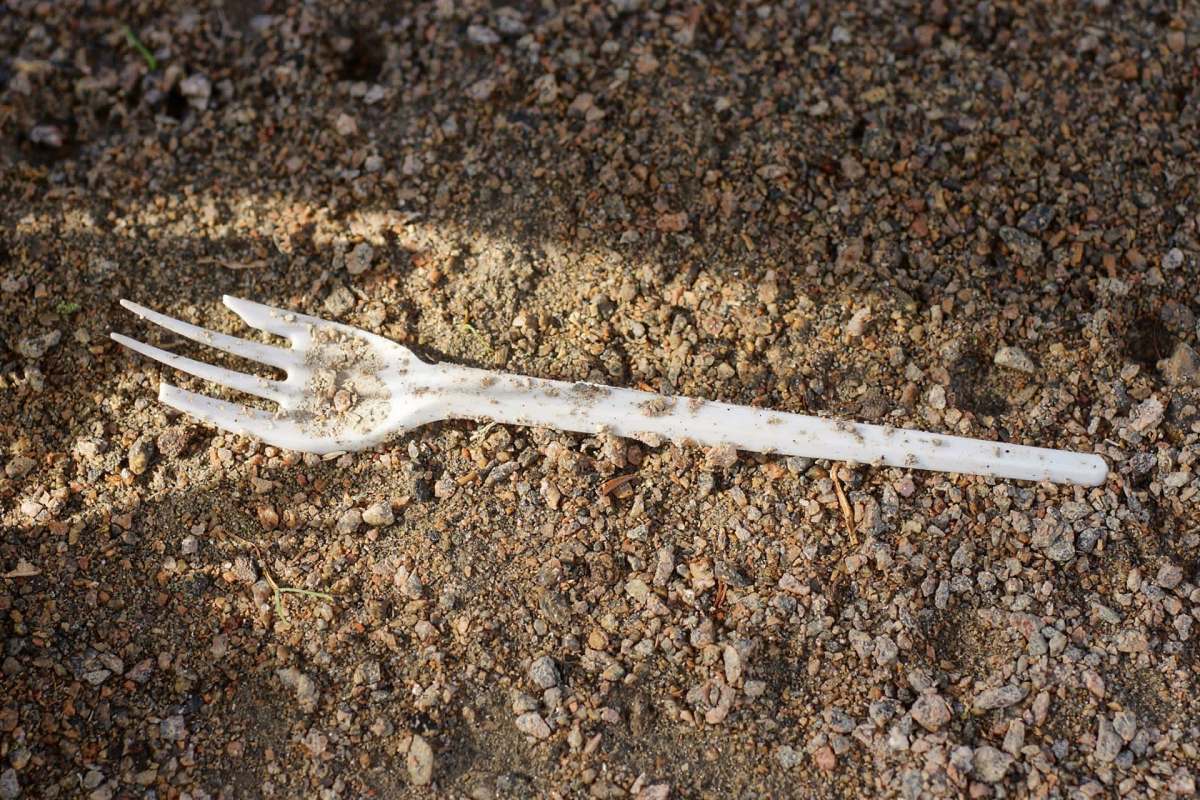
A company in Woburn, Massachusetts, is turning polymers made by sugar-fed microbes into items like forks, straws, and food packaging, aiming for them to compost in about six months instead of persisting for decades as microplastics.
Here's what to know
At its Woburn research facility, CJ Biomaterials uses microbes fed with sugar to create plant-based polymers known as polyhydroxyalkanoates, or PHAs, which the company then collects.
According to the Associated Press, those pebble-like pellets can be melted and formed into products including utensils, straws, coated cups, sushi trays, ramen containers, and flexible packaging films.
In the company's compost bin, test forks and films are already decomposing, and straws placed there earlier have disappeared.
Part of the appeal is what these materials might replace. Conventional plastics can last for years, breaking into microplastics and nanoplastics found in the ocean, the air, food, water, and human tissues.
Company marketing director Leah Ford said rising awareness of microplastics is helping drive more interest in the material: "I've been doing this for a long time and the compostability has always been a really strong driver. But with the greater understanding of microplastics, I think, that's going to change how people think about materials."
TCD Picks » Quince Spotlight
💡These best-sellers from Quince deliver affordable, sustainable luxury for all




More background
Even with that interest, bioplastics remain a small part of the market. They account for about 0.5% of annual plastic production, though output is projected to double by 2030.
One possible advantage is with food-soiled products that usually cannot be recycled: a compostable container could be tossed into an organics bin along with the leftovers instead of requiring people to separate messy waste by hand.
That approach could keep more food waste out of landfills, where it emits methane, a potent planet-warming gas. It could also reduce a source of persistent plastic pollution that can damage ecosystems and may affect human health.
Open questions remain, though. Some environmental advocates argue that bioplastics keep the single-use mindset in place, while lawmakers and researchers say more evidence is needed on how various materials break down and what effects they have in real-world conditions.
What's being done?
The World Wildlife Fund has described biobased plastics as one part of a broader response that also includes reducing plastic production and making the rest more sustainable.
At the same time, negotiators are still working toward a global treaty to address plastic pollution.
One example of expanding composting capacity is Black Earth Compost, about half an hour from CJ Biomaterials' lab. The facility accepts certified compostable cups, cutlery, and bin liners alongside food scraps and lobster shells, making it easier for homes and businesses to divert more organic waste.
Researchers are also testing how these products behave after use. In a 64-week study, the 5 Gyres Institute found that many biodegradable materials had either disappeared or were visibly breaking down, while conventional fossil-fuel plastics remained; the nonprofit is now repeating the work with newer packaging.
Marcus Eriksen of the 5 Gyres Institute warned that without better end-of-life options for everyday packaging: "We're going to flood the entire biosphere with micro- and nanoplastics."

Get TCD's free newsletters for easy tips, smart advice, and a chance to earn $5,000 toward home upgrades. To see more stories like this one, change your Google preferences here.






