


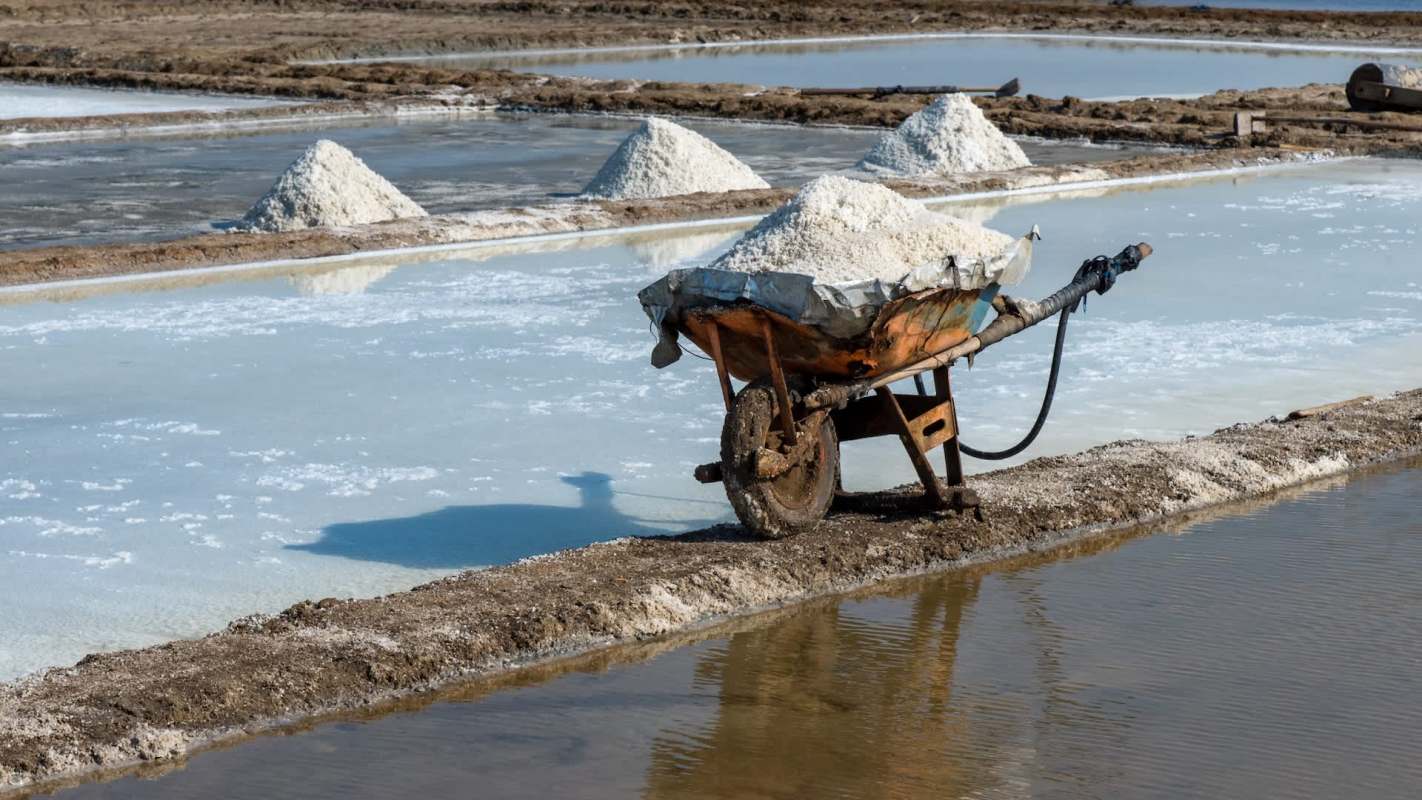
Tests on sea salt sold in markets across Indonesia's Lombok Island found microplastics in every sample, suggesting that a kitchen staple used worldwide is carrying signs of ocean pollution.
The result further indicates that plastic waste is reaching ordinary foods, including something as basic as salt.
Here's what to know
In the study reported by Mongabay, the research team led by Anna Ida Sunaryo Purwiyanto collected 20 sea salt samples from sellers in 10 markets on Lombok Island.
The researchers separated out suspected particles from the salt and then examined them using a stereo microscope.
Because sea salt is produced by evaporating seawater, plastic fragments present in the water can wind up in the final product.
Microplastics are pieces of plastic smaller than 0.2 inches (5 millimeters) that form as larger plastic waste breaks down.
TCD Picks » Quince Spotlight
💡These best-sellers from Quince deliver affordable, sustainable luxury for all




The researchers found variation between products. Coarse crystal sea salt had more microplastics than fine salt, likely because fine salt goes through additional washing and filtering.
Even so, contamination appeared in every sample, "indicating widespread contamination across the surveyed markets," the study noted.
More background
Taken together, the results point to microplastic pollution in waters around Lombok Island and show another way that contamination can enter daily life: through salt.
That aligns with earlier research showing microplastics in seafood, drinking water, and many other places, highlighting how far plastic pollution has spread.
Even so, the study is not being presented as evidence that salt alone poses a major new dietary threat.
Tamara Galloway, a microplastics researcher at Exeter University in the U.K. who was not involved with the study, said, "The risk to human health from ingestion of microplastics in sea salt is very low, especially when compared to the many other sources of microplastics and associated contaminants in our diets and daily lives."
Instead, salt appears to be a relatively small part of a much broader public health issue, even as researchers and regulators examine more closely how plastic enters the food system.
What can be done?
For producers, one immediate option is more washing and filtering, especially for coarse crystal sea salt, to reduce the amount of microplastics that remain. That would not fix ocean pollution, but it could lower contamination in the final product.
The researchers also identified a regulatory gap. Salt products generally are not covered by standardized microplastics rules, which makes it harder to compare results and enforce quality standards.
Including microplastic screening in food safety and salt quality standards could give regulators and producers a clearer way to respond.
The study's authors put the challenge plainly: "From a regulatory perspective, the absence of standardised guidelines for microplastics in salt products remains a key limitation [to reducing microplastic contamination]."

Get TCD's free newsletters for easy tips, smart advice, and a chance to earn $5,000 toward home upgrades. To see more stories like this one, change your Google preferences here.







