


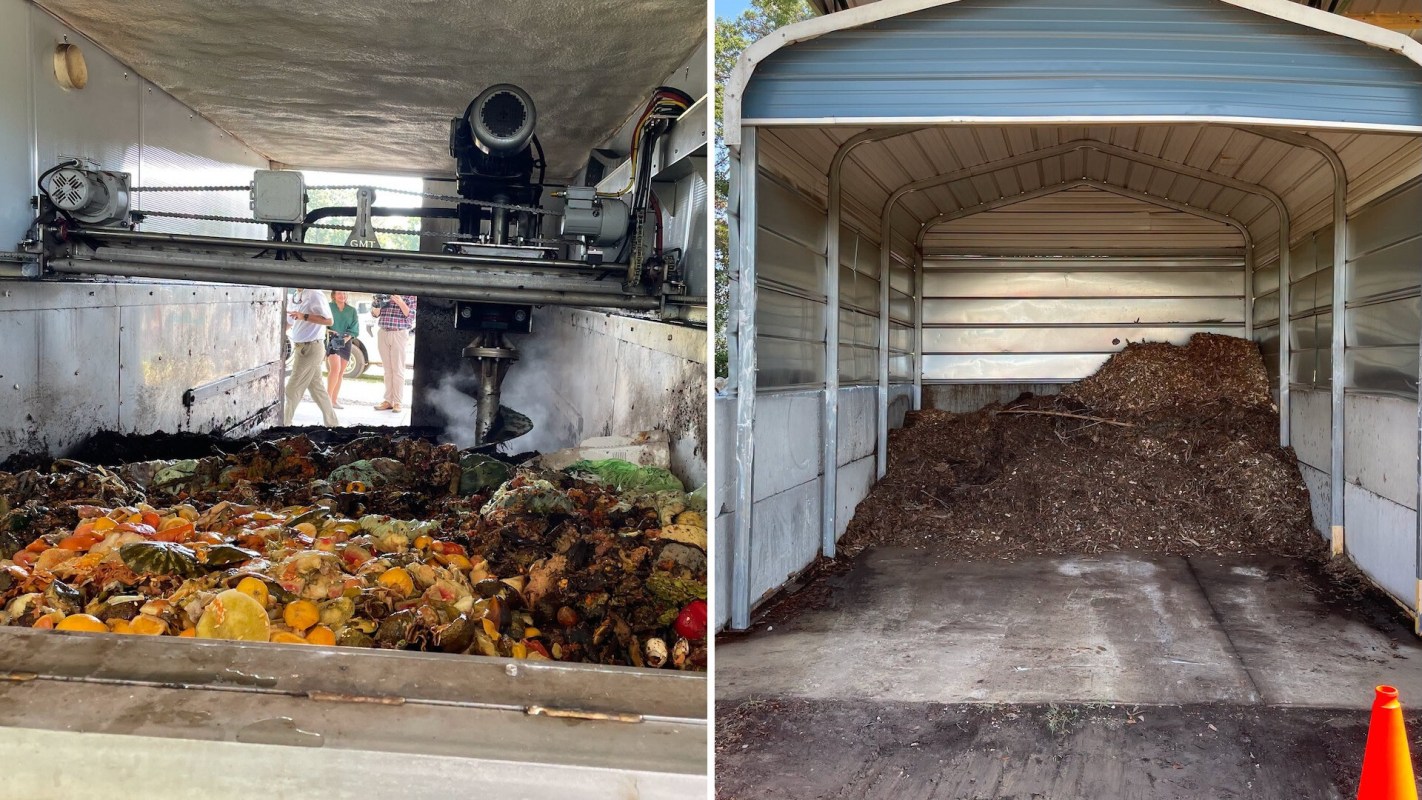
Beaufort County officials say a composting initiative in South Carolina could cut landfill waste now and, over time, save taxpayers more than $1 million.
The county started the program in January, and WTOC reported that it has already kept more than 30,000 pounds of food scraps and other organic material out of landfills by converting that waste into nutrient-rich soil.
Here's what to know
For residents, the goal is to make composting more convenient. Instead of managing a backyard compost pile or driving all the way to Charleston, locals can collect kitchen scraps and bring them to green bins at county convenience centers.
Each Tuesday, county employees pick up those bins and take the contents to an in-vessel composting unit that officials say is the only county-owned machine of its kind in South Carolina. A mechanical auger helps process the material there, and the finished compost is later used in a garden near the Beaufort County Public Works building.
Officials are focusing on organic material because it makes up a large share of landfill trash. A South Carolina Department of Environmental Science study found that organics account for 32.5% of waste in the state's landfills, including more than 930,000 pounds of food waste each year.
Beaufort County Solid Waste and Recycling Program Manager Victoria Hoffman said, "Waste is often something that people don't see or notice or think about after it goes to the trash can."
TCD Picks » Quince Spotlight
💡These best-sellers from Quince deliver affordable, sustainable luxury for all




More background
Beaufort County spends about $149,000 on organic waste disposal alone, so diverting food scraps from the landfill could gradually cut hauling and tipping expenses.
Food and yard waste are heavy, wet materials that take up landfill space and produce pollution as they decompose. Composting instead redirects those nutrients into a reusable product that can benefit the local community.
Rather than being discarded, the compost is already being put to use in a nearby garden with plants and vegetables, creating a circular system that turns kitchen scraps into soil.
Participation has climbed quickly: nearly 700 residents joined in less than seven months.
The program also has a mascot, Mossy, a Gullah storyteller tied to the Beaufort County Government USDA-funded food waste composting pilot program.
What's being done?
Officials said grant funding helped make the program possible, and they emphasized that improving access to composting was a key reason for launching it.
"It does have the potential to save taxpayer dollars when we divert the waste, as opposed to hauling it to the landfill and tipping it at the landfill," Hoffman explained.
The county is also positioning the program as a learning opportunity. Plans call for expanding composting into the Beaufort County School District so students can get hands-on experience with turning waste into something useful.
Officials also want to bring local businesses into the effort and eventually make Beaufort County's composting site available to neighboring counties through regional cooperation.
If that happens, both the environmental benefits and the cost savings could reach beyond one community.
Beaufort County Environmental Education Coordinator Libby Bergmann also pointed to benefits beyond waste reduction: "Instead of taking all of these chemicals and putting them into our bodies, we are using something we already had — a waste — and making it a resource."

Get TCD's free newsletters for easy tips, smart advice, and a chance to earn $5,000 toward home upgrades. To see more stories like this one, change your Google preferences here.






