


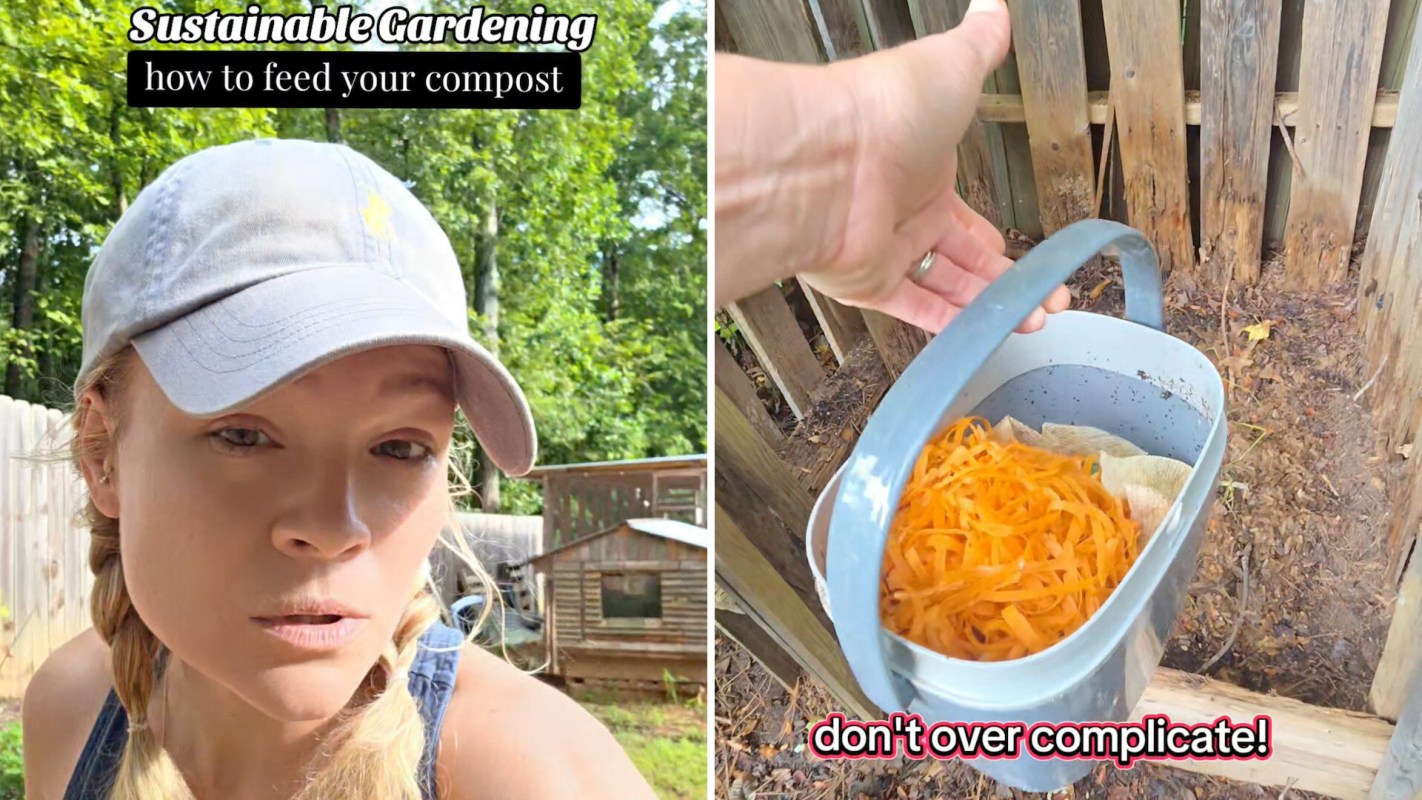
A garden coach showed how to feed a compost pile to keep it balanced and aerated, avoiding foul odors and flies.
What's happening?
A TikTok tutorial from Hygge Haven (@hygge.haven) demonstrated how to add new scraps to a compost pile without letting it get smelly. The garden coach said fresh "greens" like kitchen scraps, eggshells, and peels need to be paired with the right amount of carbon-rich material, such as dried leaves or cardboard.
@hygge.haven if you want to learn how to compost this is for you! in the last video we broke down exactly what to put in your compost, and how to build it from scratch. it's been a week, and now it's time to feed it. so heres how you're going to add to your compost pile and how to avoid that stank smell that will bring the flies! if you're serious about gardening & you want a more sustainable, healthy, and thriving garden year to year, then starting a compost is a necessarystep in that direction. if you want to learn more about sustainable gardening & composting, make sure to follow my page. I'll take you every step of the way as we transform these garden scraps into garden gold! see you in the next video 🌱 #gardening #coldcomposting #howtobuildacompostpile #gardeningtiktokcontest #sustainablegardening ♬ original sound - Hygge Haven | Garden Coach
The creator wasn't able to use dead leaves because of Asian jumping worms, an invasive species introduced to the United States in the 1800s through horticulture or anglers, according to the U.S. Department of Agriculture.
So they went with shredded cardboard, which they made themselves with a shredder and mailing boxes and envelopes. If you use the same approach, just make sure to remove any tape or stickers before shredding.
Using a cold-composting setup, the creator said the routine itself is easy and that the main thing to watch is the mix. "If you have your ratios correct, your compost pile should not smell bad, should not bring animals. It should not have bugs and flies all around it. If it does, add you some more carbon," they explained.
They added that cold composting is a good fit for gardeners with enough space who prefer less upkeep, though the payoff takes longer than with closed, hot composting.
TCD Picks » Quince Spotlight
💡These best-sellers from Quince deliver affordable, sustainable luxury for all




Regular turning was another tip, since mixing the pile adds oxygen and lets you assess how it's doing. A healthy pile should smell like "rich earth," the creator said, while a "stank smell" is a sign that more dry material may be needed to soak up moisture.
One commenter asked, "Can you use shredded paper instead of cardboard? Cardboard won't fit through my shredder." The garden coach replied, "Yes absolutely. Just no colored paper."
Why does it matter?
Making compost at home comes with all kinds of perks, from promoting zero-waste habits to saving money to enjoying more delicious food.
Composting reduces the amount of food waste sent to the trash. For people interested in living more sustainably, composting is also a practical way to close the loop. Instead of treating kitchen scraps as trash, gardeners can use them to build healthier soil and support stronger plants year after year.
Composting also reduces spending on fertilizer and other soil amendments. No need to buy it when you can make it yourself. In addition to making homegrown food more affordable, composting can help produce taste better by adding more nutrients and minerals to the soil.
Gardening also offers benefits beyond the harvest, like supporting a healthier lifestyle through regular outdoor movement and lifting. It also boosts mental well-being by reducing stress, creating a calming routine, and promoting time spent outdoors.
What can I do?
For beginner gardeners, composting can feel like a lot, but videos like this make it seem like a much more manageable habit. Start saving kitchen scraps and cardboard to start your own compost and discover how easy it really is.
If you're building a garden from scratch, compost can be one of the most useful tools for improving soil without relying as much on store-bought products. And if you're hoping to save money while harvesting fresher food, exploring resources on growing your own food is a great place to start.
"You just start composting one day and you hit a rhythm and you'll never run out of compost," the creator said in the video. "It's not some kind of trendy thing, it's just a lifestyle."

Get TCD's free newsletters for easy tips, smart advice, and a chance to earn $5,000 toward home upgrades. To see more stories like this one, change your Google preferences here.







