


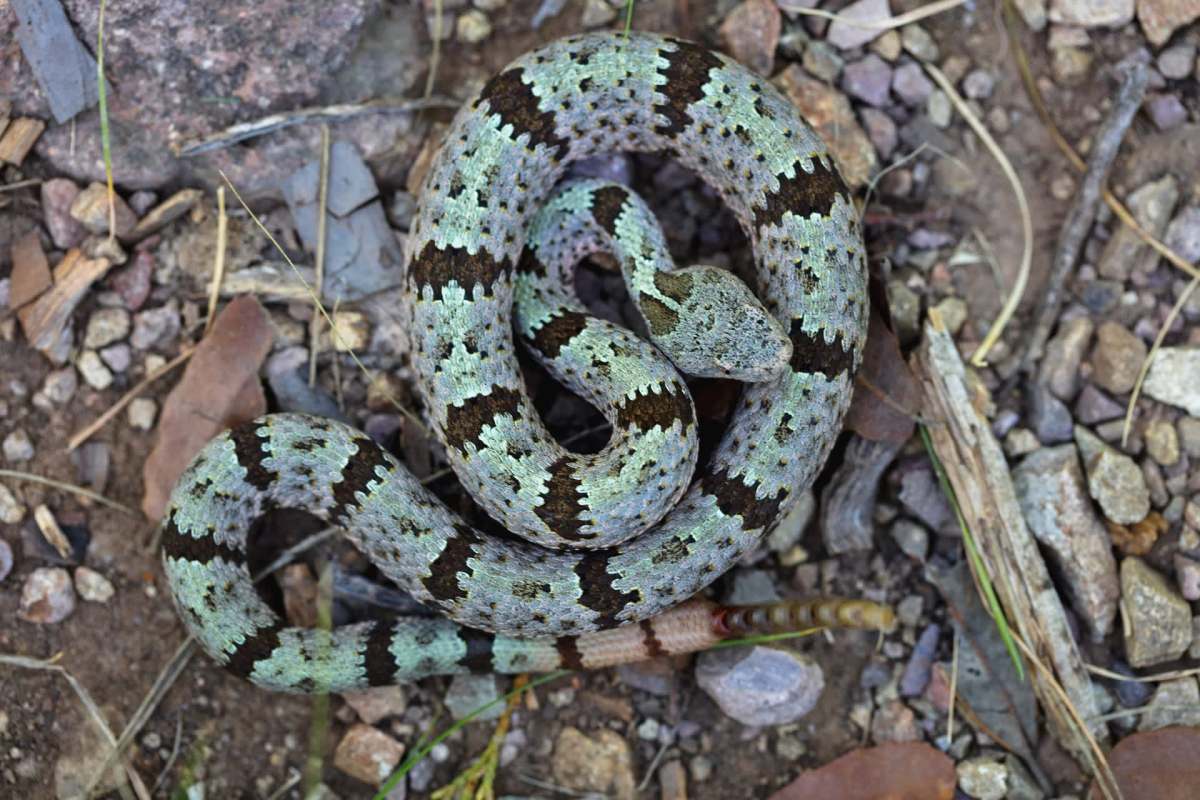
A photo from Arizona is turning heads online because the rattlesnake in it appears to have a metallic green sheen, giving the desert reptile a look more like polished metal than camouflage.
The reptile appears to be a banded rock rattlesnake, and green shimmer across parts of its body gives it an almost jewel-like, reflective look.
What happened?
The image was shared from Arizona in Reddit's r/WhatsThisSnake community, with a description of the animal's size, coloration, and how it exhibits sexual dimorphism (click here if the embed does not appear).
The animal was identified as a banded rock rattlesnake, a venomous species associated with rocky desert habitat. The original poster also noted that "males, like this one, often develop bright metallic greens on their bodies, which matches the common lichen found on rocks where they live."
The OP also noted that these snakes "are common in several of the sky islands of southeastern Arizona."
Why does it matter?
Many people think of rattlesnakes only as a threat, even though they are native species with roles in desert ecosystems.
TCD Picks » Quince Spotlight
💡These best-sellers from Quince deliver affordable, sustainable luxury for all




But encounters with snakes are part of life in many warm, dry regions, and understanding what you are looking at can help prevent panic, bites, and unnecessary harm to the animal.
As housing growth, road construction, and outdoor recreation continue to expand into desert habitats, people are increasingly likely to cross paths with wildlife that has lived there all along.
Keeping your distance is always safer than trying to scare, kill, or handle a rattlesnake.
What can I do?
If you spot a rattlesnake outdoors, the best response is usually the simplest one: Stop, back away slowly, and give it space. Most snakes would rather avoid people than interact with them.
In rocky desert areas, basic precautions can make a major difference. Watch where you place your hands and feet, avoid reaching into crevices or under rocks, and keep pets and children close on trails. Wearing sturdy shoes can also help reduce risk in snake country.
Plus, around homes near wild land, trimming heavy ground cover, reducing brush piles, and sealing small gaps can make surprise encounters less likely. If a snake does end up in a garage, yard, or entryway, local animal control or licensed wildlife relocation experts are a safer choice than trying to move it yourself.

Get TCD's free newsletters for easy tips, smart advice, and a chance to earn $5,000 toward home upgrades. To see more stories like this one, change your Google preferences here.







