


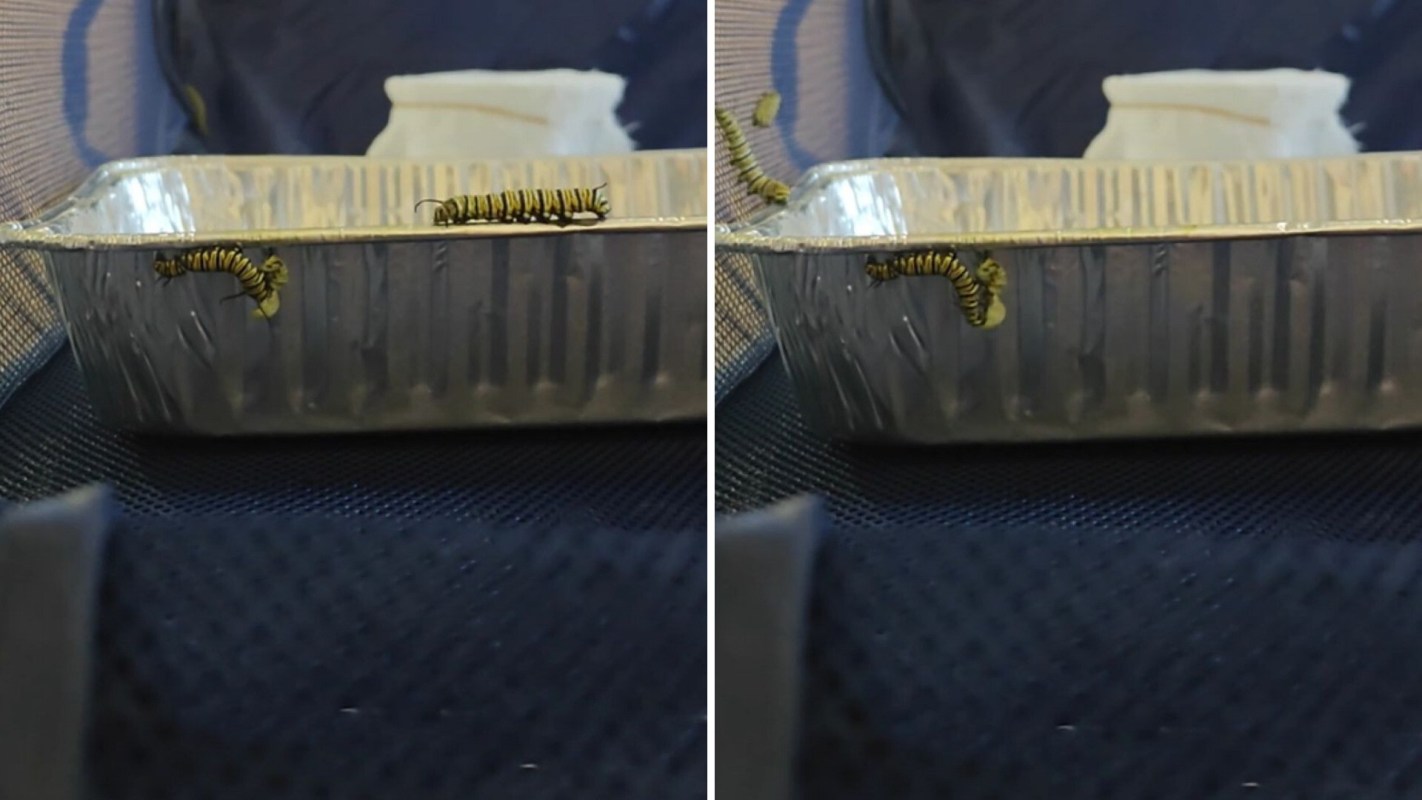
A surprising clip from Florida is giving viewers an unusual look at insect behavior, showing a caterpillar apparently consuming its own chrysalis.
What happened?
A user took to Reddit to share footage of the moment. The short video shows a tiny caterpillar on the edge of a tin baking sheet. Attached to the baking sheet is the caterpillar's chrysalis.
The original poster explained that they captured the clip as the caterpillar was munching on the shell that was made to help the caterpillar transform into a butterfly.
(Click here to view embed if it does not appear.)
Despite having plenty of milkweed nearby, a plant caterpillars normally munch on, the poster wrote: "I guess it was just not the right place to make a chrysalis."
"That is unusual!" one user wrote. "They get to a stage where they are growing so fast, maybe this one didn't have the time or energy to get to the milkweed, or didn't want to take the risk that once they got over there, it might be gone."
TCD Picks » Quince Spotlight
💡These best-sellers from Quince deliver affordable, sustainable luxury for all




Why does it matter?
Caterpillars are typically thought of as leaf-eaters, while chrysalises represent a protective shell that offers a stage for transformation.
But behavior in the wild can be messy, opportunistic, and difficult to predict, even in a space that appears well stocked with the right host plant. Heat, crowding, stress, and placement can all affect how insects behave.
For people who grow milkweed or raise caterpillars at home, providing food alone does not guarantee a smooth outcome.
Nature-friendly spaces can support wildlife while still exposing it to competition and risk.
What can I do?
Despite the strange behavior, if you're interested in growing butterflies, the basics still matter: grow host plants such as milkweed, avoid pesticides, and make sure insects have enough space instead of clustering too many together in a small area.
If you're raising caterpillars indoors or in a protected space, it can also help to pay attention to heat, humidity, airflow, and where chrysalises form. A chrysalis attached too close to heavy feeding traffic may be more vulnerable to damage or unwanted attention.
Observe closely and adjust when needed. If insects seem crowded or development is moving unusually fast, adding more plant material, separating individuals, or changing placement may reduce stress.

Get TCD's free newsletters for easy tips, smart advice, and a chance to earn $5,000 toward home upgrades. To see more stories like this one, change your Google preferences here.







