


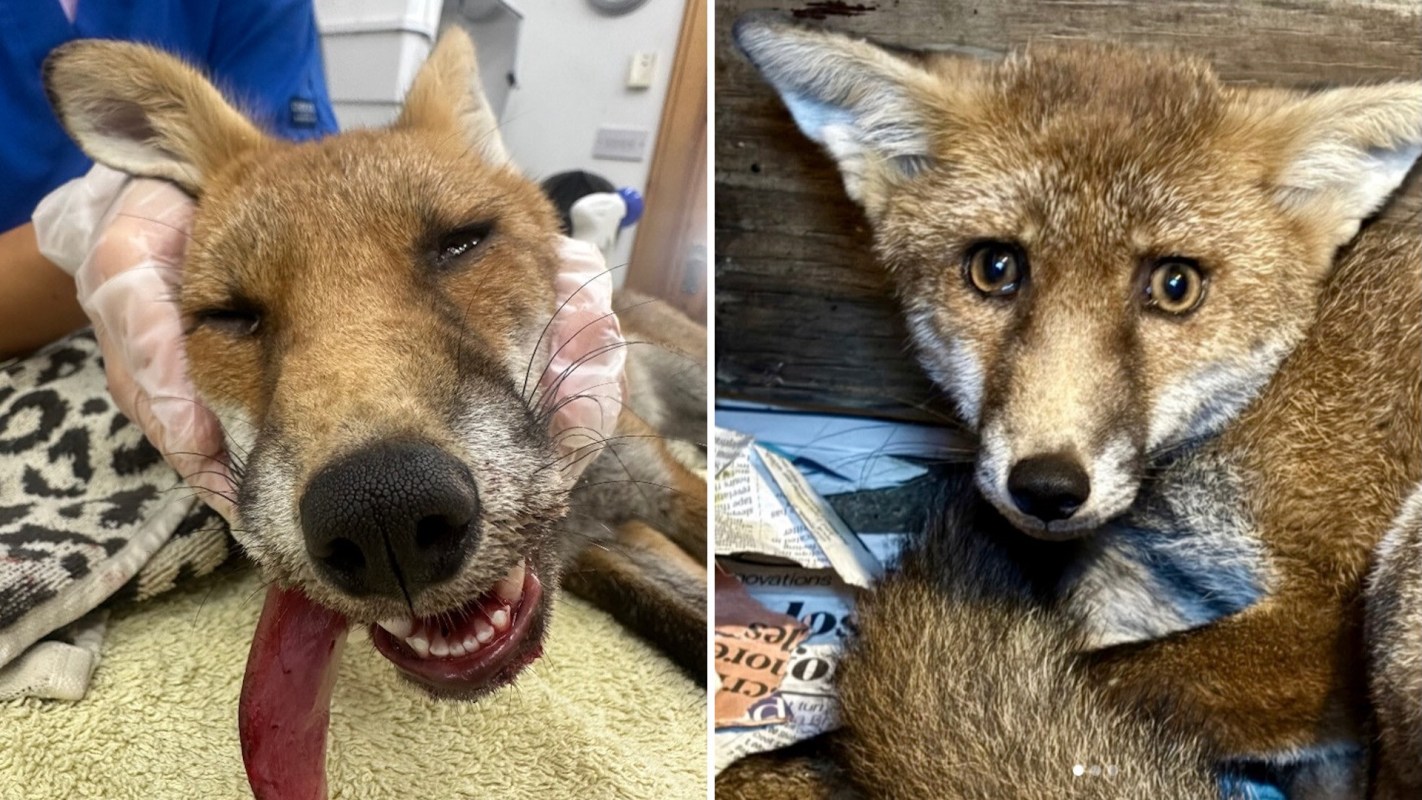
After a young fox raided a home's pantry and became injured in the process, a wildlife rescue center gave her the care she needed.
What happened?
On Instagram, Wildlife Aid (@WildlifeAid) recounted the case of a young female fox that reached its care after slipping into someone's home via a cat flap. Once inside, she caused havoc and seemed to have seriously hurt herself in the process. (Please be advised that the third image in the post below shows blood and may be distressing.)
In the caption, Wildlife Aid wrote, "We feared she was BROKEN."
That fear came from what rescuers described as an "alarmingly swollen jaw" and blood around the fox's mouth.
After taking an X-ray, the rescuers learned that her jaw wasn't broken. Vets had given the fox pain relief before imaging her, and the injury instead appeared to be a cut tongue sustained while she rummaged through the homeowner's pantry.
Why is this injury concerning?
It doesn't take much for human-wildlife encounters to become unsafe.
TCD Picks » Quince Spotlight
💡These best-sellers from Quince deliver affordable, sustainable luxury for all




While an animal entering a home can lead to property damage, the animal often faces the greatest danger. When these things happen, animals aren't trying to intentionally ruin someone's home. They may be looking for food or just trying to survive.
As human development and construction continues to reshape natural habitats, animals often adapt by searching for food and shelter closer to people. That can lead to people acting on instinctual fear or anger, which can create more harm than good.
Fortunately, this fox got out OK, and commenters appreciated that.
"Thanks to the homeowner for getting help," one person said.
What's being done?
Now that the fox has received proper medical care, Wildlife Aid is certain she'll make a fast recovery.
In the meantime, there are many things people can do to make their homes less inviting to wild animals. Keeping all food sealed and securing trash bins can help reduce attractants.
Households with pet doors may also want to consider lockable or microchip-activated models that are less likely to admit unexpected visitors.
If a wild animal gets indoors or appears injured, it's best not to handle it unless absolutely necessary and only with proper guidance. Keeping children and pets away, giving the animal space, and contacting a licensed wildlife rehabilitator can help protect everyone involved.

Get TCD's free newsletters for easy tips, smart advice, and a chance to earn $5,000 toward home upgrades. To see more stories like this one, change your Google preferences here.







