


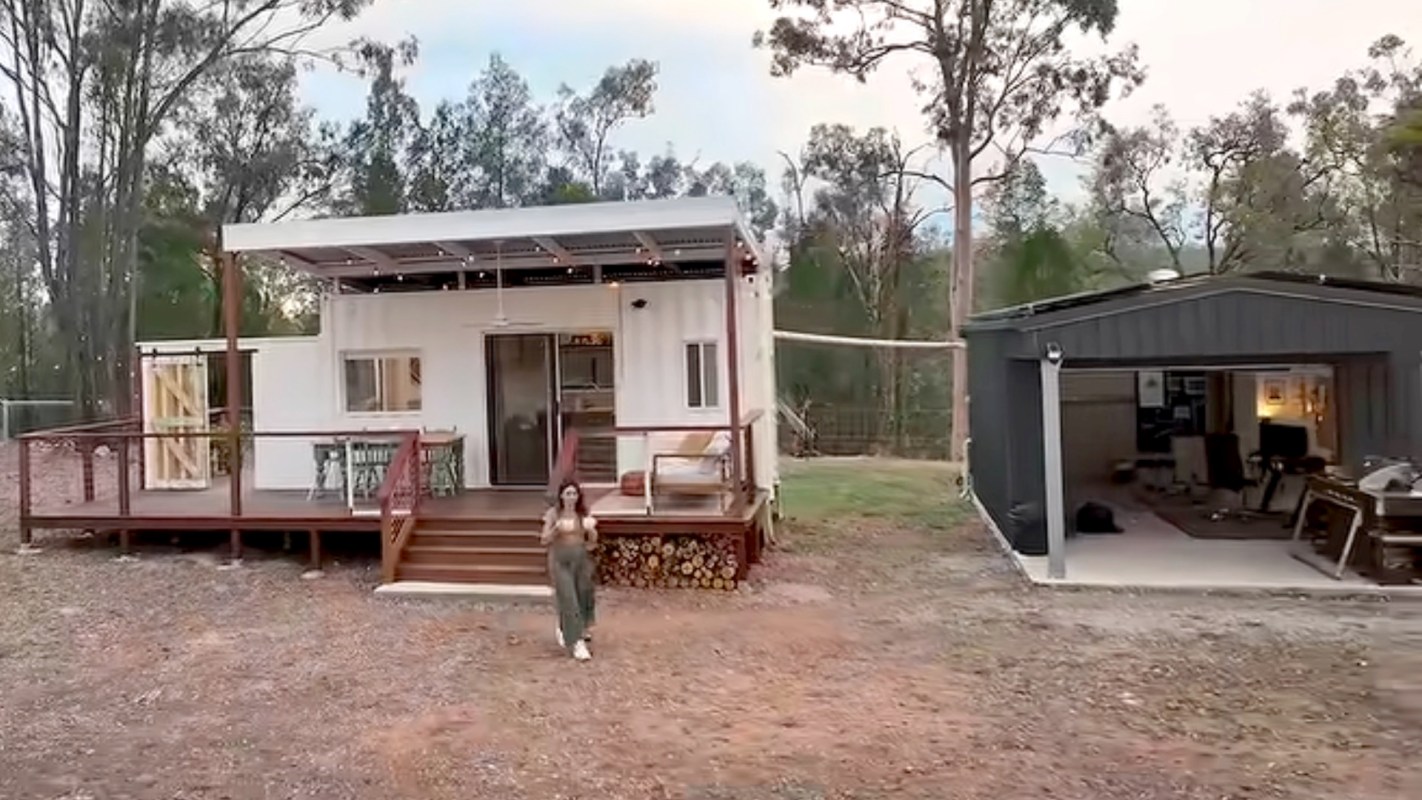
For many families, the goal is to move into a bigger home. But for Queensland, Australia, couple Ryan and Lorena, the path looked very different: They downsized into a 20-foot shipping container, where they live with their two children on a two-acre off-grid property, trading extra space for lower costs, greater flexibility, and more time together.
What happened?
Ryan and Lorena were not new to small-space living. In a YouTube home tour, Living Big In A Tiny House (@livingbig) showed how the family manages in the container home after previously living in a tiny house in Tasmania and then moving into an even smaller setup on rural land in Queensland.
The interior is only part of what makes the arrangement work. The container includes a full kitchen and bathroom, a king-size bed, and a pull-out bed for the children, while a large covered deck and a separate shed give the family added room for storage, work, toys, laundry, and relaxing once the kids are asleep.
Living without grid connections was central to the plan, the couple said.
"We are off the grid," Ryan said, explaining that they deliberately avoided buying land with existing utility connections because "it's all about sustainability for us."
They said the container home, shed, deck, and off-grid systems cost about AU$55,000 ($38,830) to AU$60,000 ($42,363.30)to build, and the land cost AU$105,000 ($74,135.78).
TCD Picks » Quince Spotlight
💡These best-sellers from Quince deliver affordable, sustainable luxury for all




Why does it matter?
As housing costs continue to pressure households worldwide, Ryan and Lorena's choice highlights one way some families try to reduce that burden. By living in a smaller home, they also reduced ongoing expenses, and they said that change slowed the pace of daily life.
"We moved out here because we wanted to spend more time with them," Ryan said of the couple's children. "We don't have to work all the time, you know? We can just be with them."
The tradeoff is not effortless, though. The couple said family life in such a tight space means constant cleanup, and Ryan noted, "When the kids have gone to bed on the slide out bed, we have to step over them to get into our bed."
In exchange, the home cuts energy demand, pushes more of daily life outdoors, and removes many of the costs associated with a larger conventional house.
What can I do?
The couple completed much of the build on their own, but they hired professionals for specialized work such as the electrical installation.
One commenter wrote, "Very small living space for family of 4 but beautifully fitted out and true freedom with your own land. And no mortgage or rent payments. They have their priorities right."
Another added, "My children are 42 and 44. If I could turn back the clock, I would choose this lifestyle for them and for myself."
"It means a lot. It's not just a house. It's a life," Lorena said.
Ryan summed up the benefit this way: "We don't have to worry about finances like maybe somebody living in the city does with a mortgage. You know, we've got all of the freedom that we need to do what we want when we want."

Get TCD's free newsletters for easy tips, smart advice, and a chance to earn $5,000 toward home upgrades. To see more stories like this one, change your Google preferences here.






