


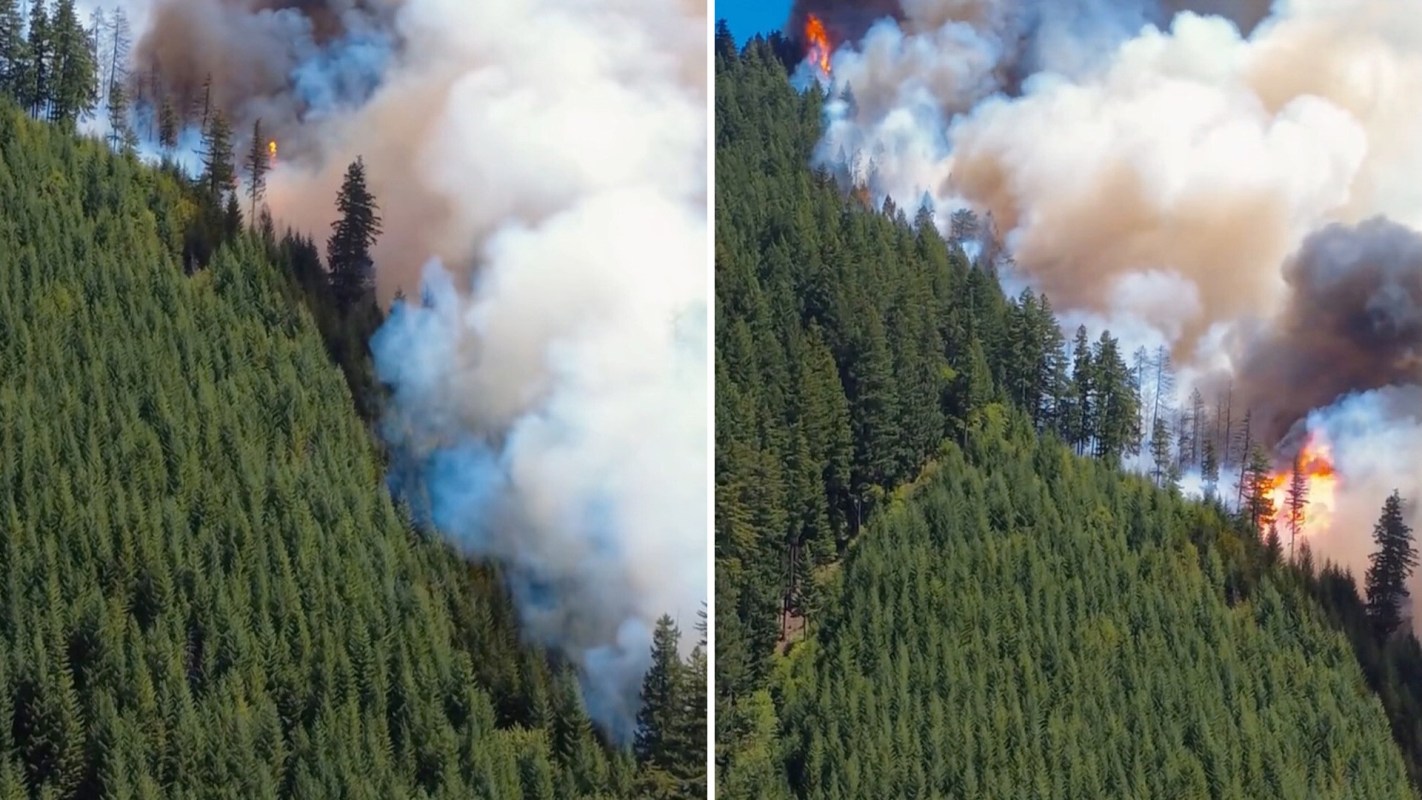
A stark video from Oregon is giving viewers a close look at wildfire danger in one of the Pacific Northwest's most recognizable landscapes.
The clip shows wildfires in Mount Hood National Forest, drawing an outpouring of grief from people familiar with the area.
What's happening?
Content creator smore.adventures shared a short video on August 9 showing flames and smoke pouring over the national forest.
@smore.adventures Oregon wildfires in Mount Hood National Forest | August 9, 2026 #oregon #wildfires #pnw #mthood #oregonwildfire ♬ ACID RAIN (SLOWED) - Lorn
In the comments, viewers mourned the scene.
One wrote, "Oh, no, how sad — I was just in Mt. Hood and Trillium Lake with my son last week."
Some reactions spanned just a few emotional words: "WOW. This is so sad," "Gut wrenching," and "Absolutely heartbreaking. Wildlife is suffering so. Rain blessings."
TCD Picks » Quince Spotlight
💡These best-sellers from Quince deliver affordable, sustainable luxury for all




Another commenter shared, "Never thought I'd say this, but ... Oregon needs rain!"
Why is this concerning?
Mount Hood National Forest is a major destination, and an active wildfire there underscores how deeply treasured outdoor spaces can become impacted by dangerous conditions.
Such fires can be devastating for wildlife and ecosystems as well as communities and economies. From food sources to food systems, habitats to homes, and migratory paths to travel routes, unpredictable blazes can pose huge threats. Wildfires can also force evacuations, disrupt tourism, damage infrastructure, and put first responders at risk.
Beyond the visible flames, wildfire smoke can travel long distances and worsen air quality for people far from the burn area. Smoke exposure is a serious public health issue, especially for children, pregnant people, older adults, outdoor workers, and people with asthma or heart and lung conditions.
What can I do?
If you live in or plan to visit a wildfire-prone area, you'll want to stay up to date on local evacuation notices, road closures, and fire news from official agencies. Conditions can shift quickly, even in well-known recreation areas.
Checking air-quality reports, limiting strenuous outdoor activity during smoky periods, and using a well-fitted mask outdoors as well as an approved air purifier indoors can reduce health risks when wildfire pollution spreads.
Travelers should also confirm that campgrounds, trails, and forest roads are open before heading out.
During dry periods, following burn bans and avoiding activities that can spark a fire — including parking on dry grass or improper campfire use — can help reduce risk.
Supporting local relief groups, respecting closure zones, and sharing verified emergency information can also make a difference without adding pressure to responders working in dangerous conditions.

Get TCD's free newsletters for easy tips, smart advice, and a chance to earn $5,000 toward home upgrades. To see more stories like this one, change your Google preferences here.







