


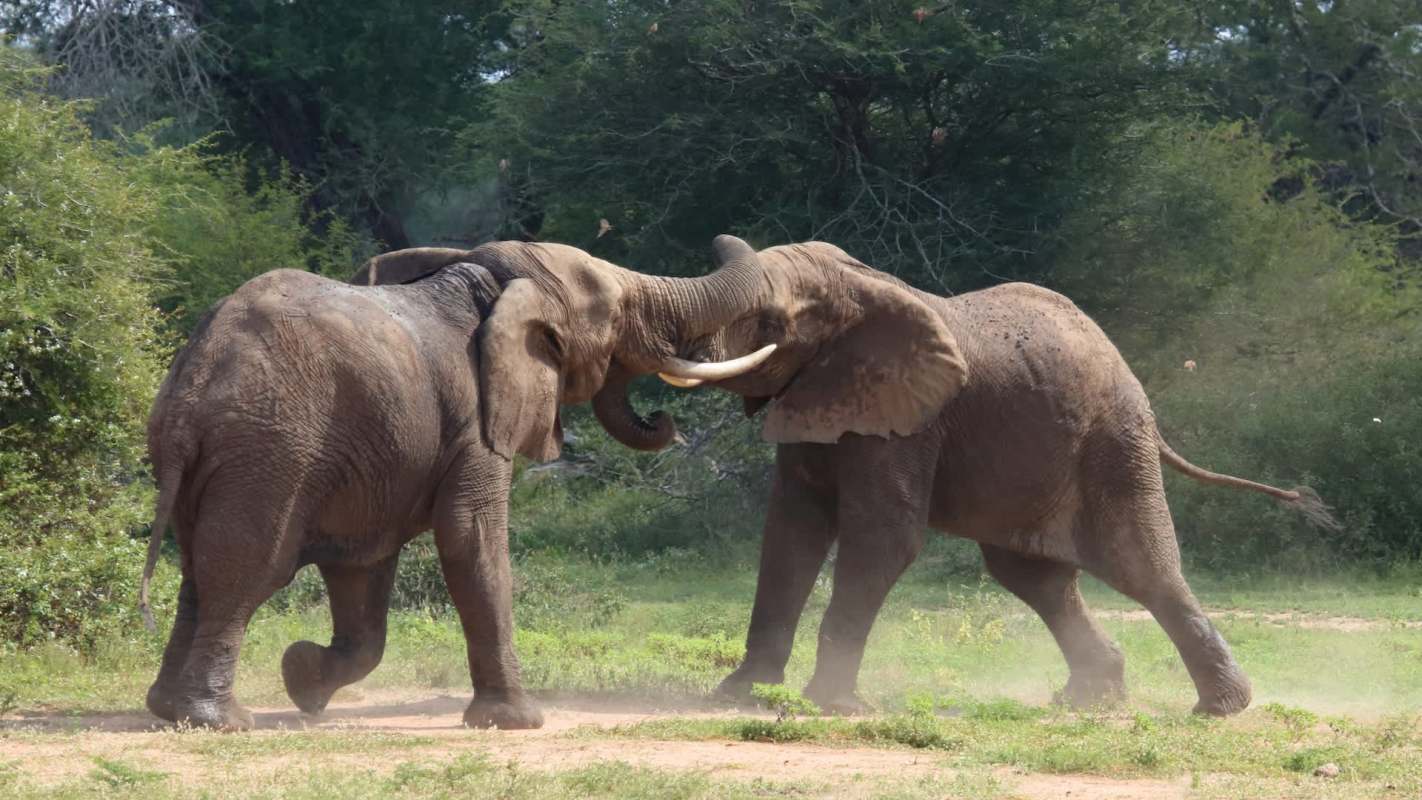
Residents near West Bengal's Kangsabati River were jolted when a tense encounter between two large tuskers escalated into a fight, prompting people nearby to rush to safety.
Near the Satpati neighborhood, a swelling crowd watched as the elephants blared calls, entwined their tusks, and pushed against each other.
What happened?
Along the riverside in West Bengal, locals watched two male elephants square off, rush at each other, and continue battling for several minutes.
People from the area stayed back while filming the clash on their phones.
Footage captured the tuskers slamming together, knocking heads, and staying locked in the fight while people shouted nearby.
The battle alarmed nearby residents as it occurred right next to a populated neighborhood.
TCD Picks » Quince Spotlight
💡These best-sellers from Quince deliver affordable, sustainable luxury for all




The elephants eventually separated and headed off in different directions, according to Asianet News.
Forest Department personnel were notified, and they watched the elephants while trying to keep onlookers at a distance.
Officials told residents to stay back from wild elephants because crowding them can endanger both people and the animals.
Why does it matter?
Fights between male elephants can be a natural part of competition and dominance, but this confrontation happened close to a populated area.
When wild animals and human settlements overlap, even normal animal behavior can become dangerous quickly.
Crowds gathering to watch can make matters worse. Loud noise, close proximity, and people trying to record video may add stress to already agitated animals, increasing the risk of a charge, injury, or panic.
That puts residents, officials, and the elephants themselves in harm's way.
As habitat loss, development, and fragmented wildlife corridors push animals into closer contact with people, these encounters may become more frequent.
How communities expand, travel, and respond around wild spaces can shape whether an encounter remains manageable or turns tragic.
What's being done?
Authorities responded to the scene and continued monitoring where the elephants moved in the area.
Their immediate work was to keep spectators from getting closer and to follow the elephants after the clash ended.
Giving elephants space lowers stress and makes it more likely they will move away without attacking people or damaging property.
Keeping a safe distance, refraining from approaching for photos and blocking an animal's path, and reporting sightings to local authorities can reduce the risk of a dangerous encounter.
Protecting habitat and movement corridors can help reduce the kind of overlap that brings wildlife and neighborhoods into sudden, risky contact.
The scene near the Kangsabati River showed how quickly a brief encounter between wild elephants and human crowds can become dangerous for all involved.

Get TCD's free newsletters for easy tips, smart advice, and a chance to earn $5,000 toward home upgrades. To see more stories like this one, change your Google preferences here.







