


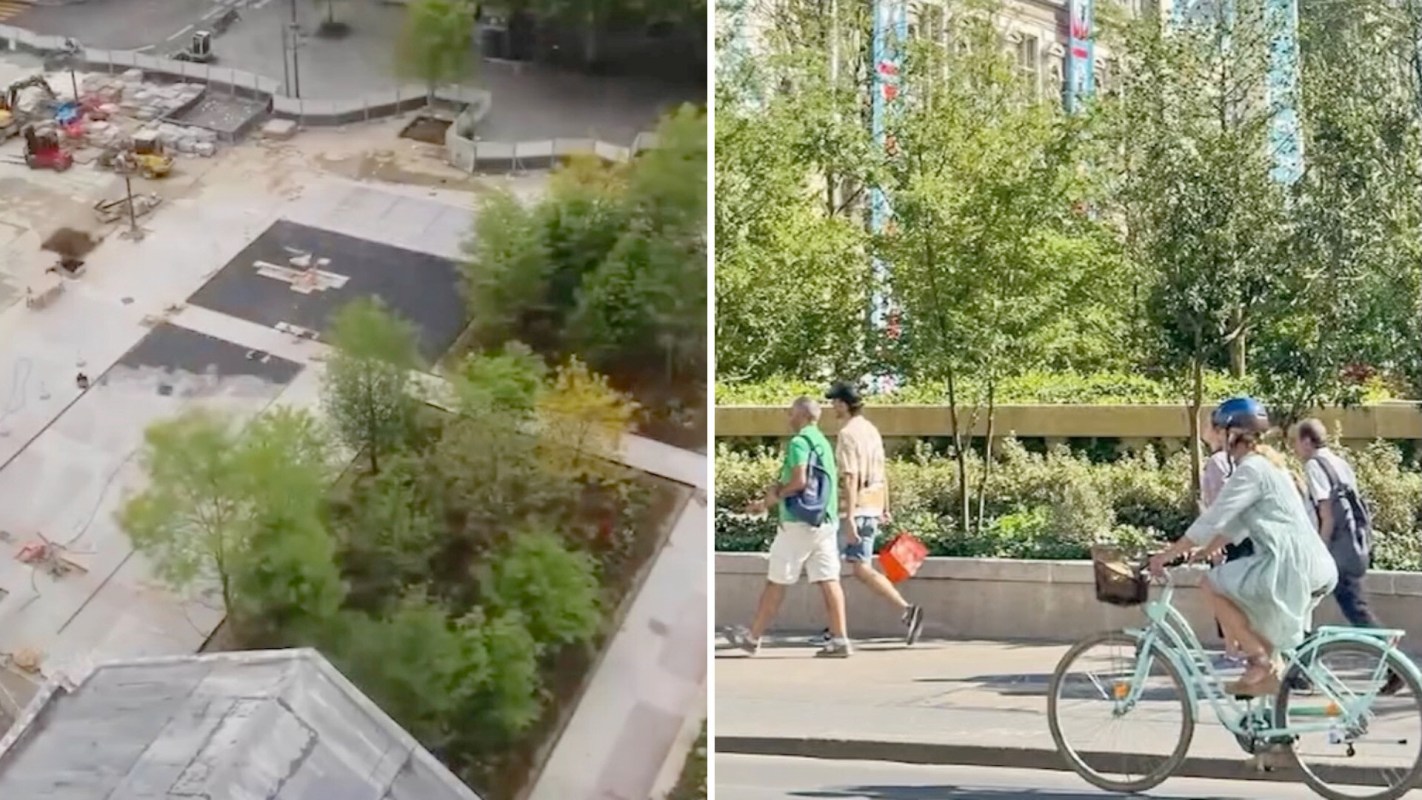
One of Paris' famous stone plazas is evolving into a microforest.
The concrete outside Paris City Hall — Hôtel de Ville — has been torn up and replanted with trees, turning a hard, heat-trapping plaza into a greener public space and offering a highly visible example of urban climate solutions.
What happened?
The Hôtel de Ville project is part of the city's larger climate resilience initiative. More than 50 trees and 20,000 plants and shrubs were planted around the plaza, which has historically been a 2,500-square-meter stone square, according to Thursd.
The planners chose heat-tolerant local plants, like oak and honey locust, to keep them alive and well in the area.
By removing the predominantly stone area, the city has now opened up the ground to help absorb and handle rainwater, which should help with local flood resilience.
How is this helpful?
This is the third microforest that's been built in Paris, following the Place de Catalogne and the Bois de Charonne. Paris wants to eventually plant over 170,000 trees to cover roughly 50% of the city with water-safe surfaces.
TCD Picks » Quince Spotlight
💡These best-sellers from Quince deliver affordable, sustainable luxury for all




Concrete plazas can intensify urban heat by absorbing and holding warmth long after the sun goes down. In a major city such as Paris, that can make summer heat more dangerous and everyday outdoor spaces less comfortable for residents, workers, and visitors.
Adding trees can help lower surface and air temperatures while creating shade in places where people actually gather. Replacing pavement with planted areas can also improve stormwater absorption, reducing runoff and helping cities better manage heavy rain, according to the Environmental Protection Agency.
More soil, roots, and canopy can also support insects, birds, and other urban wildlife that struggle in fully paved environments.
That can translate into cooler walks, more usable public squares, better air quality, and neighborhoods that feel less harsh during hot weather.
What's being done?
Paris' plaza redesign fits into a growing movement among cities trying to replace unnecessary asphalt and concrete with trees, gardens, and other climate-friendly features.
Depaving projects are showing up in schoolyards, parking lots, medians, and civic spaces as local governments look for ways to curb heat and improve livability.
These projects often work best when they serve several purposes at once: cooling neighborhoods, improving drainage, expanding habitat, and making public areas more pleasant to use.

Get TCD's free newsletters for easy tips, smart advice, and a chance to earn $5,000 toward home upgrades. To see more stories like this one, change your Google preferences here.







