


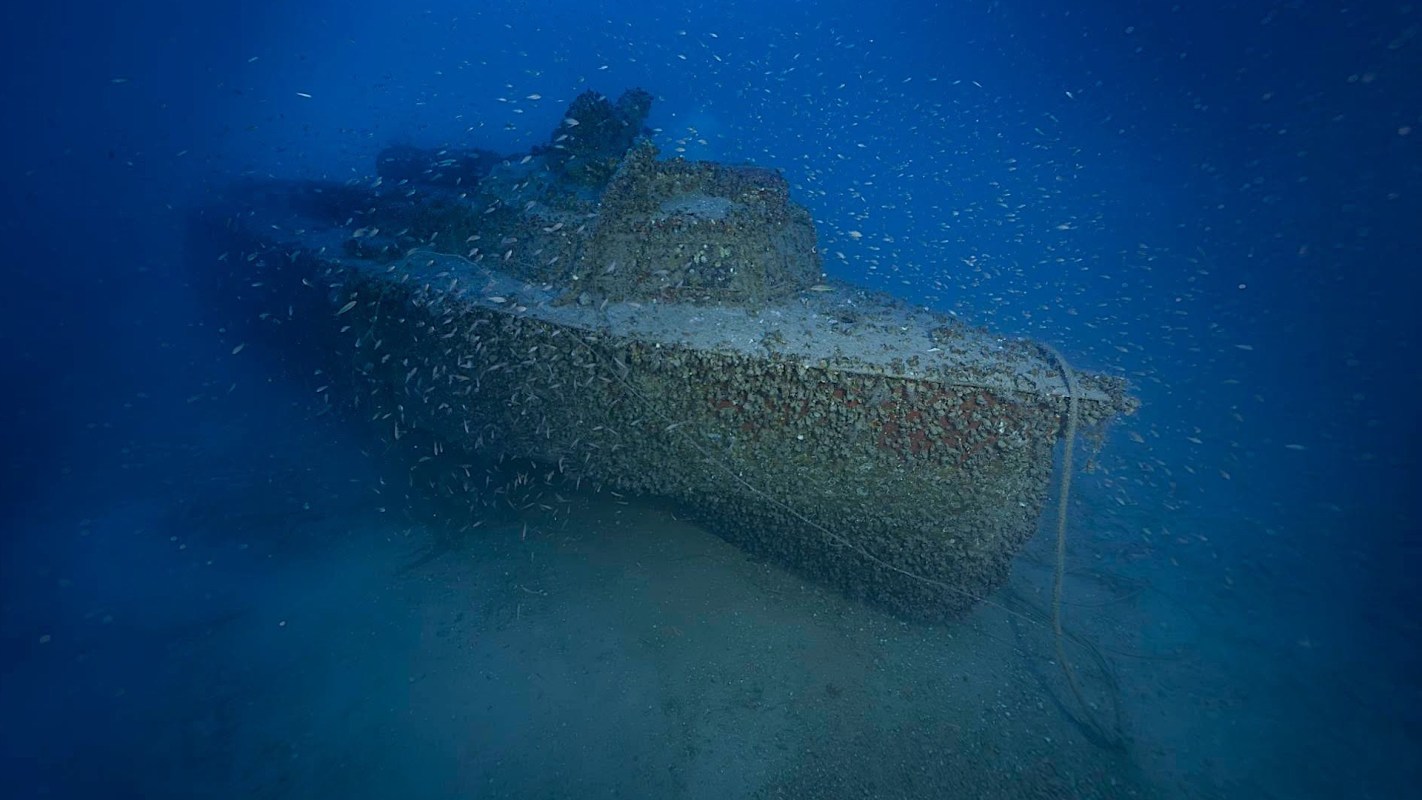
Researchers say they have found a nearly intact World War II-era German torpedo boat on the seabed of the Ionian Sea, bringing to an end a search of more than 10 years and potentially identifying the last surviving example of its type.
Its 83 years beneath the water have not erased key details: historians and archaeologists now have an unusually clear window into a lesser-known form of wartime naval design.
What happened?
The wreck has been identified as Leichte Schnellboot 6, or LS 6, an uncommon German "Light Fast Boat" that went down off western Greece in September 1943. According to Greek Reporter, it lies 96 meters (315 feet) deep in the waters between Lefkada and Preveza.
The team from AegeanTec located the vessel after a hunt that started in 2013. That effort grew out of records flagged by German naval historian Peter Schenk, who pointed researchers to accounts of a small Kriegsmarine boat lost in the Ionian Sea while being towed.
Marinos AegeanTec posted about the discovery to Facebook, writing, "Some pursuits of hidden wrecks are measured in meters. Others are measured in years…" alongside photos of the mission.
Historical researcher Giorgos Karelas later used wartime archives to further tighten the search zone. Once AegeanTec reached the site with closed-circuit rebreather equipment, the boat was found sitting almost upright on the sandy seafloor.
TCD Picks » Quince Spotlight
💡These best-sellers from Quince deliver affordable, sustainable luxury for all




Researchers identified it from markers including its Junkers Jumo engines, the boat's dimensions and construction, and a towing cable that remains attached to the bow.
Why does it matter?
If that identification holds, LS 6 would be the only Leichte Schnellboot-class boat known to survive anywhere in the world, giving historians a singular primary artifact to study.
Its construction is part of what makes the find unusual. Rather than following the pattern of many wartime boats, LS 6 used a lightweight aluminum hull intended to improve speed and agility during special operations, a feature that could help historians trace military experimentation during World War II.
The condition of the wreck adds to that importance: despite decades underwater, it remains strikingly intact, allowing specialists to inspect both how the craft was put together and how it met its end.
What's being done?
The discovery itself is the result of years of methodical research paired with advanced diving technology. AegeanTec's work shows how archival documents, careful seabed searches, and technical diving can uncover pieces of history that might otherwise remain lost.
That kind of work can support broader efforts to document and protect underwater cultural heritage. Once a wreck is identified, researchers and local authorities are better positioned to evaluate how to preserve it, study it responsibly, and prevent damage from looting or unregulated disturbance.
The discovery of LS 6 closes a search that began in 2013. With its upright position, intact features, and rare aluminum design, the wreck offers a surviving snapshot of World War II naval history.
"Few experiences compare to the privilege of being the first to dive, document and identify a forgotten piece of history. This is more than a dive. It's a journey through time!" Marinos AegeanTec wrote on Facebook.
"In the next chapter, we'll reveal the story of this extremely rare finding, the evidence that led us there, and what we discovered beneath the surface."

Get TCD's free newsletters for easy tips, smart advice, and a chance to earn $5,000 toward home upgrades. To see more stories like this one, change your Google preferences here.






