


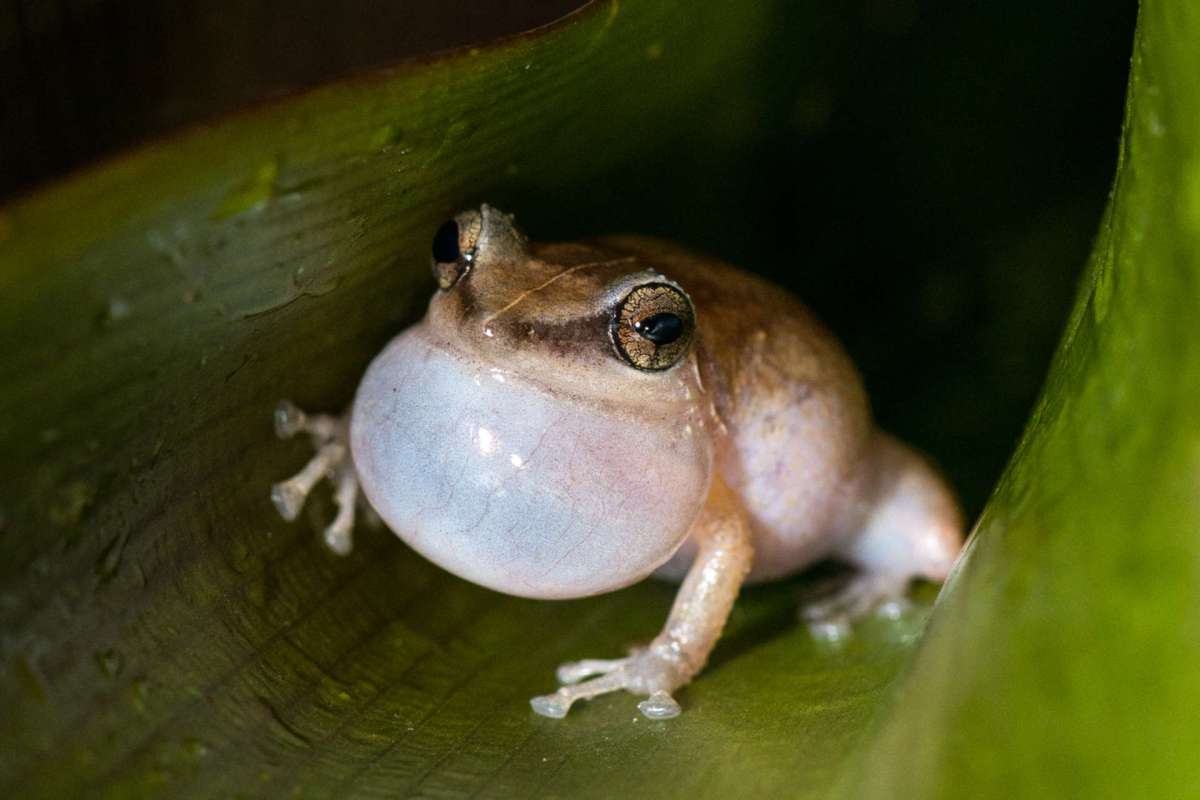
In one Oahu neighborhood, volunteers and crews are actively combating the spread of invasive coquí frogs whose loud calls can annoy local residents and threaten neighboring ecosystems.
What's happening?
In a short clip posted to Instagram, Honolulu City Council member Tyler Dos Santos-Tam explains why there is an urgent need to stop the coquí frog in its tracks.
"Coquí frogs may be tiny, but their impact is big. Their loud calls can affect neighborhoods from dusk until dawn, and they can also harm native ecosystems by eating the insects our forests depend on," Dos Santos-Tam explained in the caption.
The footage shows crews of people working through the dark, capturing the loud and disruptive frogs in plastic tubes.
Why does it matter?
Because Hawaiʻi's habitats are especially vulnerable to invasive species, a nonnative animal that consumes insects native forests rely on can send effects through the food web and add strain to already sensitive ecosystems.
Coquí frog control therefore reaches beyond the frogs themselves, touching the natural systems that support biodiversity, clean water, and the landscapes residents and visitors value.
TCD Picks » Quince Spotlight
💡These best-sellers from Quince deliver affordable, sustainable luxury for all




The problem is also immediate for nearby communities: an all-night chorus can disrupt sleep and make it harder to enjoy time outdoors. When crews limit the spread early, neighborhoods and surrounding environments have a better chance of avoiding larger disruptions later.
What's being done?
Although invasive species can wreak havoc on local ecosystems, on Oahu, crews are combating coquí frogs early, hoping to prevent the species from spreading to other regions of the island.
That kind of invasive-species control is labor-intensive and highly local, with progress tied to finding problem spots, acting quickly, and staying with the work over time.
Community-based action will not solve every ecological challenge on its own, but it can protect neighborhoods, reduce future costs, and give native ecosystems a better chance to recover.

Get TCD's free newsletters for easy tips, smart advice, and a chance to earn $5,000 toward home upgrades. To see more stories like this one, change your Google preferences here.







