


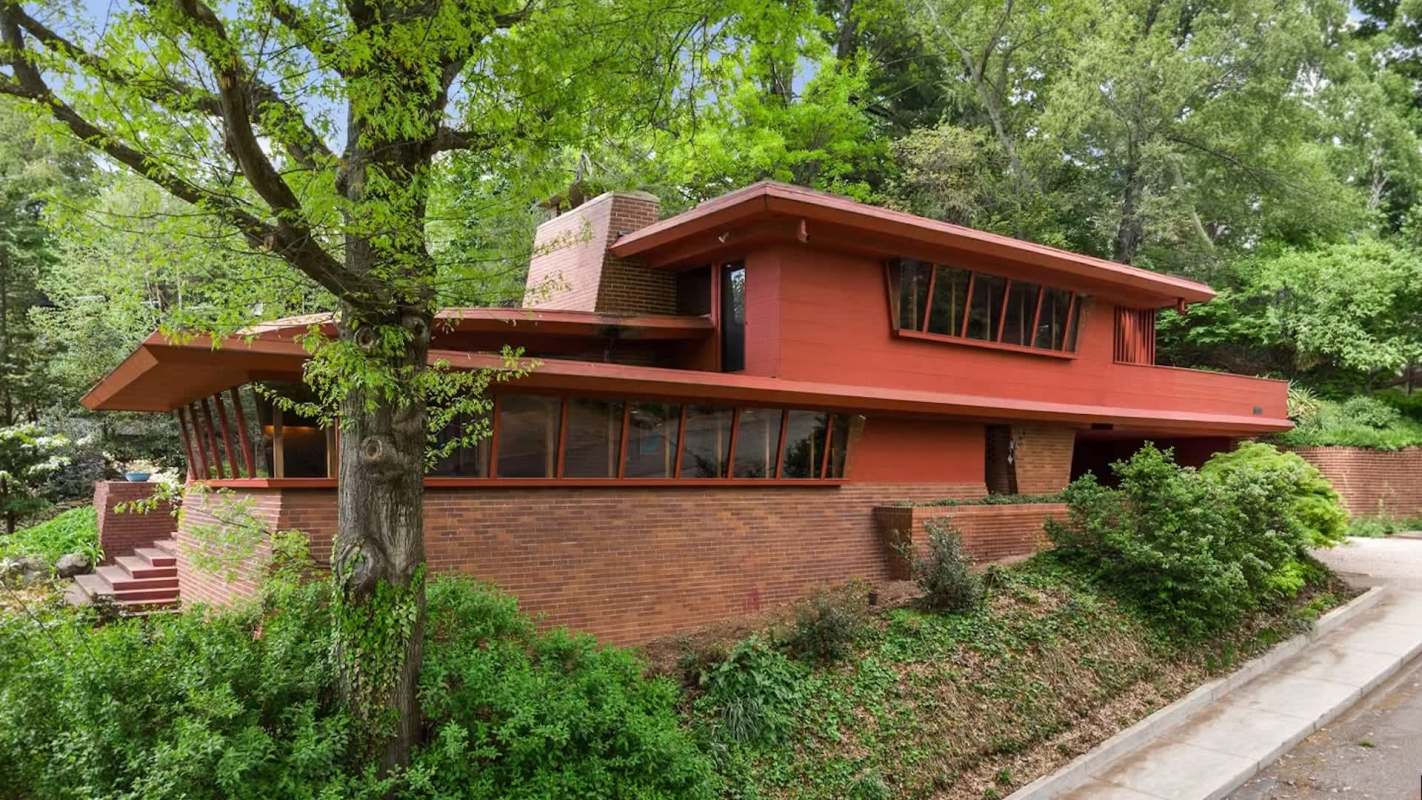
After a close call with near-destruction due to a tenacious critter infestation, an architecturally significant Pittsburgh home is getting fresh attention.
The Abraam Steinberg House, a Frank Lloyd Wright-inspired residence that was nearly demolished in 1989 due to termite damage, was recently listed for $1.2 million, Dwell reported.
What happened?
Hope and Terence Alcorn were looking for a new home after selling their house in Buffalo, New York, when they first set their sights on Pittsburgh in 1989.
A realtor first showed them a conventional early-1900s brick colonial, but the couple passed, saying it was "not really [their] style."
The realtor cryptically responded: "Meet me again at five. I have a house to show you."
As Dwell explained, that second property was the Abraam Steinberg House, a distinctive residence designed by Peter Berndtson and Cornelia Brierly, former apprentices of Frank Lloyd Wright who had also worked on Fallingwater.
TCD Picks » Quince Spotlight
💡These best-sellers from Quince deliver affordable, sustainable luxury for all




Built between 1949 and 1951 for Dr. Abraam Steinberg, the house featured brick, concrete, and redwood construction, along with strong horizontal lines, clerestory windows, cantilevered roof sections, and built-in furniture.
Despite an impeccable architectural history, the home was priced at a scant $170,000 and marketed essentially as though only the lot mattered.
According to Dwell, termite damage had led to the expectation that any buyer would likely tear the house — an extremely valuable example of American architecture — down.
The Alcorns chose to act quickly. Bolstered by Terence's expertise in architecture, the couple committed to restoring the property and eventually made it their family residence.
The house that once seemed likely to be torn down has returned to the market, this time with a $1.2 million asking price.
Why does it matter?
The Steinberg House has a direct connection to Wright's architectural legacy through Berndtson and Brierly's work on Fallingwater, an extremely significant property.
Demolishing a home sends materials into the waste stream and usually requires even more resources to build something new in its place.
However, restoring an existing structure can help reduce that waste while preserving the character of a neighborhood.
The home's rise in value from $170,000 to $1.2 million reflects the quality of the restoration and the level of effort required from the couple to rehabilitate it.
What's being done?
To save the house, the Alcorns addressed the termite issue, secured financing in an unconventional manner, and completed the restoration work it needed.
Older homes with visible damage are not always beyond repair, particularly when owners bring in the right expertise early in the process.
Inspections, targeted remediation, and thoughtful renovation can sometimes preserve remarkable buildings that might otherwise be lost.
Local preservation efforts can play a major role in protecting important buildings before they reach a crisis point.
"We saw it, put in an offer and moved in the next week, because the bank insisted that the house had to be free and clear of termites before they would give us a mortgage," Hope Alcorn told Dwell.
"We fell in love with the house and were very excited to think that we would be able to live here."

Get TCD's free newsletters for easy tips, smart advice, and a chance to earn $5,000 toward home upgrades. To see more stories like this one, change your Google preferences here.






