


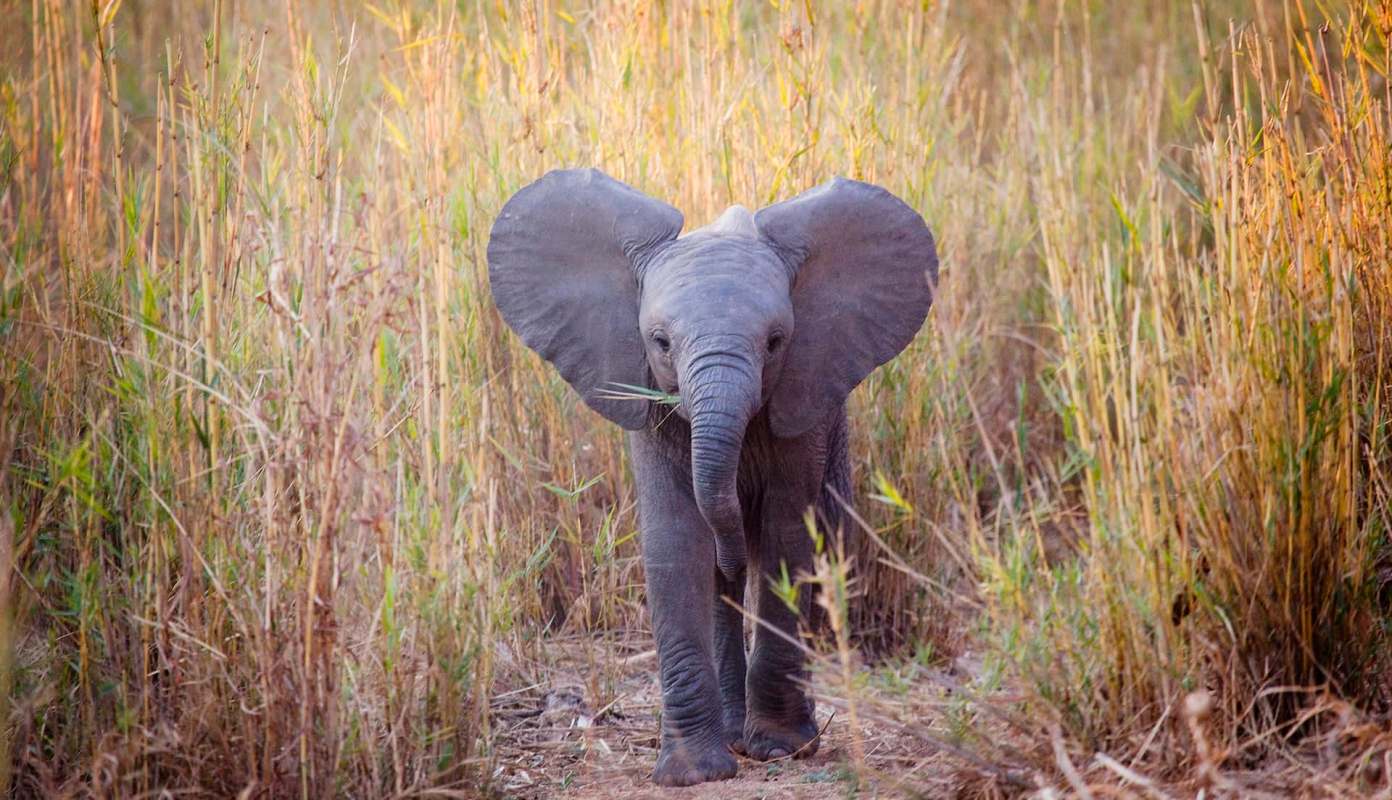
After months of recovery from a bullet wound, a young elephant is back with the herd in Voi.
A video update by Sheldrick Wildlife Trust (@sheldricktrust) shows Serenget, an orphaned elephant, alongside the Voi herd again, highlighting how sustained wildlife care can help an injured animal heal and return to group life.
What happened?
In an Aug. 4 Instagram post, the Trust detailed how Serenget spent about seven months on managed bedrest after being "saved with a serious bullet wound."
The update included video of the young elephant with the rescue herd in Voi and said she is "now back out with the Voi herd setting the pace." Indeed, the group of elephants patiently let Serenget finish her milk in her methodical manner, as the caption described.
"Our big girls always wait patiently for little Serenget to finish her milk bottles," Keeper Philip noted, per the caption. "Not one of them heads to the mud bath until her very last sip is done."
The Trust elaborated on the reason for her unique milk process, saying that months after her rescue from a bullet wound, she would refuse milk until they figured out she would accept it if they poured in a trunk-full at a time with her cooperation.
TCD Picks » Quince Spotlight
💡These best-sellers from Quince deliver affordable, sustainable luxury for all




"It's an exercise in patience — two bottles take time! — but bit by bit, sip by sip, she finishes every last drop," the Trust wrote.
The post drew more than 11,000 likes, as commenters marveled at the communal spirit of the elephants.
Why does it matter?
A bullet wound is a devastating injury for any wild animal, and for a young elephant, recovery can be especially difficult. Sheldrick linked to more info on Serenget's rescue, and indicated human-wildlife conflict was likely at play.
Long periods of restricted movement, feeding support, and close observation are labor-intensive steps that depend on experienced caregivers and a safe place to heal.
Elephants are deeply social animals. Rejoining a herd can be an important step for emotional security, learning, and overall well-being. The detail that older elephants wait for Serenget during daily routines reflects the kind of herd bond that helps young animals thrive.
Protecting wildlife is about more than saving a single animal in one dramatic moment. It also involves medical care, habitat protection, and the support systems that make recovery possible.
In places where elephants are a vital part of the ecosystem, helping them survive and return to healthy group life can have ripple effects that extend far beyond one individual animal.
What's being done?
Wildlife rehabilitation often continues long after the immediate crisis has passed, and Serenget's case shows what that can involve. Her recovery included months of managed bedrest, bottle feeding, and monitoring before she was strong enough to return to the Voi herd.
That kind of work does not end when an animal survives the initial trauma. Reintroduction to a herd, daily care from keepers, and a stable environment all help determine whether recovery will last.
Sheldrick's work with elephants and the herd's accommodation for Serenget seem to abide by the same principles.
"They walk as a family," Keeper Philip said in the caption. "No one is ever left behind."

Get TCD's free newsletters for easy tips, smart advice, and a chance to earn $5,000 toward home upgrades. To see more stories like this one, change your Google preferences here.







