


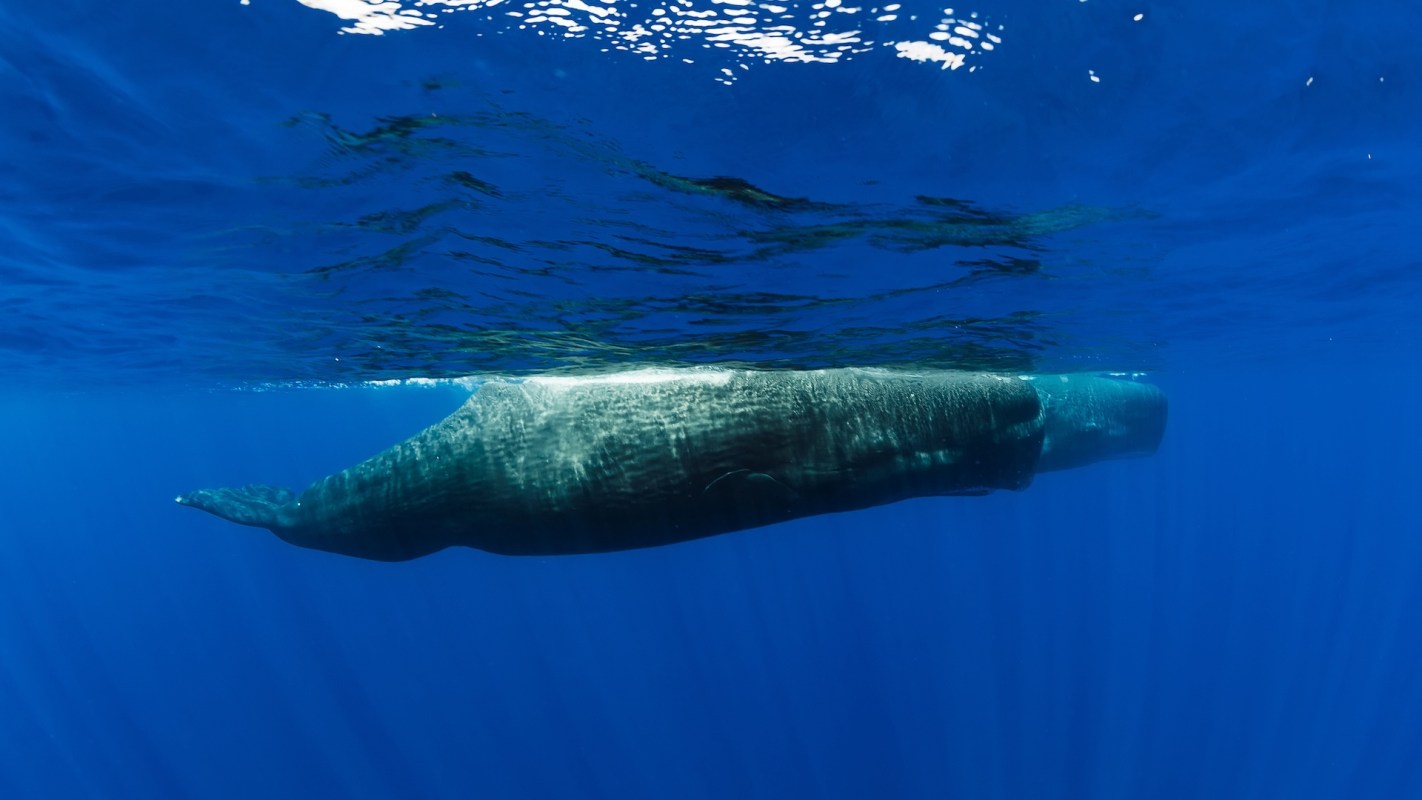
Off Norway, sleeping sperm whales have a clever way of avoiding rising to the water's surface. During their naps, they release bubbles that help keep them underwater.
The discovery gives researchers a look at how one of the ocean's largest animals manages to get enough rest.
What's happening?
Researchers still know relatively little about sperm whale sleep, but they believe the animals rest underwater in short periods lasting about 10 to 15 minutes. During these pauses, the whales often hold their heads angled upward and remain just below the rough surface.
There was a mystery about how their buoyancy worked, as Good News Network noted. Sperm whales have enormous heads, making up nearly one-third of the body and filled with oil, wax, and air, which would seem to make them prone to floating upward.
Researchers from the University of St. Andrews in Scotland and the University of Neuchâtel in Switzerland attached suction-cup recorders to 42 sperm whales in the Lofoten Islands off Norway. The tags tracked depth and body position while also picking up the sounds of bubbles released from the blowhole.
The data showed a clear pattern. Whales resting closer to the surface released bubbles about 11 times during a power nap, while whales ascending from deep dives did so only three or four times.
TCD Picks » Quince Spotlight
💡These best-sellers from Quince deliver affordable, sustainable luxury for all




As Professor Patrick Miller of the University of St. Andrews, the study co-author, explained to the Good News Network, "This means they need to blow fewer bubbles to stop themselves from floating upwards."
Why does it matter?
Unlike other animals that can sleep anywhere, sleeping sperm whales have to carefully manage their position in the water. They need to rest near enough to the surface to breathe if necessary, but not so near that waves or unintended floating disturb their sleep.
That balancing act is especially important for sperm whales because they are deep-diving animals that depend on carefully managing oxygen, pressure, and energy. The deeper they dive, the more compressed the air in their lungs becomes, which changes how buoyant they are when it is time to rest.
Understanding when and how whales rest can help researchers better interpret movement patterns and the kinds of conditions these animals need to thrive.
What's being done?
The study also highlighted how newer tagging technology is making hard-to-observe underwater behavior easier to study. Instead of depending only on what scientists can see at the surface, the tags revealed what the whales were doing below the water.
The recordings also suggested three resting patterns: a brief head-down dip before turning upward, a gentle tail-first sink of about 26 feet (eight meters), or dozing during an ascent from dives below 656 feet (200 meters). That gives researchers a much more detailed picture of whale rest than they had before.
Scientists are still trying to answer whether sperm whales sleep fully or, like dolphins, leave part of the brain on alert and whether they consciously or unconsciously think to blow bubbles.
Noémie Freymond, study lead author from the University of Neuchâtel, said, "Blowing bubbles to make sure they don't come too near the surface requires the whales to sense their environment and realize that they are coming too close to the surface."

Get TCD's free newsletters for easy tips, smart advice, and a chance to earn $5,000 toward home upgrades. To see more stories like this one, change your Google preferences here.






