


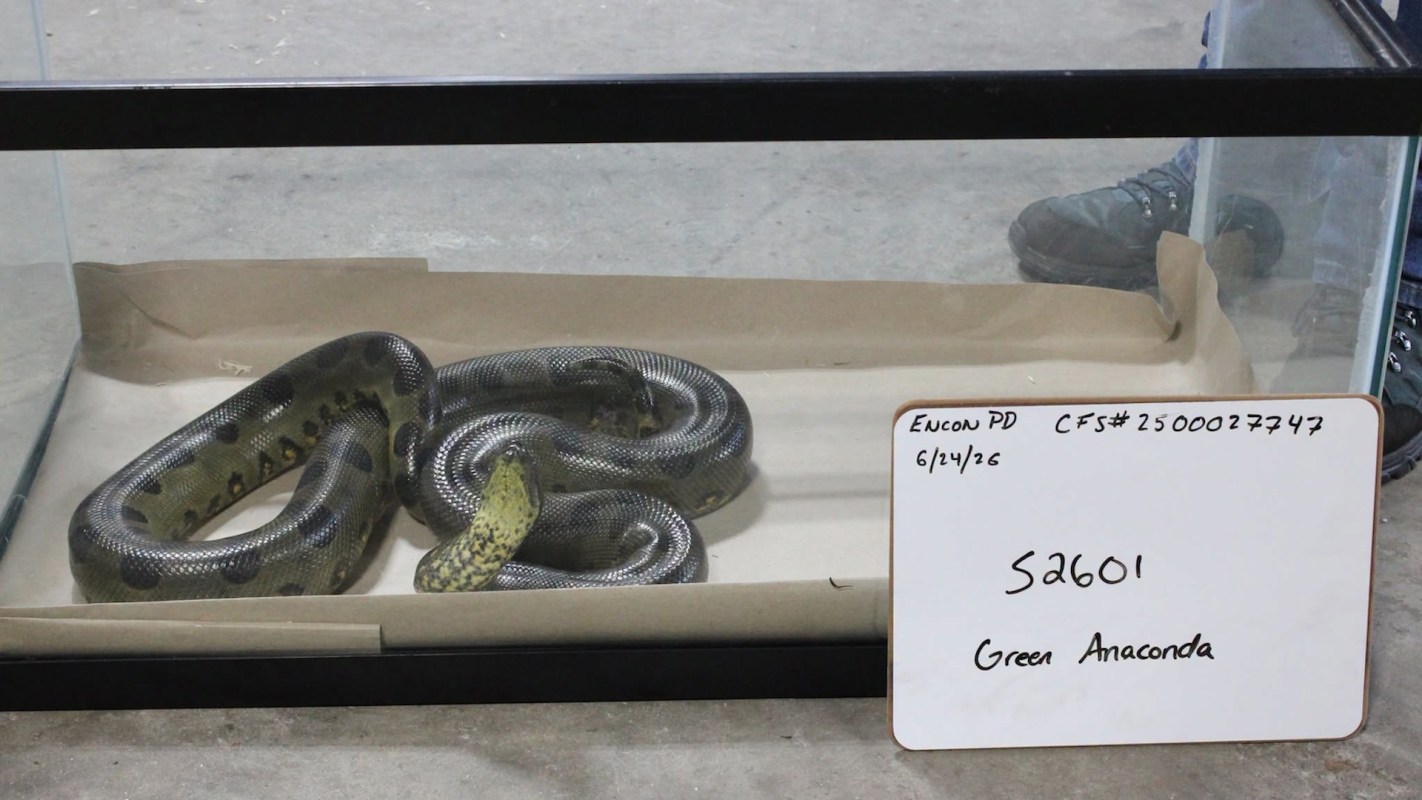
Investigators found 49 reptiles inside a Hamden, Connecticut, warehouse, with 46 of them venomous snakes that were allegedly being kept illegally.
Authorities have since filed criminal charges against two men from New Haven, and the case has sparked concerns about both the safety of people and animals as well as the impact that illegal wildlife trafficking can have on conservation efforts.
What happened?
According to the New Haven Register, among the dozens of dangerous reptiles authorities seized during a June 24 search of a Sherman Avenue warehouse were 13 types of rattlesnakes, a cobra, mangrove pit vipers, two anacondas, and a water monitor lizard.
The operation was led by the Environmental Conservation Police division of the Connecticut Department of Energy and Environmental Protection, with help from the U.S. Fish and Wildlife Service and Connecticut State Police.
Because Connecticut requires permits to legally possess these animals, officials called in an accredited herpetologist to remove the reptiles safely from the property.
Officials said two 26-year-old men from New Haven, Tyler Foster and Brian Roman, now face dozens of counts tied to the illegal possession of wild animals.
TCD Picks » Quince Spotlight
💡These best-sellers from Quince deliver affordable, sustainable luxury for all




Why does it matter?
Keeping venomous snakes and other exotic reptiles in an unauthorized setting can put nearby residents, emergency responders, and workers at serious risk if an animal escapes or someone is bitten.
This case highlights how the illegal wildlife trade is impacting places all over the world. When wild animals are bought, sold, and kept outside the law, it can undermine conservation rules meant to protect species and ecosystems.
Venomous snakes, large constrictors, and monitor lizards require specialized care, and improper housing can cause suffering for the animals while increasing danger for people living nearby.
What's being done?
Following the investigation, authorities obtained warrants for Foster and Roman. Officials said both turned themselves in to Connecticut State Police, and they were each charged with 49 counts of illegal possession of a wild animal and 13 counts related to taking endangered or threatened species.
Wildlife enforcement often depends on partnerships among local police, conservation officers, and federal officials, especially when cases involve restricted species or potentially dangerous animals.
The case also points to the value of strong permitting systems and enforcement. Those safeguards help protect communities while ensuring that conservation laws serve their purpose instead of being ignored behind closed doors.

Get TCD's free newsletters for easy tips, smart advice, and a chance to earn $5,000 toward home upgrades. To see more stories like this one, change your Google preferences here.







