


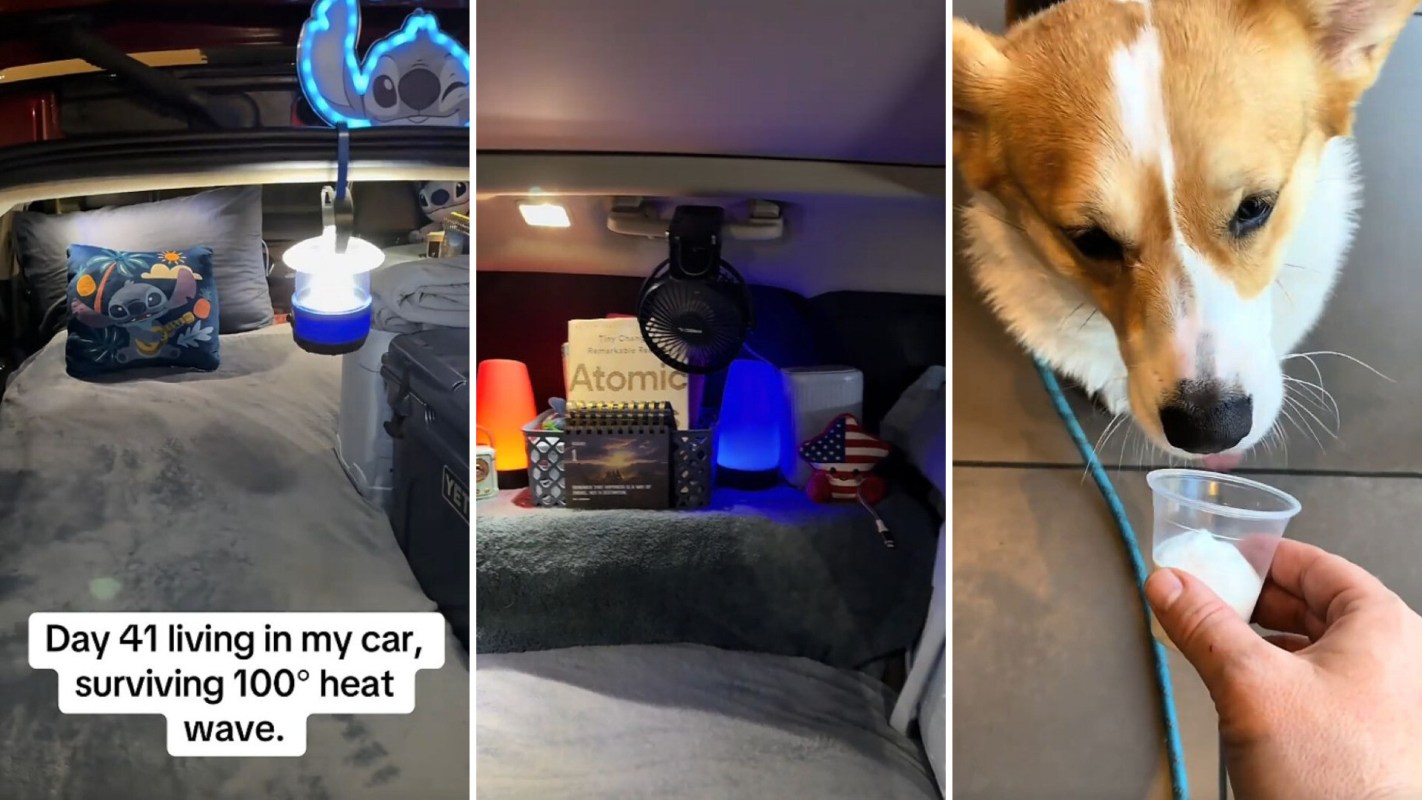
As 100-degree heat bears down on California and communities around the world, even one night of air conditioning can make a huge difference for those exposed to the extreme temperatures.
For one person experiencing homelessness, that relief came through a hotel room paid for by two supporters. It allowed him and his dog, Bandit, to spend a night away from the dangerous temperatures they have been exposed to while living in his car.
What's happening?
Content creator Tyler has been sharing on social media about his experiences surviving homelessness and living out of his car.
@thenomadicmillennial I'm homeless living in my car and today is Day 41 of living in my car and starting my life over. Surviving 100° heat wave. #homeless #homelessness #heatwave #homelesslivesmatter #california ♬ original sound - Tyler
With California facing what Tyler called a "massive heat wave," the creator also shared that two supporters, Lisa and Cara, covered a hotel room for the night. Tyler framed it as a brief chance to cool down while continuing to cope with homelessness and the challenge of rebuilding his life.
For someone living in a car during a period of high temperatures, shade, water, and air conditioning are not just comforts — they can offer critical protection from heat-related risks.
Tyler also made clear how much the gesture meant, saying, "Both Bandit and I want to just thank you so very much for getting us out of the heat and into a nice, comfortable hotel room for the night."
TCD Picks » Quince Spotlight
💡These best-sellers from Quince deliver affordable, sustainable luxury for all




Why is this important?
Extreme heat is one of the deadliest forms of severe weather, and it can be especially dangerous for people without access to housing. Cars and tents can heat up rapidly, and spending long stretches in high temperatures can increase the risk of dehydration, heat exhaustion, and heat stroke.
Rising temperatures can endanger lives and livelihoods in ways that go far beyond discomfort. Heat waves can threaten public health, strain emergency services, and make communities less safe for people who already have the fewest resources. Extreme heat can also deepen economic inequality, as a person living in a car or tent may have to spend limited money on gas, hotels, bottled water, or pet care.
Climate stress and cost-of-living pressures are increasingly overlapping, and the impacts of extreme heat — and extreme weather overall — are not equally felt. The people most exposed are often those with the least access to air conditioning, air filtration, clean water, transportation, and safe shelter.
What can be done?
In this case, the most immediate help came from ordinary people. Lisa and Cara provided a hotel stay, giving Tyler and Bandit a safer place to rest.
Other viewers also responded with concern and encouragement.
One commenter wrote, "Glad you got a hotel, and I hope you got a [night's] sleep."
Direct cash support, hotel vouchers, cooling-center outreach, bottled water donations, and pet-friendly shelter options can all help during dangerous weather events. For people facing housing insecurity, small interventions can have a major impact.
"This is such a nice break from the heat," Tyler said.
A commenter echoed the sentiment, writing, "It makes my heart happy to hear about these acts of kindness. You and your sweet doggy Bandit deserve this break."

Get TCD's free newsletters for easy tips, smart advice, and a chance to earn $5,000 toward home upgrades. To see more stories like this one, change your Google preferences here.






