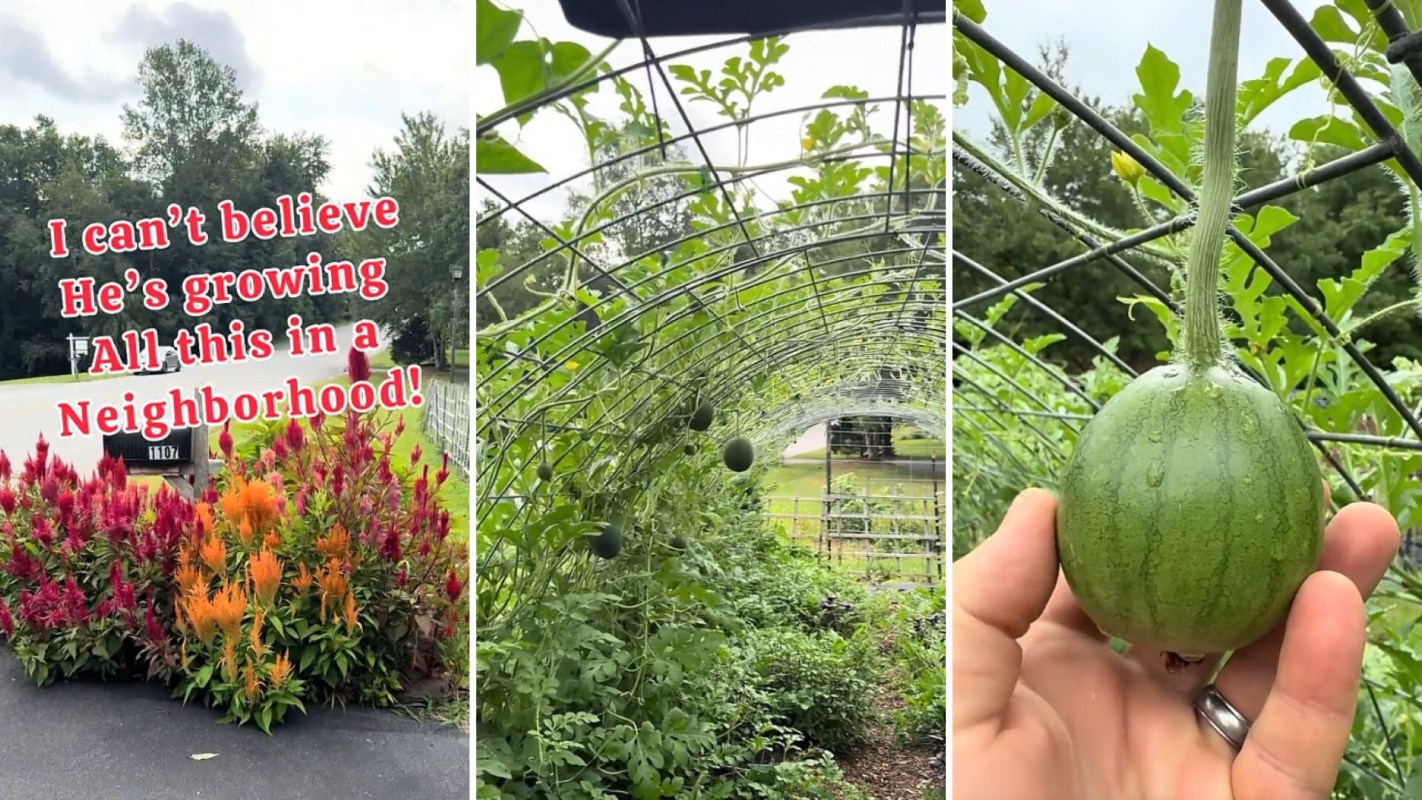
A front-yard vegetable garden is drawing criticism — and a strong defense from the person growing it.
In a post, the creator behind Rootbound Farms challenged the idea that a yard used to grow food is somehow bad for the block, saying home gardening can help a community rather than hurt it.
What happened?
After about a decade of hearing objections to the food he plants in his front yard, the creator said some critics still argue that it is "bringing property values down." In a TikTok, he boiled that mindset down to one line: "Neighborhoods are meant for manicured lawns and flower beds."
@rootboundfarms I don't know who this guy thinks he is!!!🙄🙄👀 👉Growing food in his front yard, bringing property values down, and making a mess! 👉Neighborhoods are meant for manicured lawns and flower beds!! 🔥I've heard it all. 🍉BTW… did you know that you can tell when a watermelon is ripe by locating the first tendril closest to the fruit? Once it dries up and hardens, the fruit is usually ready to pick!! #regenerativeagriculture #growyourownfood #farmtotable #farmlife #sustainability ♬ original sound - Rootbound
According to the creator, upsetting anyone was never the purpose of the project. "We didn't start Rootbound Farms to piss anybody off," the creator said. "We actually started it to be more sustainable, self sufficient, and to educate the community. Because if more people did this, communities would thrive."
He also used the video to share a growing tip, saying the sugar baby watermelons climbing his cattle panel trellis typically reach 6 to 8 pounds and are ready to harvest when the tendril closest to the fruit has turned brown and dried.
Commenters largely sided with the grower. One wrote: "It's his land! I love gardening!" Another added: "Plant food, not grass!"
TCD Picks » Quince Spotlight
💡These best-sellers from Quince deliver affordable, sustainable luxury for all




Why does it matter?
A front-yard food garden can turn ornamental space into something practical, producing fresh fruits and vegetables steps from the kitchen.
It also reflects a wider pattern of neighborhood resistance to sustainable home changes. These conflicts can make it harder for residents to cut utility costs and conserve resources, even when the changes benefit the wider community.
The Rootbound Farms video reflects a cultural divide. While some people still see neatly trimmed lawns as the standard, others view food production and ecological landscaping as a smarter use of space.
What can I do?
A raised bed, a trellis, or even a few containers can provide herbs, greens, or fruit without requiring a full backyard farm.
HOA policies vary widely, and some restrictions can be challenged or changed. TCD has a helpful guide on working with HOAs for residents trying to update bylaws or advocate for more climate-friendly home choices.
Food gardens, native landscaping, and other sustainable yard choices can create more useful, lower-maintenance neighborhoods than traditional lawns — even if they do not match everyone's idea of curb appeal.

Get TCD's free newsletters for easy tips, smart advice, and a chance to earn $5,000 toward home upgrades. To see more stories like this one, change your Google preferences here.