


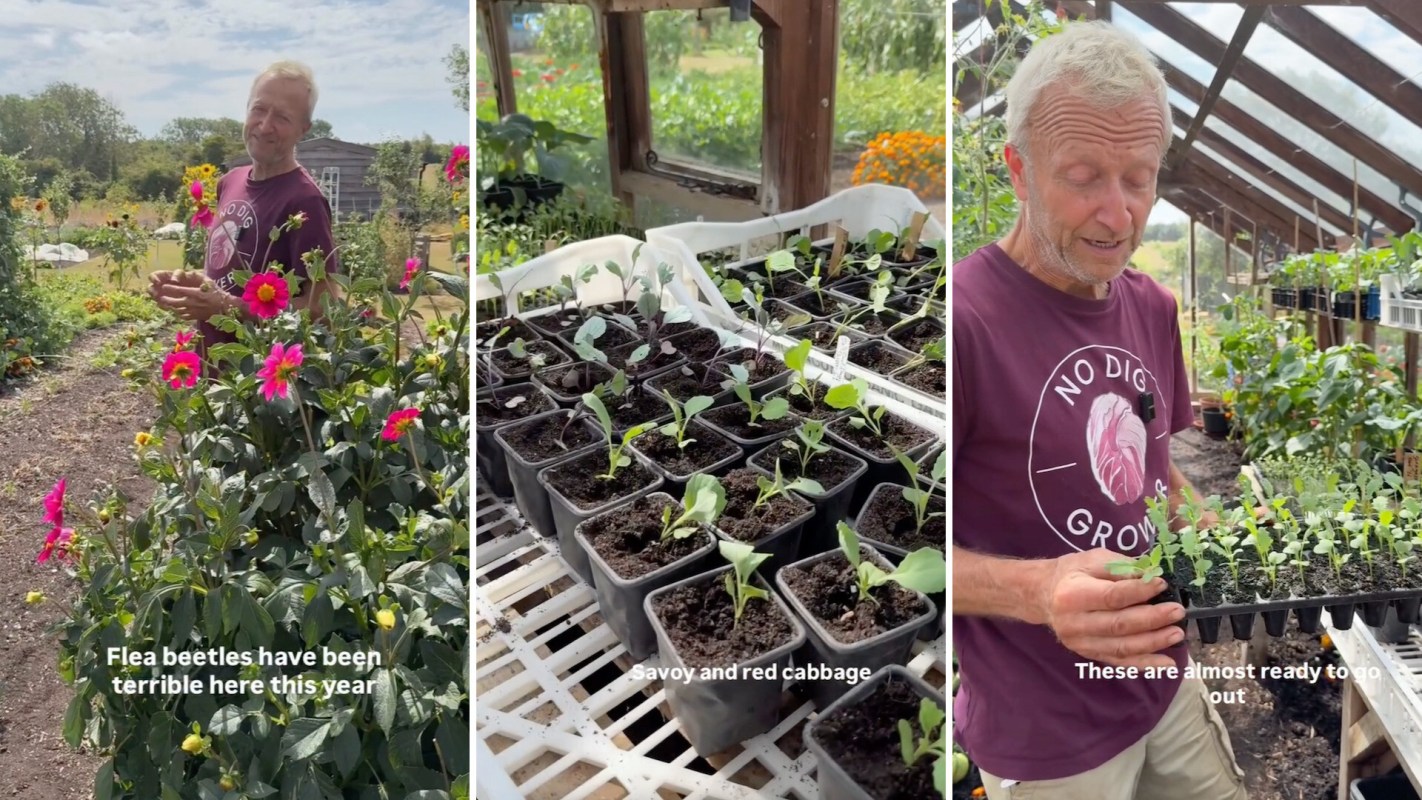
A severe flea beetle outbreak in England pushed no-dig gardening expert Charles Dowding to reconsider a common line of defense for plants. Rather than relying on row covers alone, he found that larger starts and better watering offered a stronger chance of saving crops.
What happened?
In a July 28 video, no-dig gardening educator Dowding walked viewers through the damage in an Instagram post. The clip showed kale that had gone into the ground as small plug plants, and he said the young transplants were "almost a disaster."
For comparison, he showed swedes that had been sown earlier than the kale. Flea beetles had still hit them hard — "massively hammered," in his words — but the bigger plants were still putting on growth.
Dowding also pointed to another issue beyond the insects themselves. Some Brussels sprouts were badly undersized, and he said mesh may have caused water to miss the center of certain rows, where the driest plants were struggling most.
Why does it matter?
Flea beetles are more than a cosmetic nuisance for home gardeners. They can shred the tender leaves of kale, cabbage, broccoli, kohlrabi, and Brussels sprouts before plants become established, turning a promising garden bed into a failed harvest.
Growing food at home can help households save money on produce, enjoy fresher and better-tasting vegetables, and spend more time being active outdoors.
TCD Picks » Quince Spotlight
💡These best-sellers from Quince deliver affordable, sustainable luxury for all




Gardening can also support mental health for many people by providing routine, stress relief, and a sense of progress that is hard to get from a grocery receipt alone.
Dowding pointed to weather as part of the problem, explaining that flea beetles "thrive in dry weather."
What can I do?
In his caption, he explained, "We're watering as much as possible, which is one remedy. The other one is to raise larger transplants, as you see."
That can mean growing cabbages in larger pots before transplanting, seeing whether row covers are keeping water from reaching the soil evenly, and taking covers off or shifting them if they are creating dry patches.
It can also mean deciding when a chewed-up seedling is unlikely to recover and swapping it out for a replacement instead.
"I've never seen them so voracious and harmful, even where I've used covers," Dowding wrote.
One commenter wrote: "Perhaps that's why us gardeners are never bored."

Get TCD's free newsletters for easy tips, smart advice, and a chance to earn $5,000 toward home upgrades. To see more stories like this one, change your Google preferences here.






