


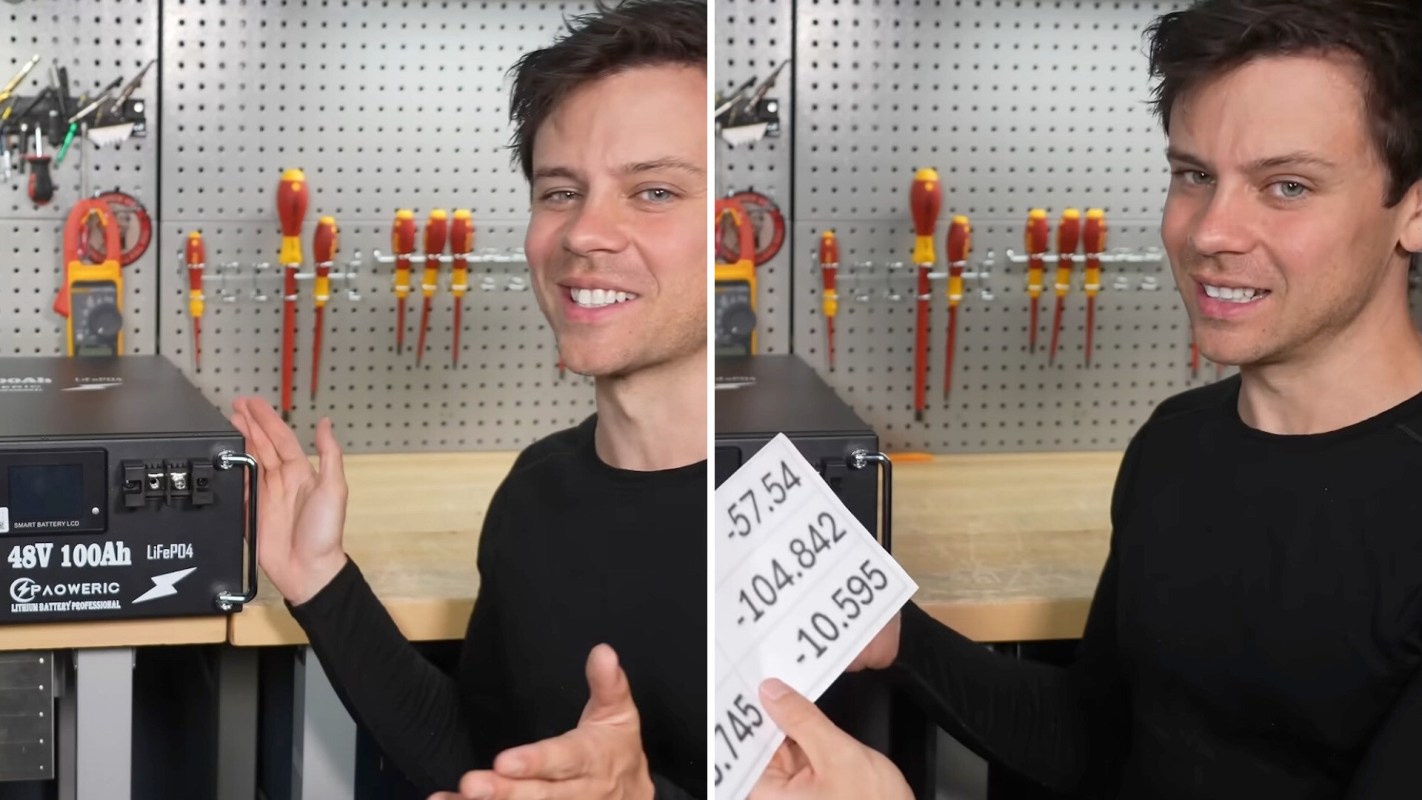
Sometimes, a product can offer a lot and deliver very little, and the cheapest option doesn't always provide the best value.
In a YouTube review, content creator and solar DIY expert Will Prowse (@WillProwse) tested a $699 Paoweric server-rack battery sold on Amazon that promised 5 kilowatt-hours of LiFePO4 storage and a 200-amp output for backup power, and he found performance and build-quality problems.
What happened?
Prowse's first impression was mixed. He said the battery "doesn't look that bad," but he noted that the case is only 13 inches wide, which means it would not fit most standard server racks that are typically wider. He also found that the 200-amp claim did not match the battery's real-world performance.
When he ran a 200-amp test, Prowse said the battery lasted only 54 seconds, and he said the breaker seemed to be labeled for 100 amps instead of 200. Testing at 100 amps did not solve the issue, as the unit kept shutting off.
After opening the battery, he pointed to several workmanship problems, including blobs of solder at the bus bar, temperature sensors attached with tape, messy heat shrink, and no material between the cells.
"This is not a good battery, guys," Prowse said.
TCD Picks » Quince Spotlight
💡These best-sellers from Quince deliver affordable, sustainable luxury for all




Why does it matter?
LiFePO4 batteries can be incredibly useful when they are well built. They can store solar energy for nighttime use, keep essential devices and appliances running during blackouts, and help homeowners or small businesses avoid some peak electricity costs. For people in storm-prone areas, reliable battery storage can offer peace of mind as well as convenience.
A battery that cannot deliver its rated output or that cuts corners internally may create expensive headaches for buyers expecting dependable backup power. In the worst case, poor design can also complicate permitting, insurance, and safety.
One commenter wrote, "They cut too many corners to make it cheap. Not worth the hassle."
What can I do?
If you are shopping for home energy storage, it helps to compare more than the sticker price. Check the continuous current rating, breaker size, terminal size, physical dimensions, certifications, and whether the battery has been independently tested or torn down by a trusted reviewer.
Certification is especially important for anyone pairing batteries with home solar or installing a backup system indoors. A cheaper battery may look appealing upfront, but a certified model can save time and money later if it is easier to permit, insure, and rely on during an outage.
A lower-cost unit might seem like enough for basic storage, but if you need to run larger appliances, recharge quickly, or cycle the system often, real-world performance matters more than marketing claims.

Get TCD's free newsletters for easy tips, smart advice, and a chance to earn $5,000 toward home upgrades. To see more stories like this one, change your Google preferences here.






