


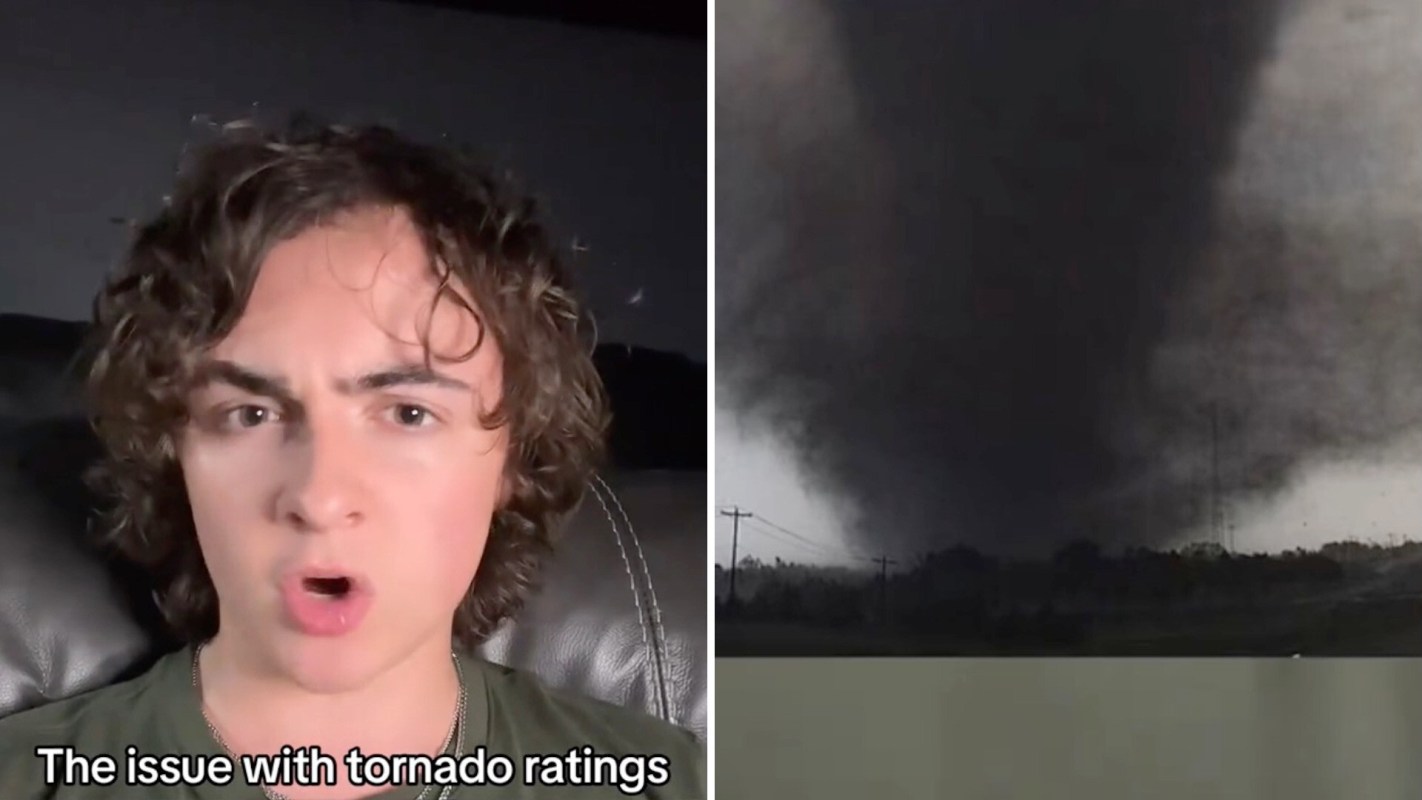
Tornado ratings can seem final once the skies clear. But a tornado in Enid, Oklahoma, that struck in April 2026 is raising a bigger question about whether the United States is measuring some of its most violent twisters the right way.
What's happening?
In a TikTok video, weather content creator and self-described storm chaser Liam Watkins (@liamwatkinswx) said the Enid tornado's final rating may end up influencing how future storms are judged.
@liamwatkinswx The rating of the Enid Oklahoma tornado could heavily impact how tornadoes are rated in the future. #weather #storm #tornado #fyp #viral ♬ original sound - Glitch guy 🟩⬛️
The discussion centers on the Enhanced Fujita scale, the system used to rate tornadoes from EF0 to EF5. Those ratings depend heavily on the damage a storm leaves behind and the wind speeds experts can estimate from that damage.
That process can become more complicated when a tornado moves across open land or misses the kinds of structures survey teams use as the strongest damage indicators. In those cases, a storm that appears exceptionally intense on radar or on video may still be harder to place at the top of the scale.
Watkins said the National Weather Service is considering upgrading the Enid tornado from an EF4 to an EF5 following a forensic investigation. The possibility comes after a similar case in 2025, when the Enderlin, North Dakota, tornado was upgraded to EF5 based on post-storm forensic evidence rather than damage assessments made immediately after the event.
According to Watkins, the National Weather Service has not indicated whether the Enid tornado will ultimately receive the higher rating. However, if it does not, he argued it could create inconsistencies in how the strongest tornadoes are classified when comparable forensic evidence exists.
TCD Picks » Quince Spotlight
💡These best-sellers from Quince deliver affordable, sustainable luxury for all




Why does it matter?
Tornado ratings are more than dramatic labels. They help scientists compare storms across years, guide how meteorologists talk about severe weather risk, and shape how the public understands what a community just endured.
If the Enid tornado exposes a weakness in the current system, especially for storms that move through rural areas, it could influence how future tornadoes are assessed nationwide. That would not change what survivors experienced on the ground, but it could affect the historical record and the way dangerous storms are described going forward.
A lower or uncertain rating can create the impression that a tornado was less dangerous than it actually was. A clearer system could help show that a storm does not need to hit a dense neighborhood to be extremely powerful and life-threatening.
What's being done?
The immediate work is the careful process meteorologists already use after major tornadoes: surveying damage, reviewing imagery and radar, and comparing those findings with established EF-scale guidance. High-profile cases can also prompt experts to reexamine whether the system is capturing the full picture in sparsely populated areas.
Weather researchers continue to push for better observation tools and clearer communication about tornado intensity. Stronger radar analysis, more complete field surveys, and better public explanations can all help narrow the gap between what a storm did and how it is officially rated.

Get TCD's free newsletters for easy tips, smart advice, and a chance to earn $5,000 toward home upgrades. To see more stories like this one, change your Google preferences here.






