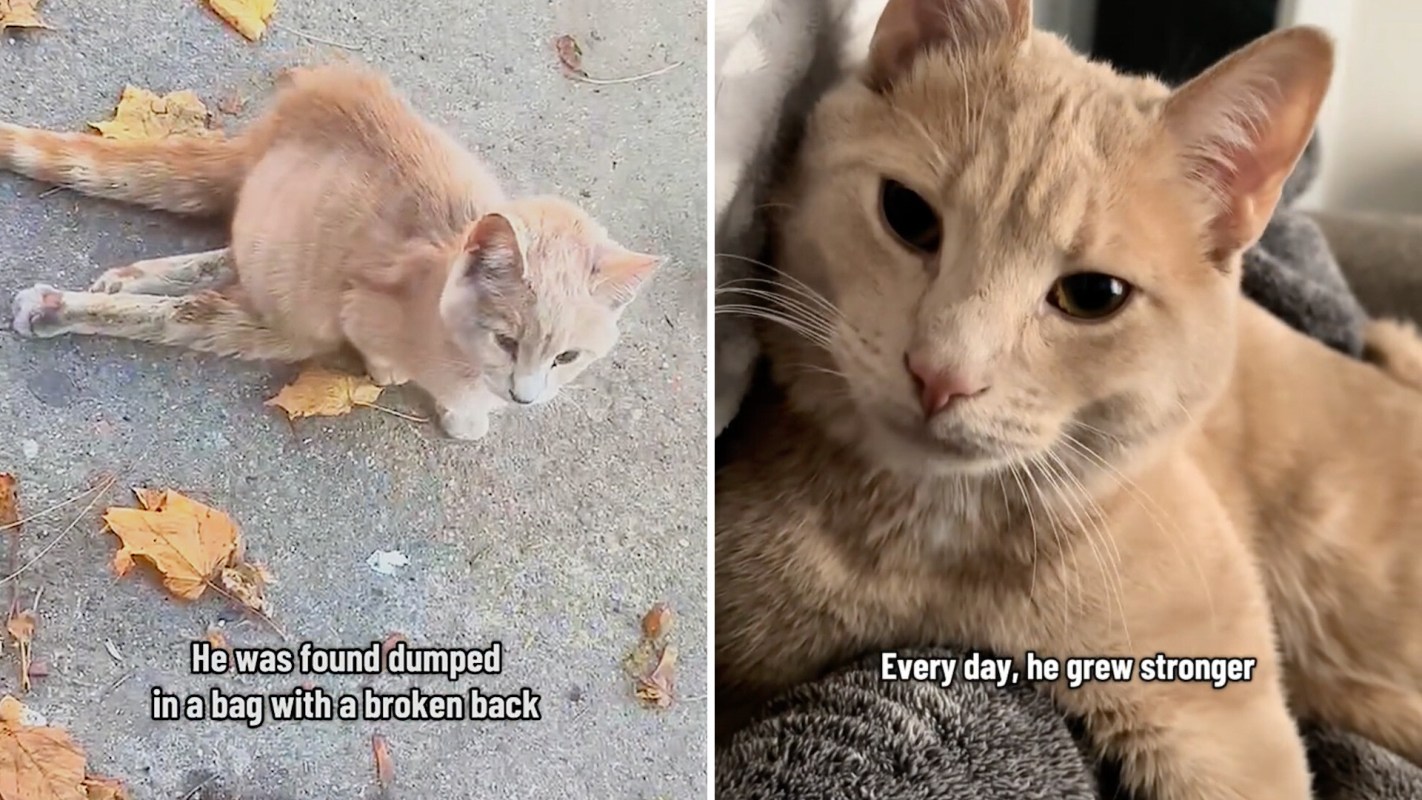
A widely shared video about Ryder, a rescue kitten, is giving viewers another way to understand life with a disabled pet. His owner uses the post to show that paralysis is part of his story but doesn't determine his future.
What happened?
According to the TikTok posted by Low Ryder Kitty (@LowRyderKitty), the creator used the video to tell Ryder's origin story, writing that the cat "wasn't born a paralyzed cat" and framing his rescue as the moment he got a new chance at life.
The post focuses on what happened after Ryder was rescued, including his rehabilitation progress and the mobility cart that helped him move.
That feeling came through in the comments.
One commenter wrote, "Thank you for giving him a loving home!"
Another added, "Now he knows what a loving furever home is. Thank you. We enjoy watching his daily journey and the happiness he has."
TCD Picks » Quince Spotlight
💡These best-sellers from Quince deliver affordable, sustainable luxury for all




Why is this important?
For animals that are often overlooked in shelters and rescues, stories like Ryder's can change the way people see them. Pets with mobility challenges are sometimes assumed to be harder to care for or less likely to live full, happy lives, and posts like this push back on those ideas in a direct, visual way.
A disabled animal may first attract attention out of curiosity, but that interest can grow into empathy. From there, it can lead to support for adoption, fostering, donations, or simply a greater willingness to consider animals of all kinds.
What's being done?
For Ryder, it appears to involve rehabilitation, adaptive equipment, and committed at-home care. The post shows the mobility cart that helped him move again, highlighting how life-changing mobility aids can be for some animals.
The post makes that care visible. Showing the whole process gives viewers a more realistic sense of the time, creativity, and love involved.
Ryder's journey shows that rescue does not end the moment an animal is brought home. Recovery, trust, and adaptation are ongoing processes, and in many cases, those steps are what truly create a second chance.

Get TCD's free newsletters for easy tips, smart advice, and a chance to earn $5,000 toward home upgrades. To see more stories like this one, change your Google preferences here.