


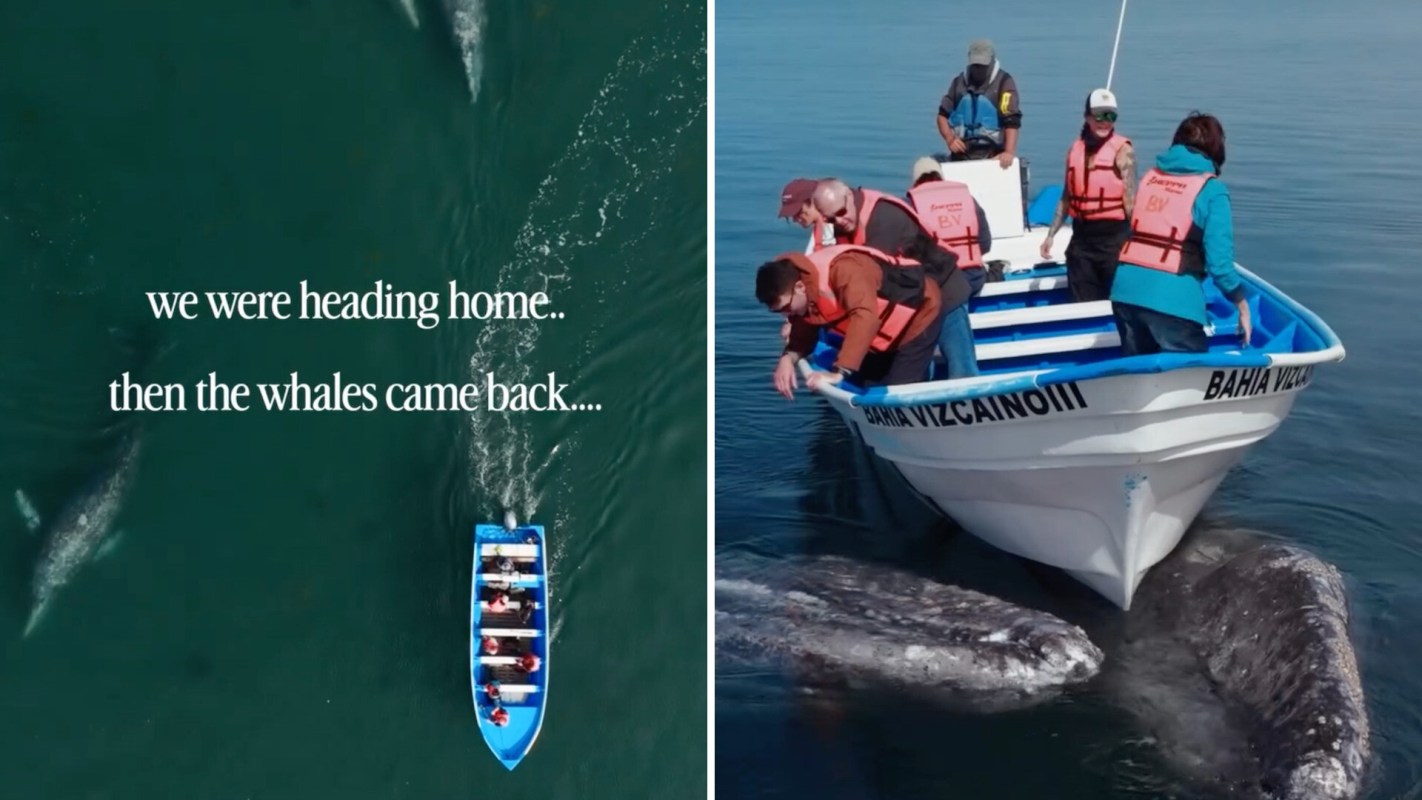
A whale-watching outing took an unexpected turn only after the crew had already started heading back: the whales returned to the boat, according to an Instagram post.
For a wildlife photographer, it was the kind of rare encounter people hope to witness. One whale appeared beside the vessel more than once; after dropping beneath the surface, it later came back, and at another point circled the boat.
What happened?
Referring to the moment on Instagram, the photographer said the group had essentially moved on from the sighting — the "boat was turning back, cameras were down" — when "the whales came back."
The caption also said the boat's "engines were off and propellers not moving," underscoring that the animals' return was not driven by pursuit. "Not because we chased them. Not because we forced the moment. But because they chose to," the photographer wrote.
Among the reactions, one user wrote, "Such a blessing to experience this type of encounter with these majestic creatures. My dream." Another added, "They did not want you to leave."
He described the closest pass this way: "A whale surfaced beside the boat, circled us, disappeared beneath the water, then returned again - close enough to remind us just how small we are in their world."
TCD Picks » Quince Spotlight
💡These best-sellers from Quince deliver affordable, sustainable luxury for all




Why does it matter?
Respectfully interacting with wildlife tourism can provide a safe way for humans and animals to interact. As the caption says, "These are the moments you can never plan for."
In this case, however, while the boat was not actively moving and posing a danger to the animals in that way, it's important for crew and passengers onboard to avoid leaning over the side in an attempt to interact with the whales.
According to NOAA Fisheries, "NOAA Fisheries does not support, condone, approve, or authorize activities that involve closely approaching, interacting, or attempting to interact with whales, dolphins, porpoises, seals, or sea lions in the wild. This includes attempting to swim with, pet, touch, or elicit a reaction from the animals." Under the Marine Mammal Protection Act, any act that has the "potential to disturb" a marine mammal is considered harassment and is illegal.
Studies on why wild animals attack humans show many encounters are shaped by the ways humans alter animal behavior, space, and expectations. A respectful approach can also reduce risk for both people and animals.
What can I do?
Good wildlife-viewing practice means giving animals room, slowing down, and avoiding any action that corners or pressures them.
Ethical viewing does not guarantee a close-up encounter. Animals should be free to leave, ignore people, or approach on their own terms.
The caption put it simply: "Give wildlife space, stay patient, and let nature decide the story."
"Some encounters don't feel like something you witnessed," the photographer wrote. "They feel like something you were invited into."

Get TCD's free newsletters for easy tips, smart advice, and a chance to earn $5,000 toward home upgrades. To see more stories like this one, change your Google preferences here.







