


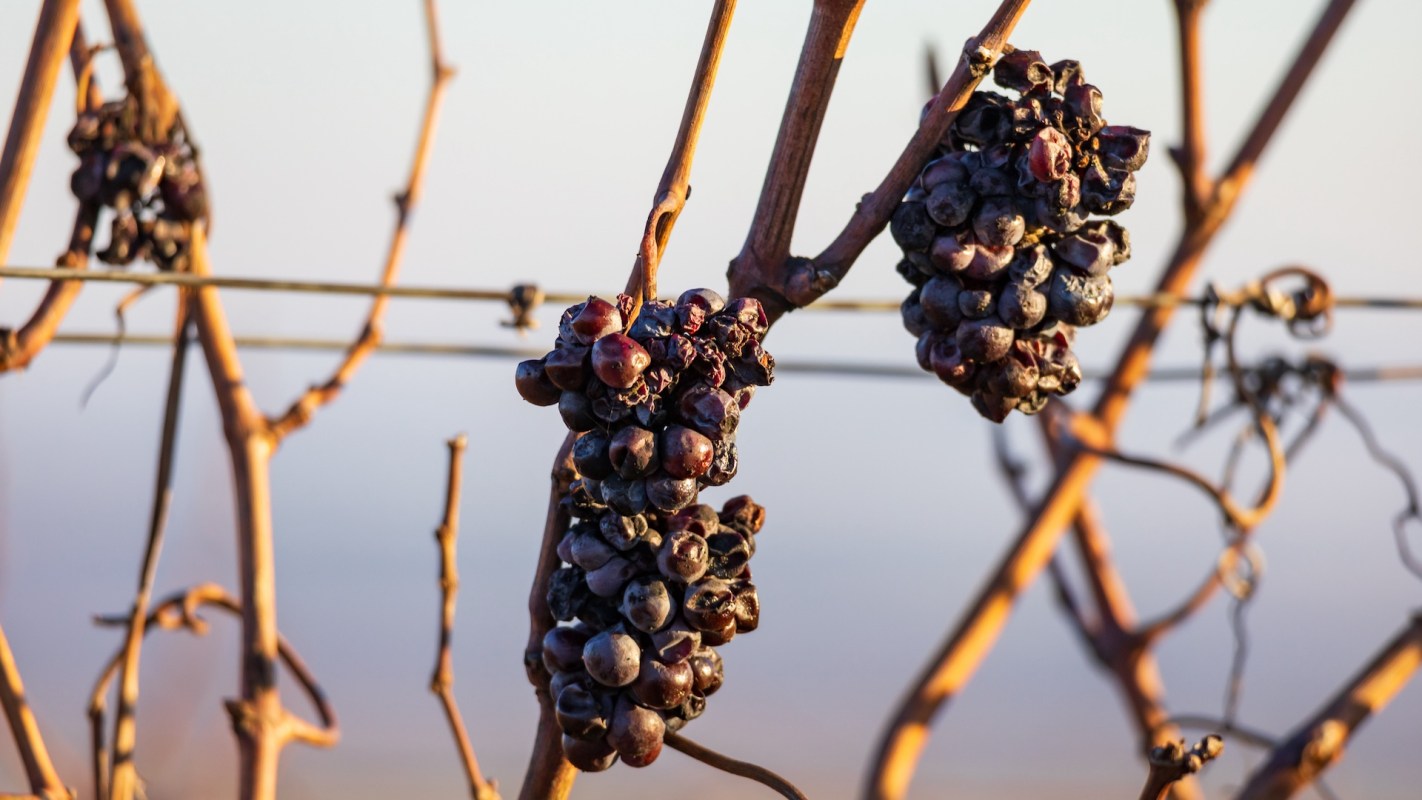
Across parts of California wine country, grape growers are confronting a grim calculation: When grapes have no buyers, some vineyards lose less money by leaving the fruit on the vine than by harvesting it.
That reversal is upending pinot noir businesses and family legacies, leading to layoffs, land sales, and the loss of livelihoods.
What's happening?
The pressure on growers follows an exceptionally weak year for the industry. California wineries made less wine last year than they had in 25 years, and, as the New York Times reported, softer demand, changing drinking habits, and years of overplanting have left so much wine in storage that some farmers are forgoing harvest altogether.
For some longtime operators, that has meant shutting down. In Monterey County, Valley Farm Management chief executive Jason Smith recently watched workers tear out a pinot noir vineyard and burn the posts that had supported it after deciding to sell all of his land and close the company his family had run for 51 years.
"There's literally no way for me to make money," Smith said.
The contraction is broad: The Times reported that in 2025, about 38,000 acres of wine grapes — roughly 7% of statewide plantings — were removed, and industry estimates said more than half a million tons of grapes went unpicked.
TCD Picks » Quince Spotlight
💡These best-sellers from Quince deliver affordable, sustainable luxury for all




Why does it matter?
California produces roughly four-fifths of the wine made in the United States, so a pullback in its vineyards affects far more than winemakers alone. Farm communities, local jobs, and businesses tied to harvest season all feel the impact, and vineyard removals can wipe out years of agricultural investment almost overnight.
The downturn also reflects changing consumer preferences. The Times reported that some younger drinkers are choosing canned cocktails, seltzers, and alcohol-free drinks instead, while other shoppers view wine as too expensive or too intimidating.
Adriana Fabbro, owner of Wine on Piedmont in Oakland, told the Times: "It's still very hard to make an inexpensive pinot."
What's being done?
According to the Times, growers are adjusting in different ways. Some are replanting with white varieties that customers increasingly favor, including fiano and grüner veltliner, while others are reducing output instead of adding more wine to an already oversupplied market.
The same shift is showing up in retail and hospitality. Alex Ma, co-owner of Ruby Wine, a natural wine bar in San Francisco, said customers increasingly want approachable options, including "wine that you can drink out of a camping mug and it tastes just as good."
Bar and bottle-shop owners are also hearing more questions from younger customers about nonalcoholic options, underscoring how drinking habits are changing.
For growers, diversification appears to be the clearest path forward as the market resets.
Others in the industry are less pessimistic about where things are headed. Michael Meluskey, general manager of Au Bon Climat, said, "People love wine, they love wine with food."
For Smith, however, the reality is more immediate.
"I'm going to have to find a new career," he said.

Get TCD's free newsletters for easy tips, smart advice, and a chance to earn $5,000 toward home upgrades. To see more stories like this one, change your Google preferences here.






