


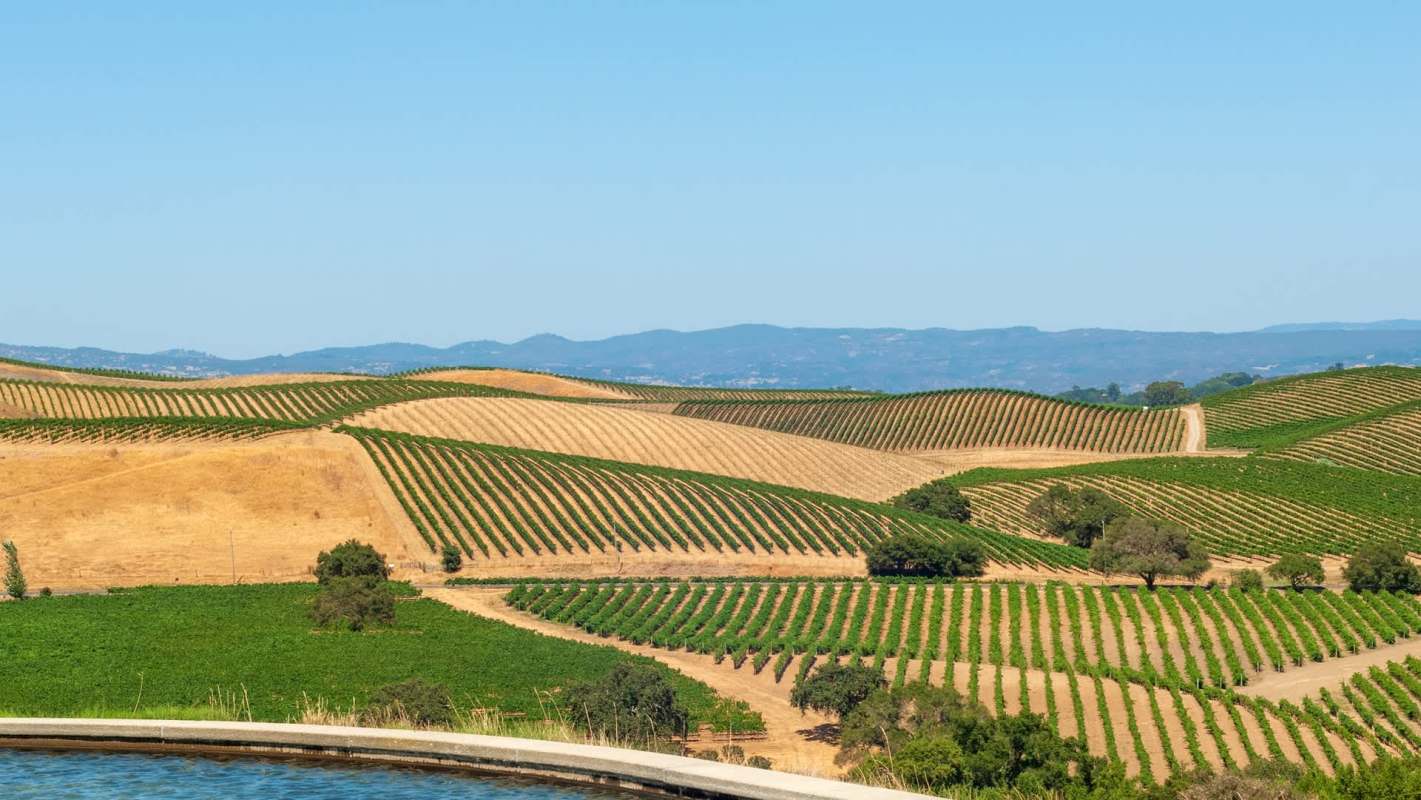
Climate change could redraw California's wine map over the coming decades. A new study indicates that longtime industry anchors such as Napa and Sonoma may face mounting pressure, while cooler coastal areas become better positioned for grape growing.
What's happening?
A research team at Tohoku University found that, under severe climate change, several of California's most established wine regions could become less favorable for vineyards even as other parts of the state improve their prospects.
As Phys.org reported, the paper, published in Frontiers in Climate, analyzed 379 wine-growing sites statewide. To do that, the researchers applied Intergovernmental Panel on Climate Change scenarios to a 2.5-mile grid and used machine learning to estimate both vineyard suitability and likely vintage quality.
Using Wine Spectator ratings from 1996 to 2023 to train the model, the researchers projected that major current wine centers — including Napa, Sonoma, San Luis Obispo, and Santa Barbara — could become much less suitable if heat-trapping pollution remains high.
Meanwhile, Mendocino, Monterey, and parts of central and southern coastal California may become more favorable for wine grapes. That suggests the state's next major period of wine growth could come from regions that have historically had a smaller role.
Why does it matter?
Wine is more than a luxury product in California — it is a major agricultural business tied to jobs, tourism, restaurants, exports, and local tax revenue. California produces roughly 80% of U.S. wine, and by volume, the country ranks fourth globally.
TCD Picks » Quince Spotlight
💡These best-sellers from Quince deliver affordable, sustainable luxury for all




Shifting climate conditions could affect not only vineyard owners but also workers, nearby communities, and consumers. If heat, drought, and wildfire risk intensify in established regions, growers may face lower yields, changes in grape quality, and higher costs for insurance, water, and fire protection.
For everyday shoppers, those pressures could eventually show up as higher prices or different bottles on store shelves. New wine-growing regions could create fresh economic opportunities and help preserve domestic production if growers adapt quickly.
The study also points to how better forecasting tools can help farmers make smarter decisions. Using climate science and machine learning to anticipate which areas will remain viable could make food and drink systems more resilient and help communities prepare before losses mount.
What's being done?
Vineyard operators can use climate modeling to rethink where they plant, which grape varieties they choose, and how they manage water and heat stress.
That could mean expanding into cooler northern and coastal zones, experimenting with grapes better suited to warmer conditions, or adjusting harvest timing and vineyard design. Those choices can help protect quality while reducing risk.
Wildfire planning will also become more important. In many parts of California, vineyard success may depend on fire-resilient land management, emergency response planning, and reducing the amount of heat-trapping pollution driving these shifts in the first place.
Corresponding author Dr. Yusuke Hiraga said, "The path forward requires active adaptation to both shifting climatic conditions and increasing wildfire risk," emphasizing that careful varietal selection will be critical.

Get TCD's free newsletters for easy tips, smart advice, and a chance to earn $5,000 toward home upgrades. To see more stories like this one, change your Google preferences here.






