


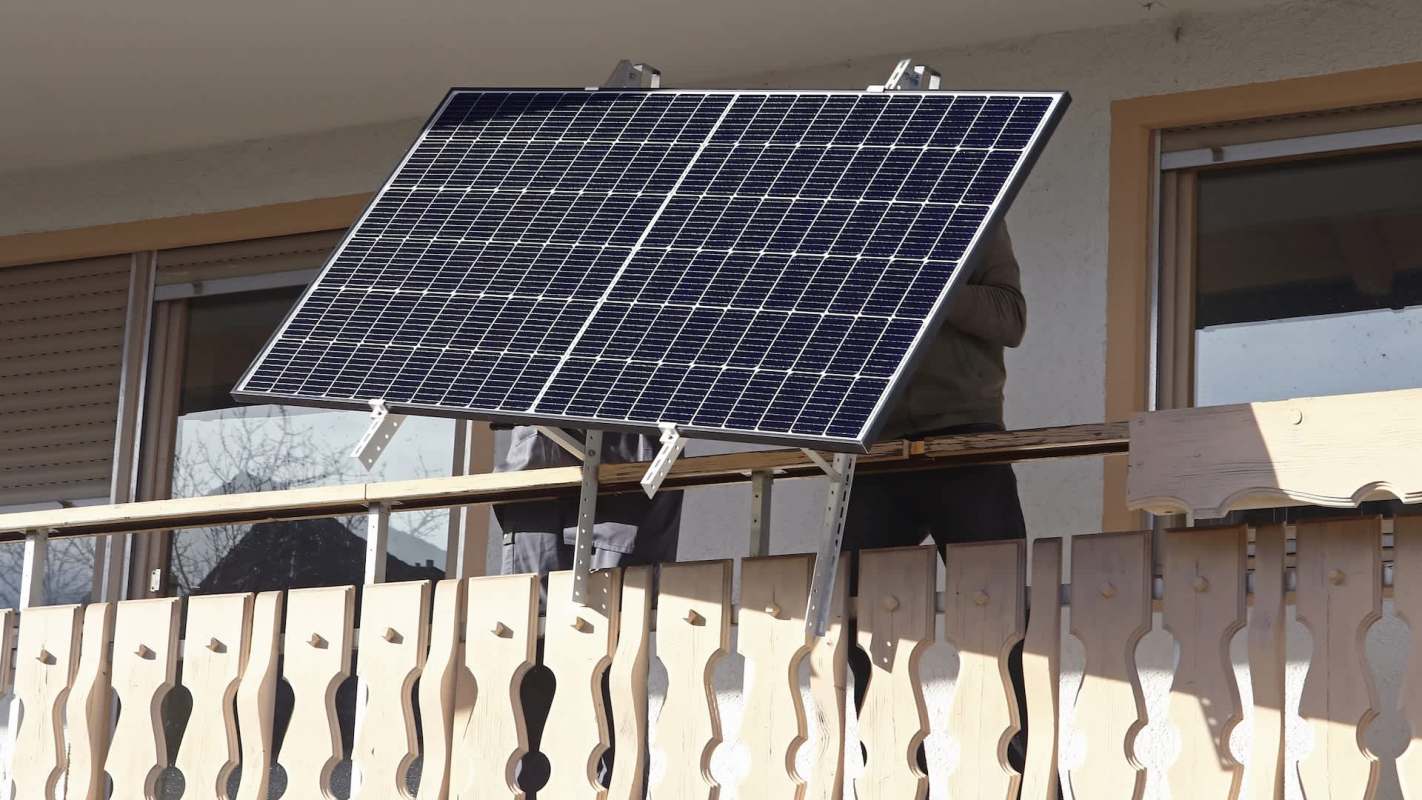
New York City officials want the state to make solar more accessible to apartment dwellers by allowing small panels to plug into standard outlets without advance utility permission.
Roughly 30 elected leaders have asked Gov. Kathy Hochul to sign the Solar Up Now New York Act, arguing that it would remove one of the biggest roadblocks facing plug-in solar systems.
What's happening?
In a letter to Hochul, City Comptroller Mark Levine, Manhattan Borough President Brad Hoylman-Sigal, and 27 New York City Council members, including Speaker Julie Menin, said the bill could help apartment residents produce renewable power and lower their electricity costs, amNewYork reported.
Brooklyn Assembly Member Emily Gallagher and Manhattan state Sen. Liz Krueger are backing the measure. It cleared both chambers of the state Legislature on May 28, including a 59-1 vote in the Senate.
If Hochul approves it, the bill would apply to plug-in photovoltaic systems that produce no more than 1,200 watts of continuous output.
The proposal would stop utilities from requiring prior approval, charging fees tied to the devices, or demanding controls beyond those already built into the systems. Customers would instead have to notify the utility within 30 days of installation.
TCD Picks » Quince Spotlight
💡These best-sellers from Quince deliver affordable, sustainable luxury for all




The officials wrote in their letter, "One plug-in panel can potentially generate hundreds of dollars of yearly savings for New York households."
To push for Hochul's signature, supporters were also expected to rally at City Hall Park, where they planned to use a solar panel to power a blender while giving out milkshakes.
Why does it matter?
The proposal aims to widen access to solar power.
A large share of New Yorkers live in apartments and do not have private roofs or yards where conventional solar arrays can be installed. For those households, plug-in panels could offer a smaller and less expensive way to use solar energy, according to amNewYork.
These systems typically would not power an entire apartment. They could, however, reduce how much electricity a home draws from the grid, which might cut utility bills; the amount saved would depend on panel size, sun exposure, and household electricity use.
The bill also builds in safety requirements. Covered systems would need certification from an accredited lab, compliance with fire and building codes, and protections against dangerous backfeeding during outages.
Even with those changes, some barriers would remain. The bill would reduce utility-related hurdles, but landlords, co-op boards, and condo associations could still refuse to allow the systems.
Ann Korchak, board president of Small Property Owners of New York, raised safety and installation concerns, asking: "Are tenants going to hire licensed electricians?"
What's being done?
Supporters say the legislation would be an opening move, not the final one.
Gallagher said Hochul's office has not identified any specific problems to her and that she hopes to know more by the fall, amNewYork reported. She also said she would "definitely" support future legislation giving renters clearer rights to install the systems.
Advocates are already considering stronger protections. New Jersey recently passed a balcony-solar law that broadly prevents landlords and co-op, condo, and homeowners associations from imposing blanket bans while still allowing reasonable restrictions. New York's bill does not extend that far.
Supporters also contend that putting the measure into law could help build a wider U.S. market for certified plug-in solar systems.
Priya Mulgaonkar, campaign director at the Green Co-op Council, said, "Our priority is to get this law on the books to remove the red tape, so that hopefully we can help kind of create the market for more plug-in panels and technology."
Even if Hochul signs the bill, residents would still have to follow building rules, use certified equipment, and make sure installations comply with code and manufacturer instructions.
Gallagher described the bill as "step one," adding that "there will be more steps to follow after that."
Mulgaonkar said, "We just need the governor to do her part."

Get TCD's free newsletters for easy tips, smart advice, and a chance to earn $5,000 toward home upgrades. To see more stories like this one, change your Google preferences here.






