


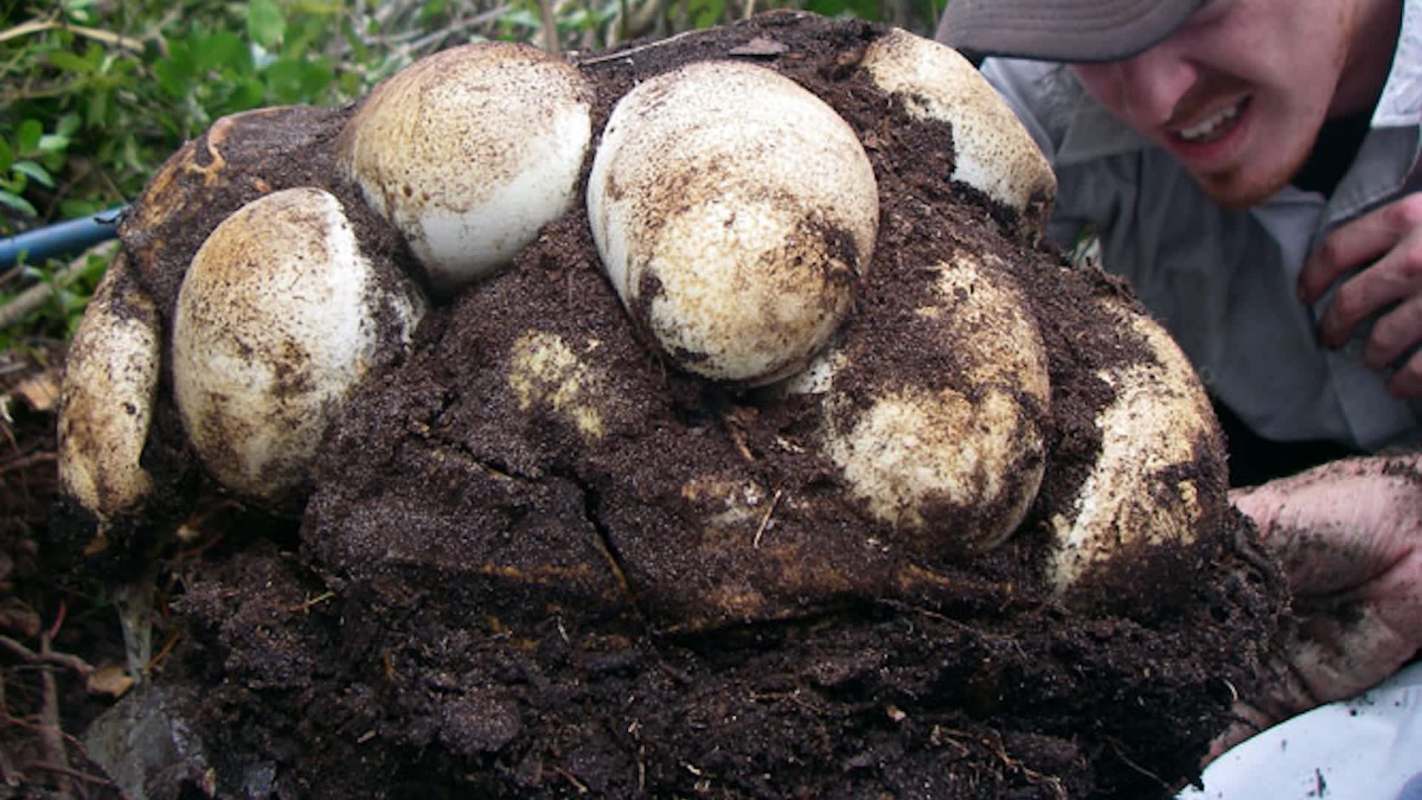
To help hunt the elusive Burmese pythons that plague the Everglades, Florida researchers are radio-tagging males and then following their movements — a tactic that has exposed females, mating groups, and nests full of eggs.
What's happening?
According to the Miami Herald, while python removal programs in Florida have proved to be the most effective way of slowing down the predator's invasion, the work is timely and tough. Researchers with the University of Florida's "Croc Docs" team have been studying Burmese python movement, breeding, and nesting site selection to give hunters more ways to track them.
One recent case involved a 10-foot female Burmese python on a man-made island near Everglades Holiday Park, where she was found guarding a nest. Before collecting the eggs, researchers had spent months tracking the snake with a transmitter and trail camera.
The discovery came through a broader "scout snake" program, which uses surgically implanted radio transmitters in captured pythons to help locate others. This year, the team's 25 tagged snakes have led researchers to 30 more pythons. The tagged males are especially helpful during breeding season, when they are drawn to females and may stay with them for extended periods.
Python nests can contain a striking number of eggs. The Florida Fish and Wildlife Conservation Commission says one nest found in the Everglades and Francis S. Taylor Wildlife Management Area held 111 eggs.
As invasive animal biologist Jenna Cole of the South Florida Water Management District said, the research is helping, telling the Herald, "They're finding these nesting females more frequently than they were previously."
TCD Picks » Quince Spotlight
💡These best-sellers from Quince deliver affordable, sustainable luxury for all




Why does it matter?
The invasive Burmese pythons pose a major ecological and community threat in South Florida. With no natural predators, they're disrupting the ecosystem by eating everything from wading birds and marsh rabbits to deer. Now native animals like panthers, bobcats, and raptors are having to compete with the species for food.
That damage threatens years of restoration work in the Everglades, which supports drinking water, tourism, flood control, and wildlife habitat. Early detection and removal can help protect native wildlife and the public investment in recovery.
Researchers have also become wary of spreading, seeing signs that pythons may be using connected waterways as travel corridors into more developed areas.
Melissa Miller, an assistant professor of Invasive Wildlife Ecology with the UF Department of Wildlife Ecology and Conservation, said, "We suspect they're probably using the canals as a path of least resistance. They could be used like highways for pythons to disperse."
What's being done?
Researchers are focusing on where the snakes travel, where they build nests, and where females go after laying eggs. When nesting females are located, they draw blood, collect eggs for lab study, and make sure no additional eggs or snakes are hidden nearby.
Tagged pythons are being tracked every other day to better understand movement patterns. As the Herald reported, some snakes remain within a relatively small range, while one male traveled about 40 miles over six months.
All of this information can help removal teams search more efficiently in remote, waterlogged areas that are difficult to reach by road.
There is also growing political interest in supporting the work. Rep. Debbie Wasserman Schultz joined a March trip with researchers and raised the possibility of additional funding.
"We're spending billions of dollars on Everglades restoration. If a, you know, an invasive species ends up upending all the work we did, or much of the work we did — that's a problem for us down the road," she said.
At present, the project is funded by the Florida Fish and Wildlife Conservation Commission and the South Florida Water Management District, according to the Herald.
"As time goes on, the people who are doing the removals and our boots on the ground are getting better," Cole said.
And as Brandon Welty of the UF Croc Docs team put it: "There's so much to do, but we're getting this little picture of what's actually happening."

Get TCD's free newsletters for easy tips, smart advice, and a chance to earn $5,000 toward home upgrades. To see more stories like this one, change your Google preferences here.






