


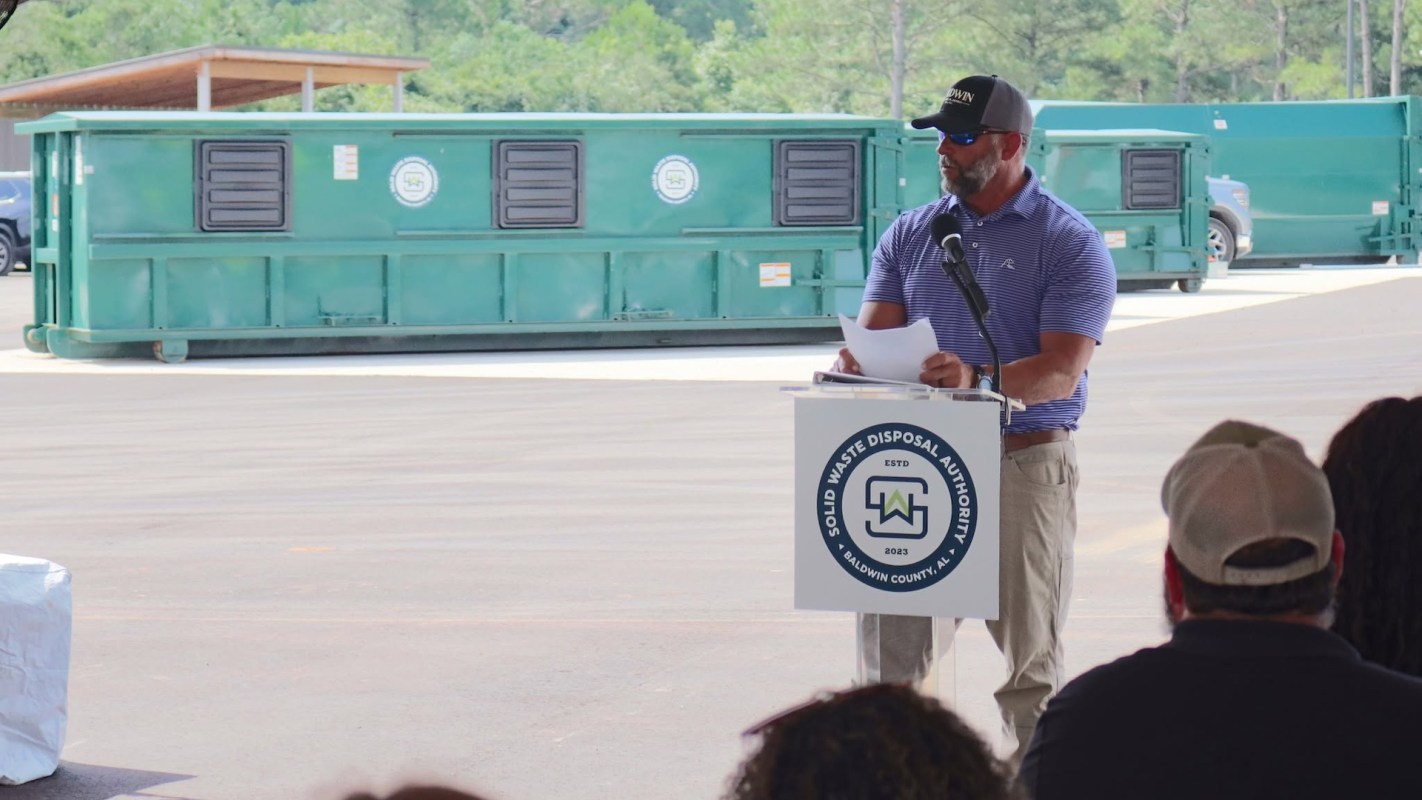
Baldwin County, Alabama, is taking a simple approach to boost recycling: make it easier for residents to drop off items that curbside bins do not take, so more of that material stays out of the trash.
With the newest site now open, Baldwin County has three hard-to-recycle drop-off locations, and Baldwin County Solid Waste Disposal Authority CEO Terri Graham said three more are planned.
What's happening?
According to Waste Dive, the Baldwin County SWDA recently opened a Center for Hard to Recycle Materials, or CHaRM Center, giving residents another drop-off option for items that usually do not belong in curbside recycling. Those materials include light bulbs, glass, and batteries.
Population growth, federal funding, and expanding opportunities in recycling end markets are helping drive the county's recycling push, local officials told Waste Dive. The effort marks a notable expansion in a county that has not typically been known for recycling leadership.
The newly opened location is the county's third CHaRM Center, and Graham said three more are expected.
Another part of the county's investment is a materials recovery facility that opened in 2025 and can process 40,000 tons a year.
TCD Picks » Quince Spotlight
💡These best-sellers from Quince deliver affordable, sustainable luxury for all




Together, those projects are intended to make recycling more convenient and effective for residents, especially when it comes to confusing, hard-to-handle household waste.
Why does it matter?
Hard-to-recycle items can create serious problems when they are tossed in the wrong bin or sent straight to a landfill.
Batteries can damage equipment or create safety risks, while broken glass and certain bulbs can contaminate loads that might otherwise be recyclable.
Convenient drop-off locations give households a clearer option for materials that require special handling. Instead of storing those items indefinitely in a garage or throwing them away, residents have a more obvious alternative.
Cleaner recycling streams can improve the value of collected materials and reduce contamination, which helps systems run more efficiently.
Stronger recycling infrastructure can also support jobs and local business activity tied to sorting, processing, and using recovered materials.
As populations rise, waste volumes usually increase too, so adding practical systems early can help communities avoid bigger disposal and pollution problems later.
What's being done?
Baldwin County is building a network instead of relying on one-off improvements.
Rather than expecting curbside bins to handle every recyclable item, the county is pairing regular service with CHaRM centers for materials those bins leave out. Its larger materials recovery facility adds broader processing capacity for recyclables that do enter the system.
That kind of layered approach can make participation easier for residents. People do not need to guess whether every item belongs in the household bin; instead, they have dedicated places for materials that require special handling.
"The biggest goal is for us to make recycling in our environment a priority for Baldwin County," Graham said.

Get TCD's free newsletters for easy tips, smart advice, and a chance to earn $5,000 toward home upgrades. To see more stories like this one, change your Google preferences here.






