


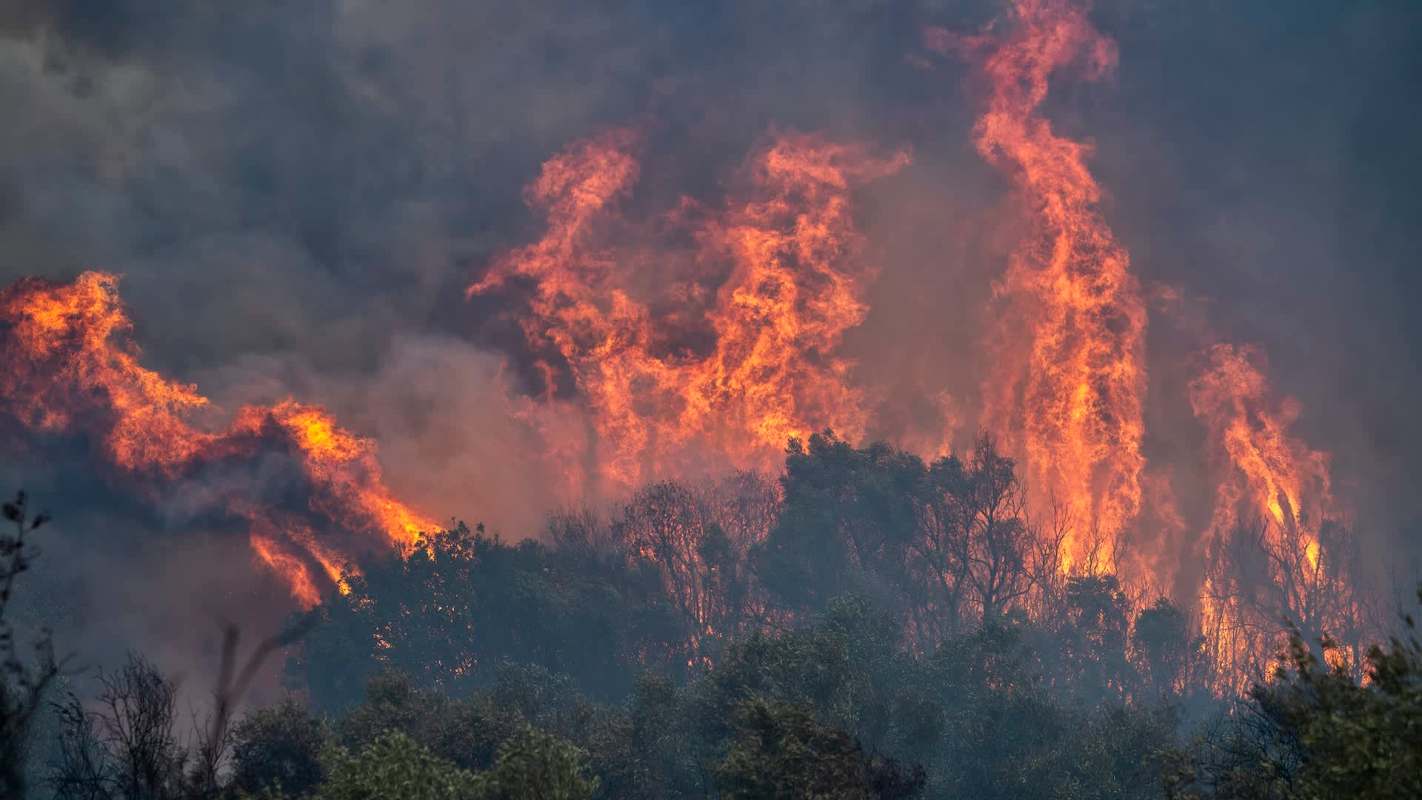
Scientists say two realities are unfolding together: wildfire damage is getting worse in Europe and North America, even as overall fire activity worldwide continues to decline.
That apparent conflict is mostly about geography. Fires are easing in some regions, intensifying in others, and human influence is helping drive both trends at the same time.
What's happening?
Phys.org reported that a nearly 25-year satellite record now shows global emissions from landscape fires at a low point, with rising wildfire damage in Europe and North America. Researchers say those developments fit together rather than contradict each other.
In Canada and the United States, national wildfire centers say the area burned this summer has been at least 25% above the 10-year average and more than double levels from decades ago. Europe, meanwhile, is just under its 2025 fire peak, and Spain has already seen its biggest wildfire on record, with more than 193 square miles burned.
Globally, though, Copernicus says carbon pollution from burning is running at about half the level seen in the early 2000s. Scientists largely attribute that drop to reduced fire activity in Africa and Asia, where shifts in farming, fire management, and population patterns are cutting back broad-scale burning.
"It does seem like a paradox because we're talking increases in fires, yet the global numbers have been going down and down. But they're both true," said Mike Flannigan, a fire scientist at Thompson Rivers University in Canada.
TCD Picks » Quince Spotlight
💡These best-sellers from Quince deliver affordable, sustainable luxury for all




Why does it matter?
Smaller global totals do not necessarily mean less harm, because fires in richer and more densely populated places are often bigger, faster, and more destructive.
The result can be more days of heavy smoke, more evacuations, more homes lost, and more pressure on firefighters and public health systems. University of Colorado fire scientist Jennifer Balch emphasized the seriousness of the shift.
"Extreme wildfires are on the rise globally in different parts of the world. And that's the piece that you know has us shaking in our boots," she said, according to Phys.org.
Researchers point to planetary warming and its effects as a central reason. Warming driven by coal, oil, and gas is producing hotter, drier conditions that make land easier to ignite and harder to protect.
Balch said humans "have our foot on the gas pedal" for bigger fires, and "we also have lost the brakes on fire" because warmer nights no longer give forests or firefighting crews the same chance to recover.
As UCLA water and fire scientist Park Williams put it, "Africa dominates the global fire activity," so large drops there can push global numbers lower even while fire risk is rising elsewhere.
What's being done?
Experts say the decline in Africa and Asia also shows that policy and land use can matter. In some places, growth in housing and agriculture has interrupted the spread of huge savanna fires, while elsewhere there has been less burning associated with clearing land.
Even so, scientists say Europe and North America are not adapting quickly enough. They point to better planning, more prescribed burning, and the removal of excess trees and grasses to make forests less ready for explosive fire behavior.
Scientists are also watching a developing super-strong El Niño, which could raise fire risk in tropical forests, particularly in the Amazon, Southeast Asia, and the Western Pacific. Governments in South America are already preparing for that possibility.
And as Balch put it, "It's not a question of whether our landscapes are going to burn, it's the question of when they're going to burn."

Get TCD's free newsletters for easy tips, smart advice, and a chance to earn $5,000 toward home upgrades. To see more stories like this one, change your Google preferences here.






