


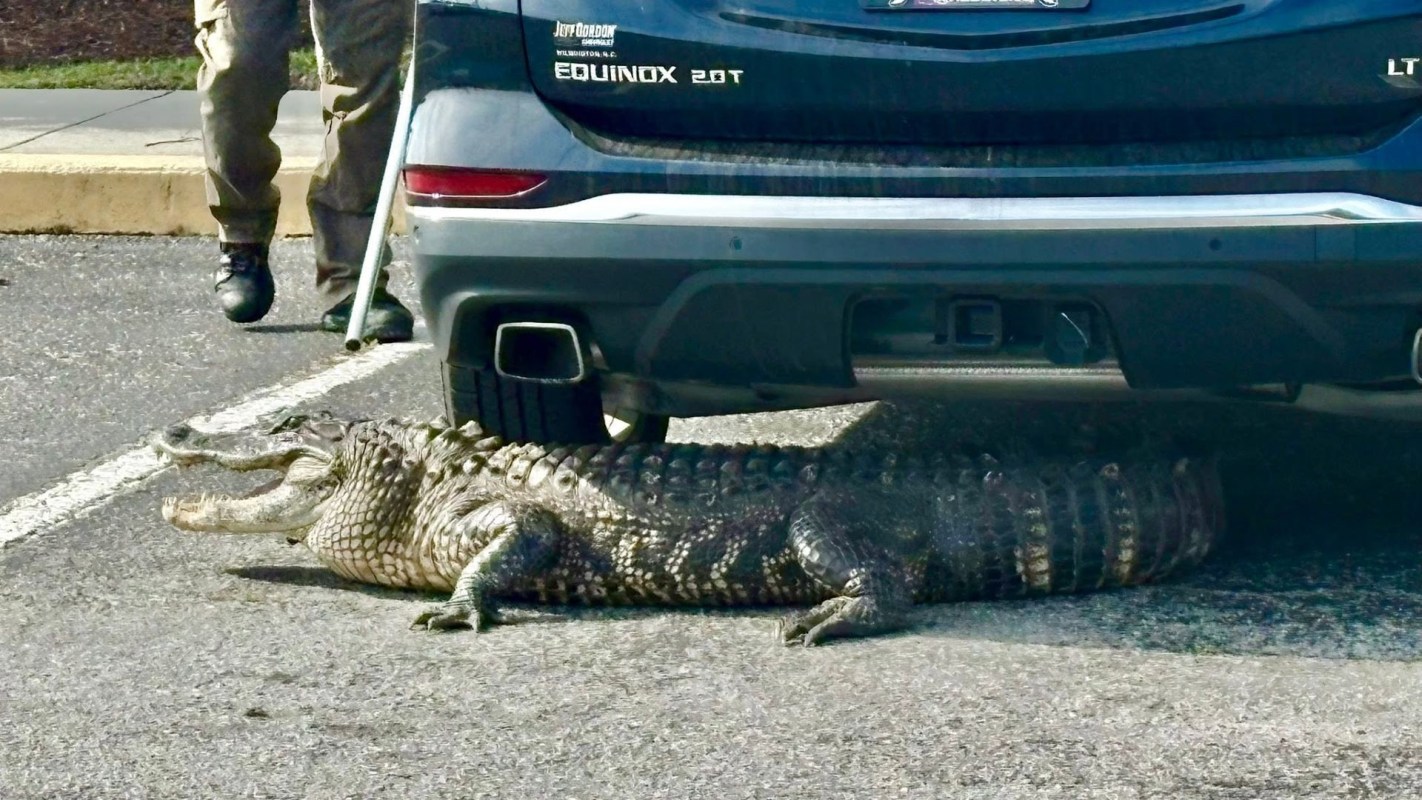
A Thursday afternoon call at a bank drive-thru in coastal North Carolina became a wildlife rescue when a large alligator ended up pinned beneath a car and had to be freed by police and animal protection officers.
The incident appeared to end without serious injury to the animal, amid increasingly frequent encounters between people and wildlife in many fast-developing communities.
What happened?
According to WECT, the response began shortly before 4 p.m., when Southport Police were called to the Truist Bank on Howe Street after a report of an alligator by the drive-thru.
WECT reported that the reptile had been struck by a vehicle and was wedged beneath the car.
As Southport officers kept people back from the area, Brunswick County Sheriff's Office animal protection services assisted at the scene while authorities waited for the North Carolina Wildlife Resources Commission.
Once wildlife officials arrived, they chose to remove the alligator from the site and relocate it. Photos released by the police department indicated the animal didn't appear to be badly injured.
TCD Picks » Quince Spotlight
💡These best-sellers from Quince deliver affordable, sustainable luxury for all




WECT said the call followed another recent gator response by the department: on Tuesday, officers freed a 12-foot alligator that had wandered onto a porch, making Thursday's rescue the second alligator call the department handled that week.
Why does it matter?
Southport is in a region where alligators are native, and as roads, parking lots, homes, and businesses continue expanding near wetlands, the chances of these encounters can increase.
That doesn't necessarily mean alligators are becoming more aggressive. In many cases, it means people and wild animals are simply operating in closer quarters than they once did. A BBC report on why wild animals attack humans found that closer proximity to people can raise the odds of dangerous or stressful encounters.
A frightened alligator in a busy commercial area can pose a threat to drivers, pedestrians, and first responders. At the same time, being struck by a car or trapped in a developed space can seriously injure or kill the animal.
The alligator in Southport appeared to avoid major harm, but roads and commercial areas can create serious hazards for wildlife moving through their natural range.
What's being done?
Here, the response involved local police controlling the immediate area, animal protection personnel providing assistance, and state wildlife officials ultimately deciding to move the alligator to another location.
Protecting natural habitat where possible can reduce conflicts, especially in places where neighborhoods, parking lots, or commercial development intersect with wildlife corridors.
Southport officers relocated the alligator away from the bank. It was the department's second alligator call of the week.

Get TCD's free newsletters for easy tips, smart advice, and a chance to earn $5,000 toward home upgrades. To see more stories like this one, change your Google preferences here.







